JAP | ENG
Around Bali #7/10
Building materials #2
Wood
Local production for local consumption
When observing the building materials used in Bali, what is surprising is that even now in the 21st century, the island remains committed to using local building materials and has continued to use them for many years.
Most of these natural materials are sourced from within this 5,500 km2 island, with the exception of some imported from other Indonesian islands. It has been able to keep the CO2 emissions generated by transporting from remote areas low.
Therefore, it can be said to be a typical example of a Island whose so-called carbon footprint can be kept low compared to other countries and regions around the world.
Timber for columns and beams
(1) Teak wood
The general architecture of Bali is basically a wooden structure. Teak wood is the preferred material, but in recent years it has become increasingly difficult to obtain them. In some cases, palm palm wood is used instead of teak.
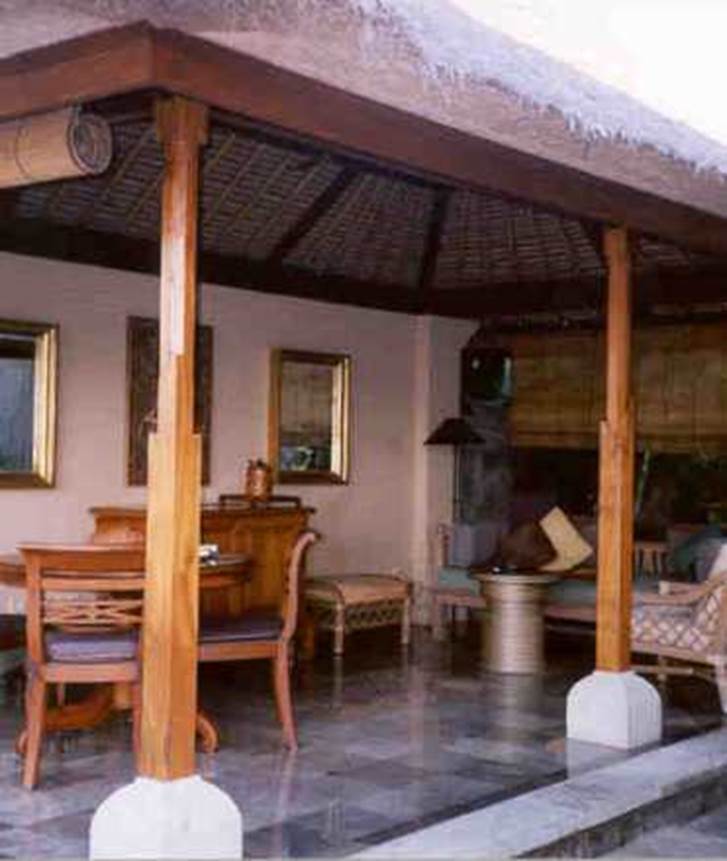
The free-standing pillar shape is unique to Bali.
The origins of this shape can be seen in ancient Hindu architecture throughout India.
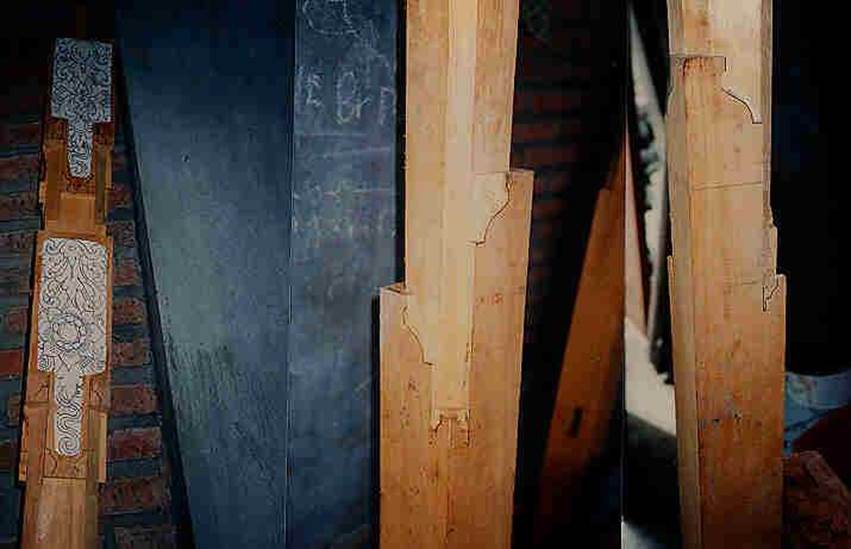
Photo by author
The design techniques used on pillars in the ancient Indian subcontinent is like a water veins that flowed all the way to Bali.
(The sketch of pillar design is the author’s personal opinion derived from his observations of architecture)
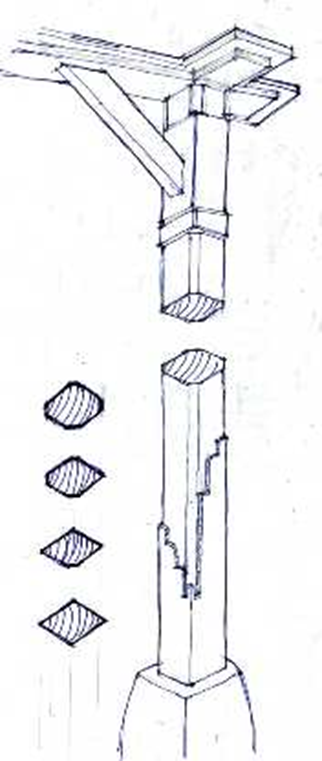
Author’s sketch
(2) Nanka wood
There are outdoor woodworking shops scattered all over Bali. At a woodworking shop that I happened to visit, a veteran carpenter was working alone, sweating. There are no power machines, everything is done by hand. When I asked about the material of the wooden pillars that had already been molded, he explained as follows:
Nangka (jackfruit) is often used for pillars of sacred buildings such as temples.
Nangka wood is also used for sacred objects such as Indonesian gamelang musical instruments and furniture for offerings in Hindu temples
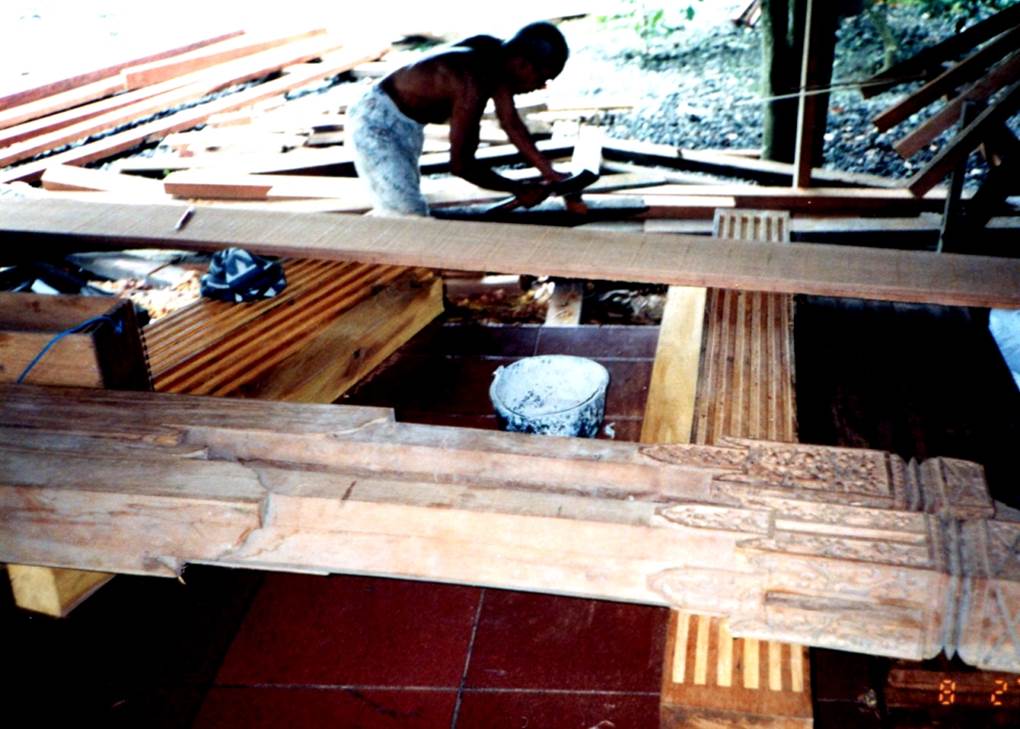
Photo by author
The height of the pillars is calculated from the owner’s body measurements. The spacing between the pillars is also calculated from the owner’s body measurements.
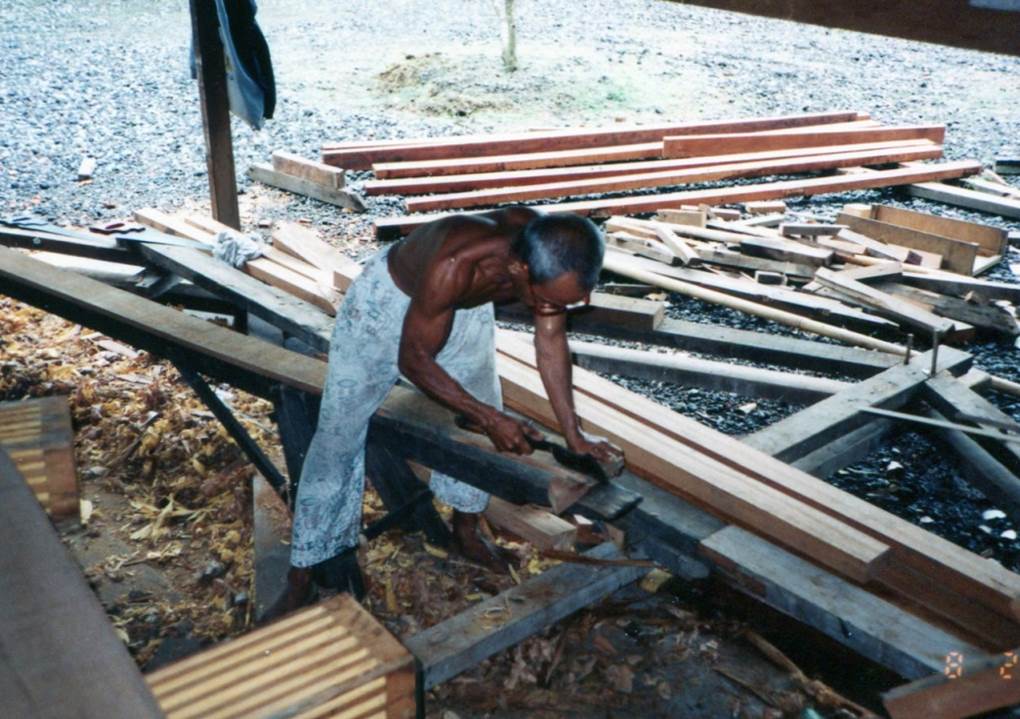
Photo by author
(3) Old coffee tree
Coffee trees were collected and found in a corner of the woodworking shop. The shape is interesting, and it looks like it could be used somewhere.
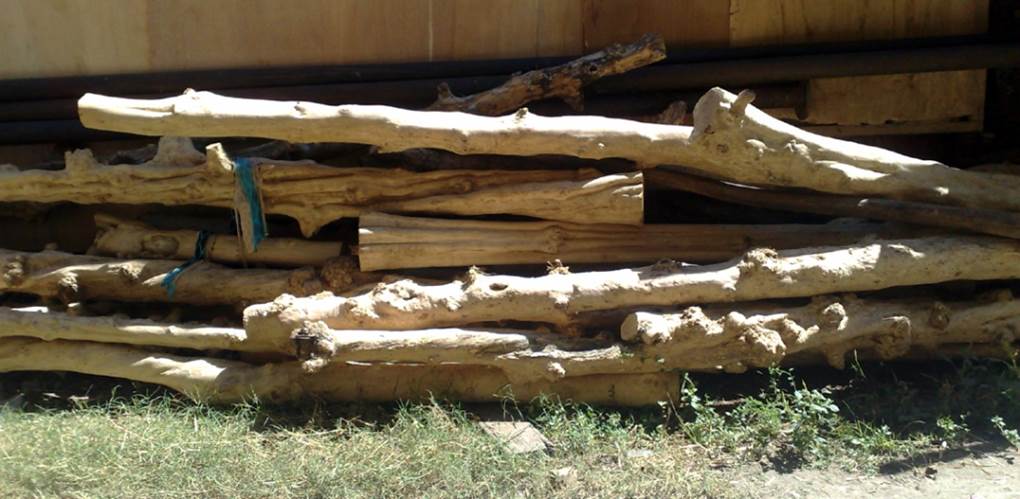
Photo by author
Roofing materials
1.The shape of the roof is basically square or hipped, and there are no gables or one-sided flows
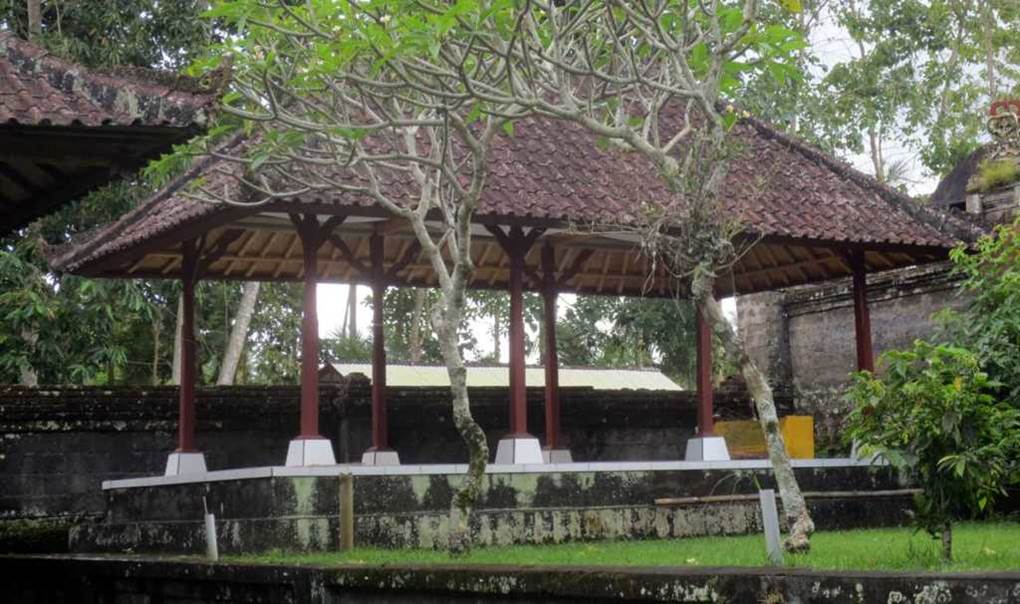
Photo by author
2. Timber is used for the basic part of the roof structure, and bamboo is used for the rest of the secondary parts.
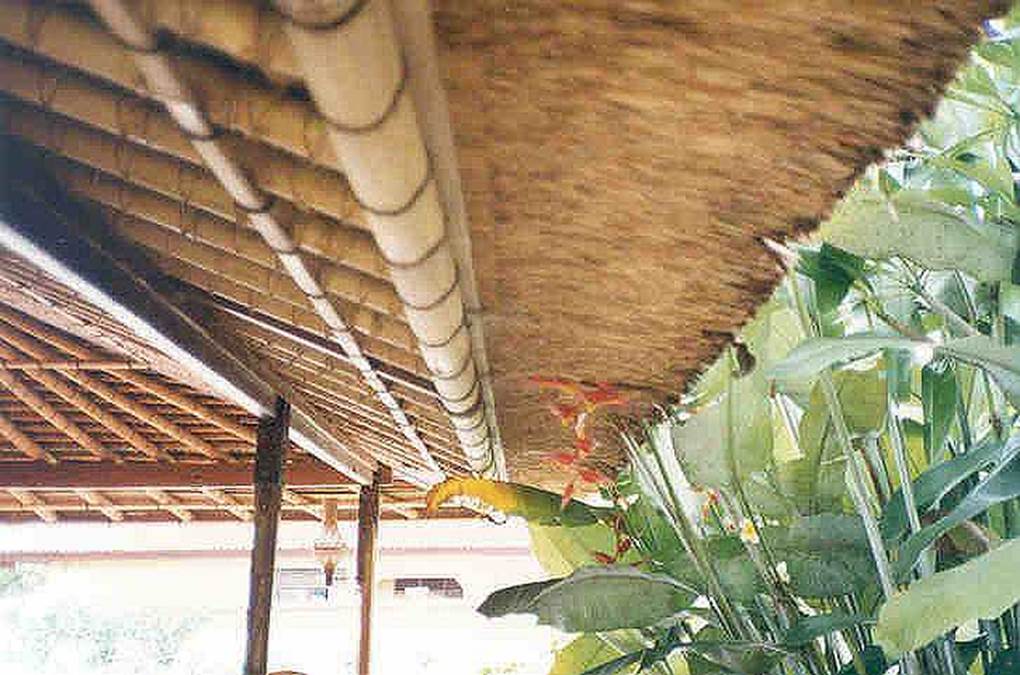
Photo by author

Photo by author
3. Most of the bamboo rafters are arranged in a radial pattern.
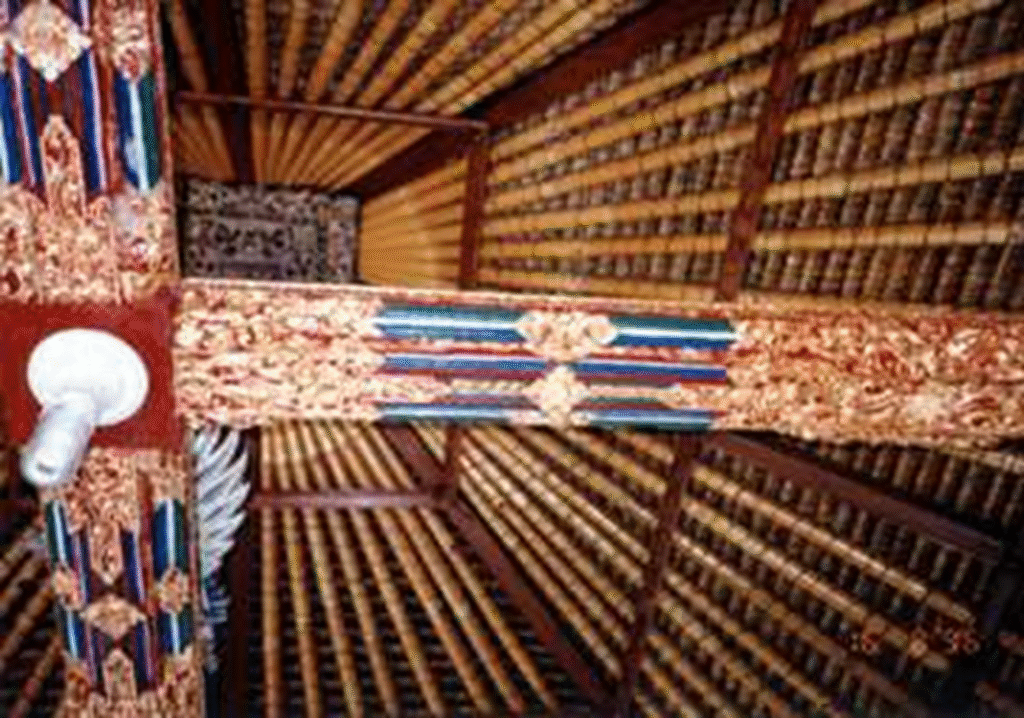
Photo by author
(4) Alang Alang Roof Materials
The roofing material is a grass called alang alang in line with the Balinese tradition. I think it was in the early 1980s that I first saw this material in person.
In southern India, Thailand and Malaysia, nipa palm leaves are commonly used as roofing materials. It grows in clusters in the mangrove swamps at the mouth of the river. There are no stems, and the leaves grow directly from the ground, the length is 3-10 m, making it an ideal material for roofing because of its ventilation and heat insulation properties.
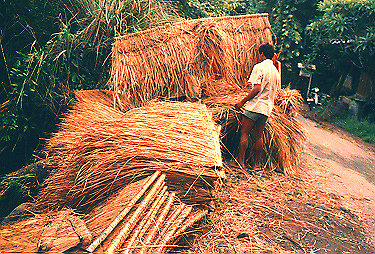
Photo by author
In contrast, alang-alang is a plant completely different from palm trees, with pointed, long, thin leaves that grow in clusters in the wilderness of Java, Bali, Lombok, and other islands, and can grow up to about 3m in height.
The leaves are dried and fixed in strips on bamboo skewers to form an element, which is then layered to provide waterproofing for roofing.
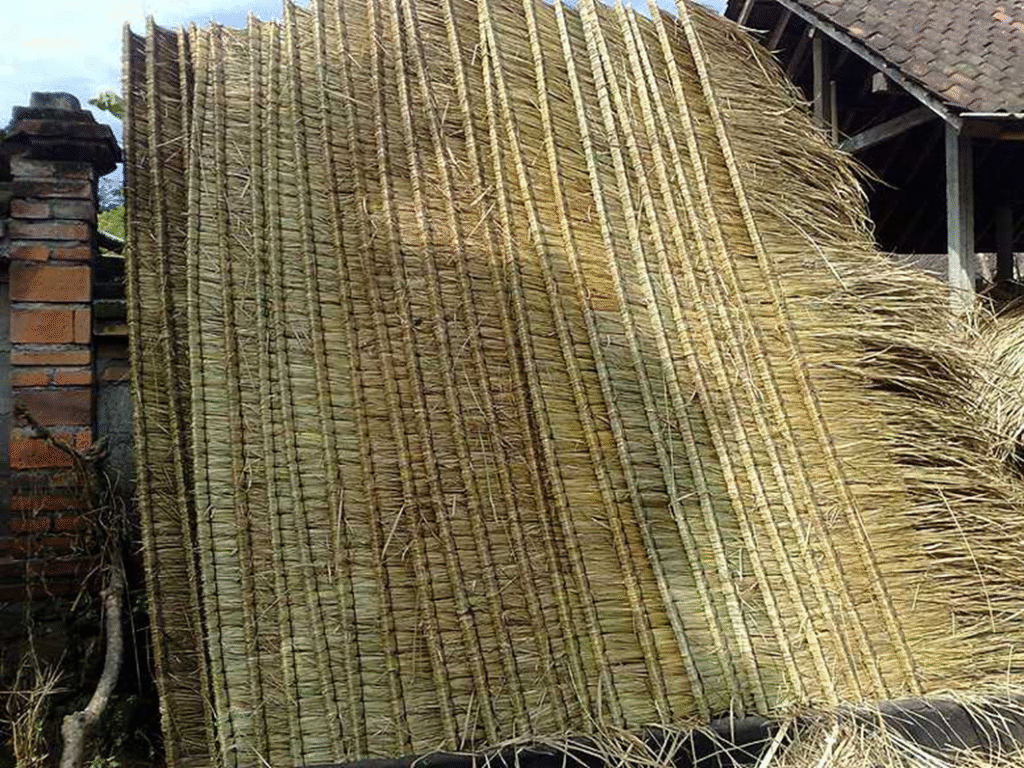
Alang Alang roof, Photo by author
The minimum required distance for overlapping these roofing elements is about 10cm. The shorter the overlap, the longer the roof will last, and the better it will be at retaining heat and waterproofing. Re-dusting is required about once every 10 years.
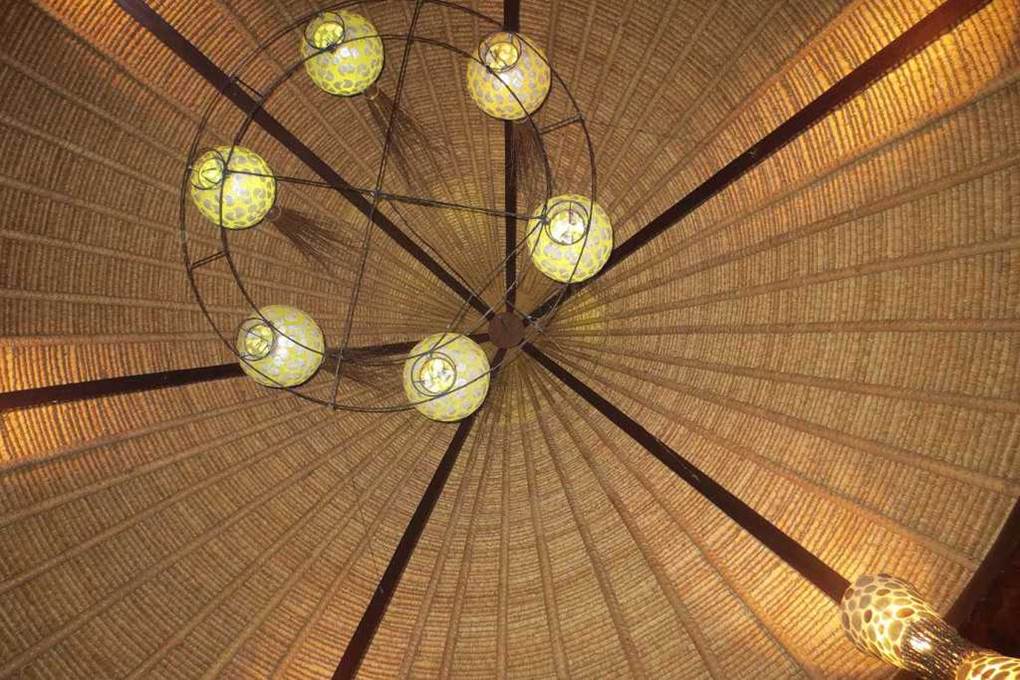
Photo by author
The special feature of this Alang Alang material is that it can bring out delicateness in the eaves line. It can also give an elegant finish to the ridge line of a hipped roof. And above all, the plant fiber can create an artistic visual effect in the roof lining and ceiling, expressing a delicate and serene space.
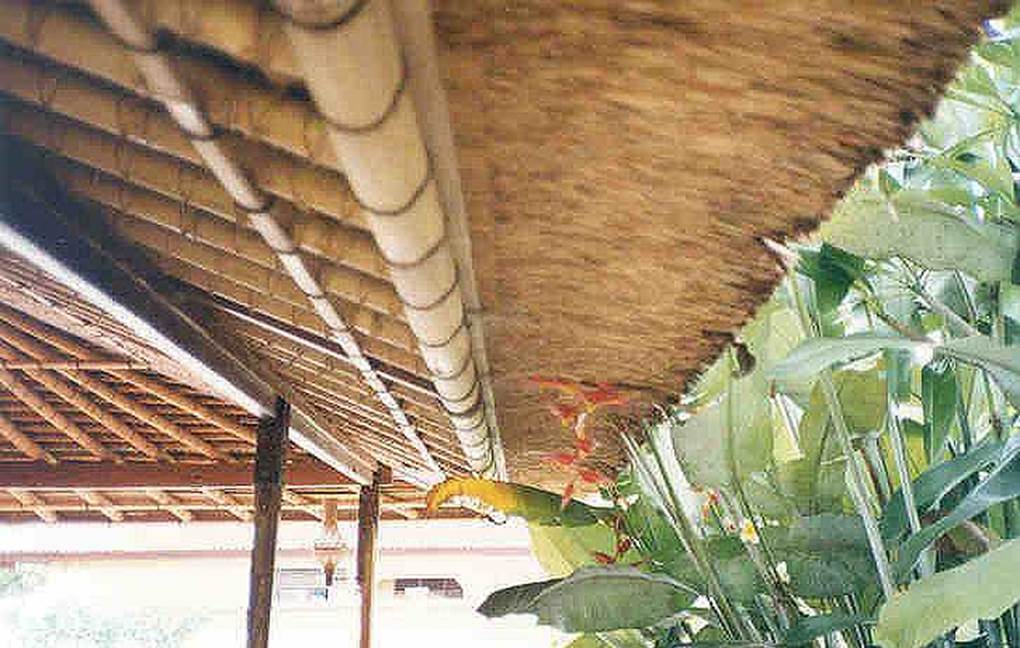
Photo by author
Alang-Alang wood construction procedure. It is carried out by many people.
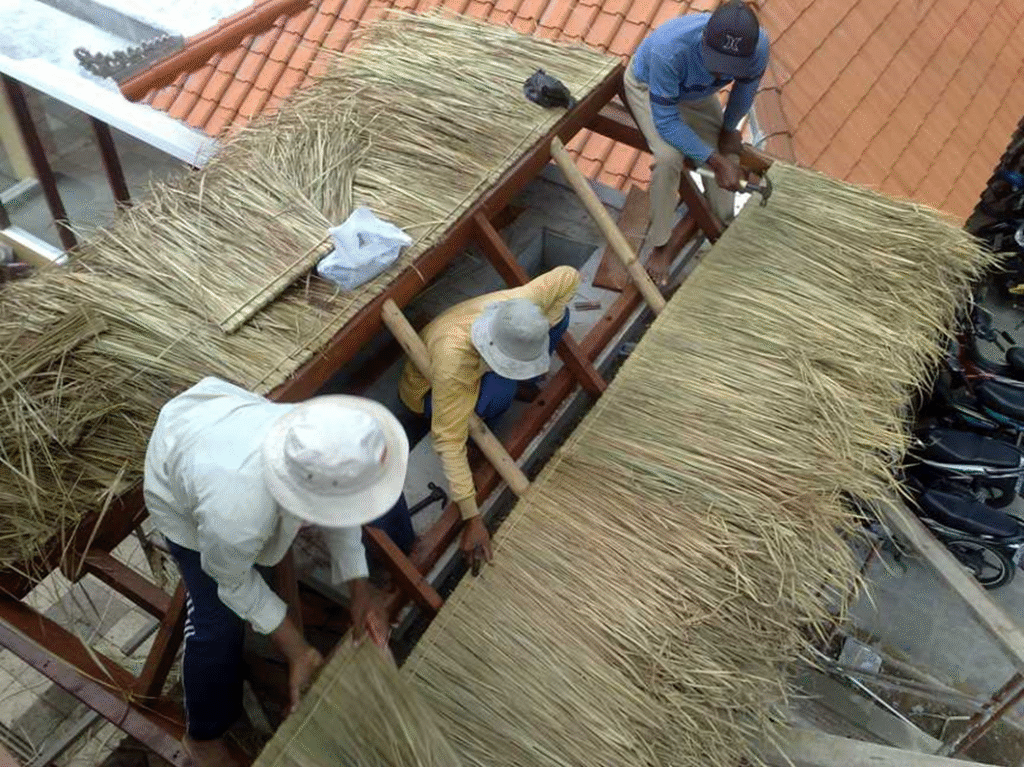
Photo by author
The entrance gate of Ubud Green Resort Villa, designed by the author, after completion with ridge tiles to ward off evil spirits.
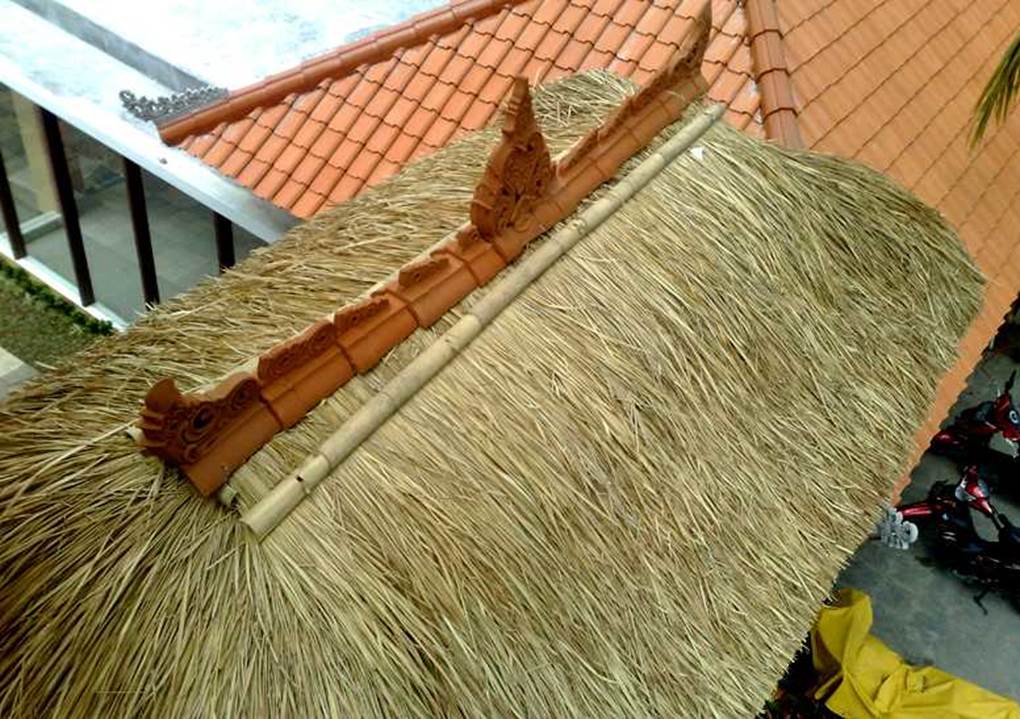
Photo by author
A resort with alang-alang roofs in the Sanur area of Bali.
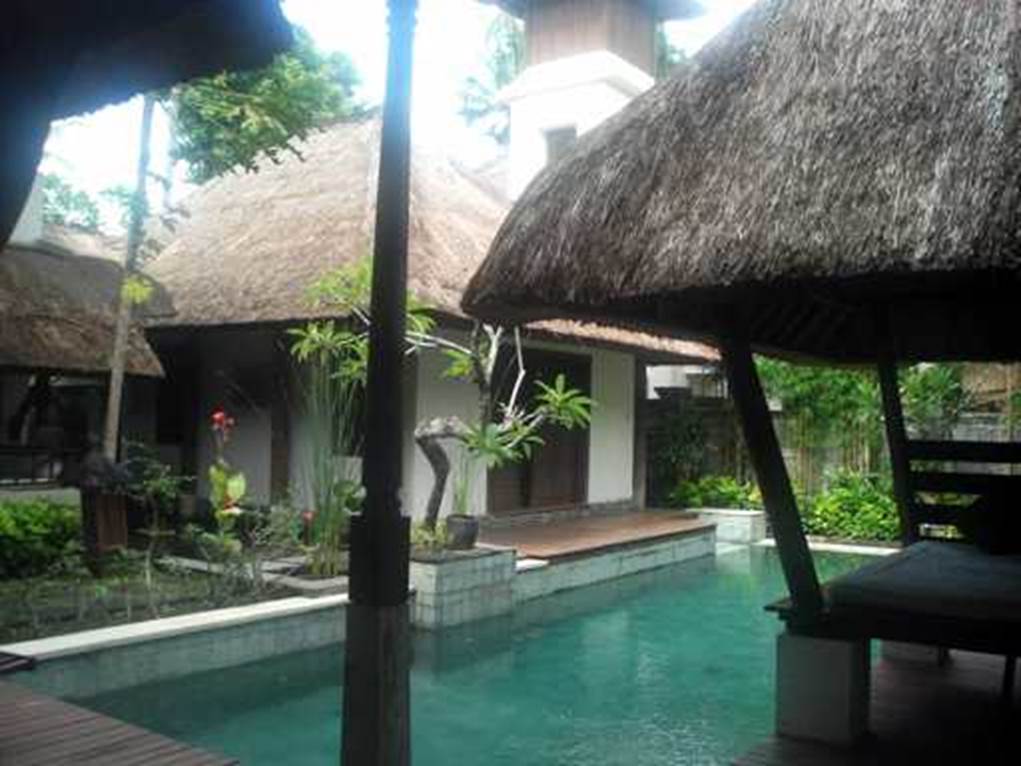
Photo by author
Tiles are place on ridge to ward off evil spirits.

Photo by author
Making a conical roof
Preparatory work to shave the tip of the bamboo into a sharp angle and fit the apex.
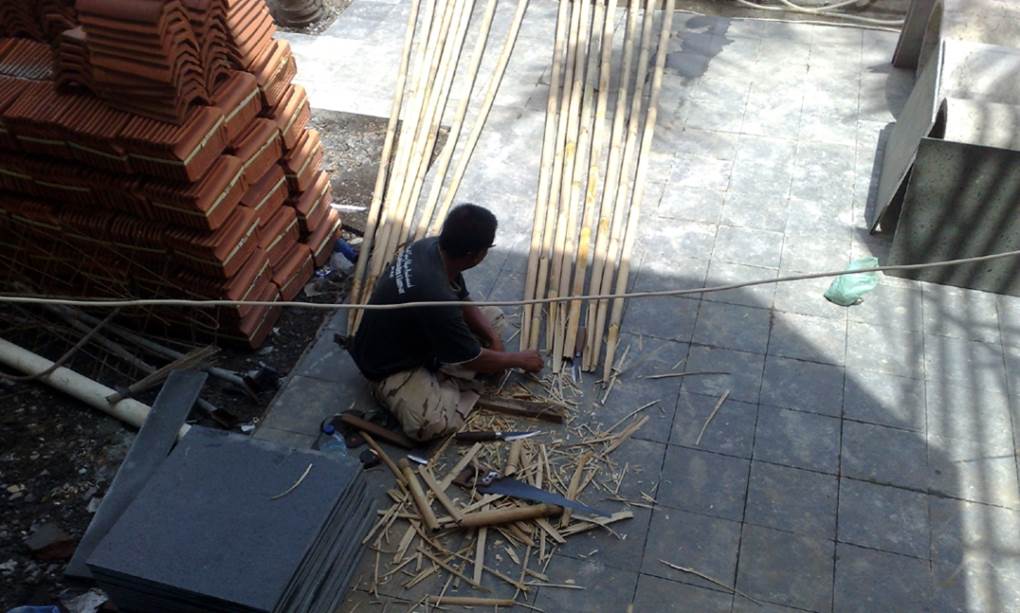
Photo by author
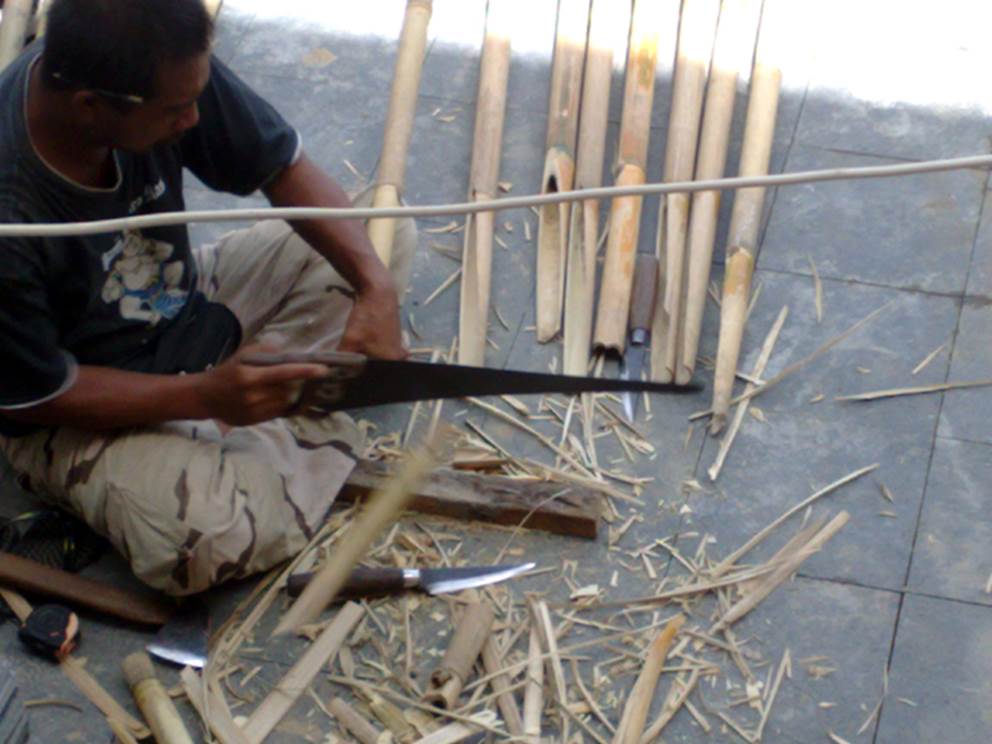
Photo by author
Working together to cover the conical alang-alang roof of the Firefly restaurant in Ubud Green Resort Villa, designed by the author.
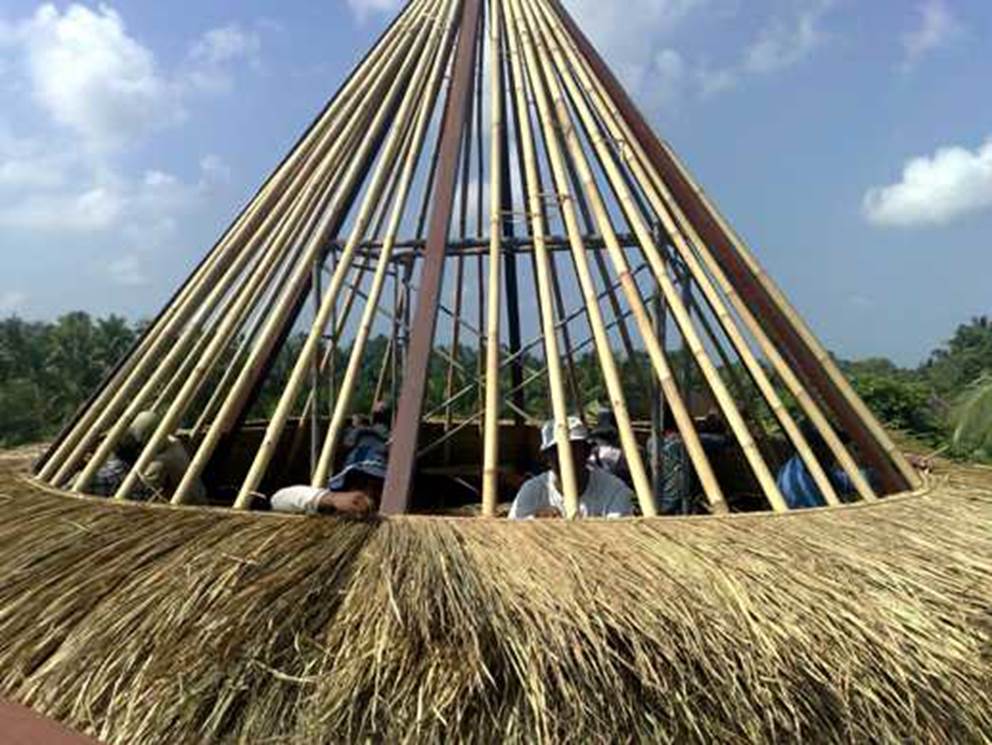
Photo by author
The inside of the completed cone-shaped alang alang.
The overlapping width is about 5cm, making it very dense.
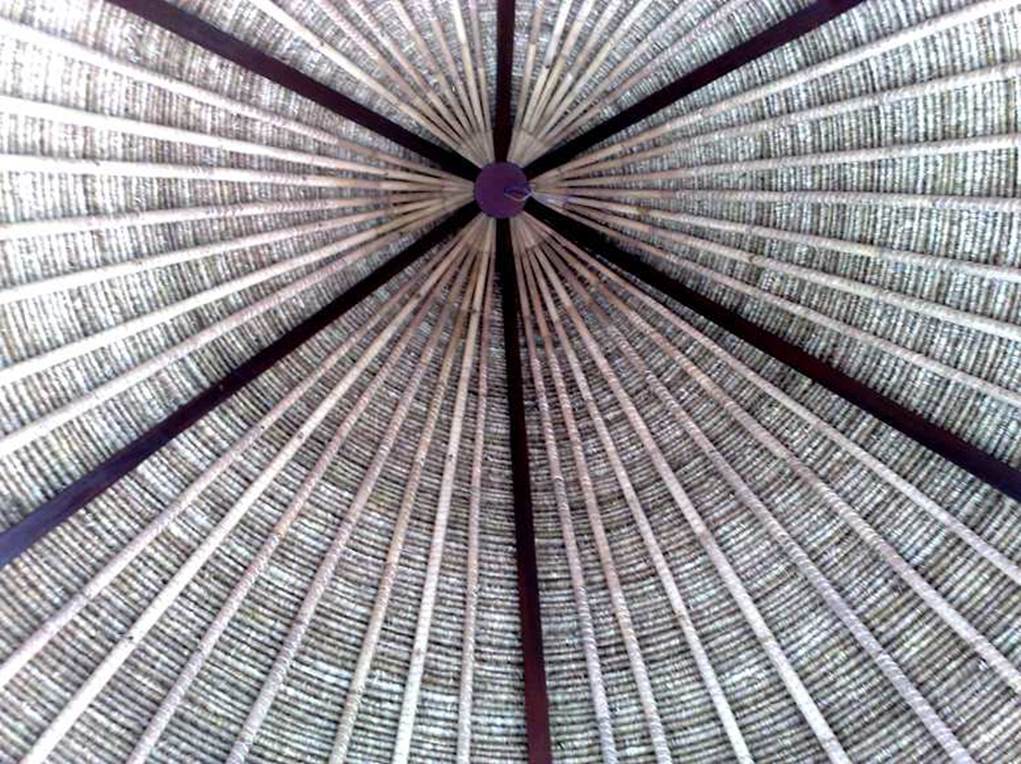
Photo by author
(5) Thatched roof
In Bali, it is used as a roofing material for the vaults of temples in relatively high altitudes of 600 m or more. It is often used on the roofs of buildings to create shade. Due to the effect of water retention after rain, moss and other plants begin to grow, and the roof and nature become one, creating a harmonious atmosphere.
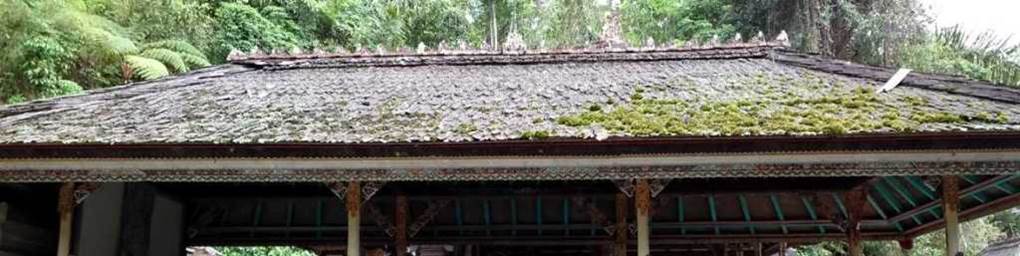
Photo by author
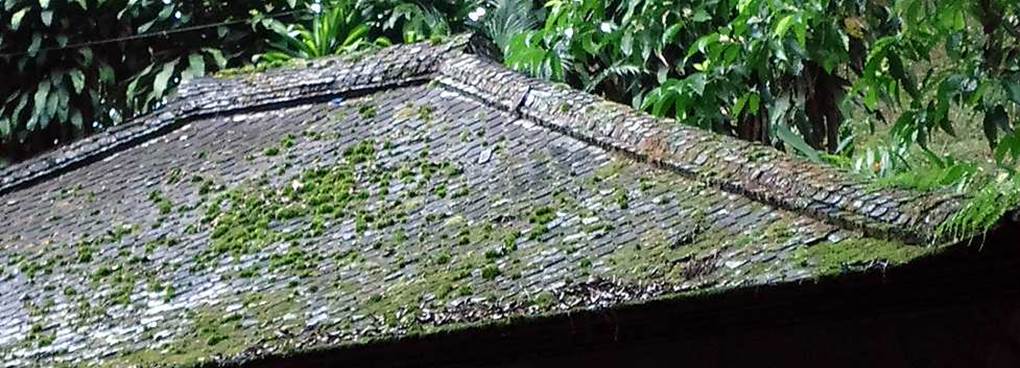
Photo by author

Photo by author
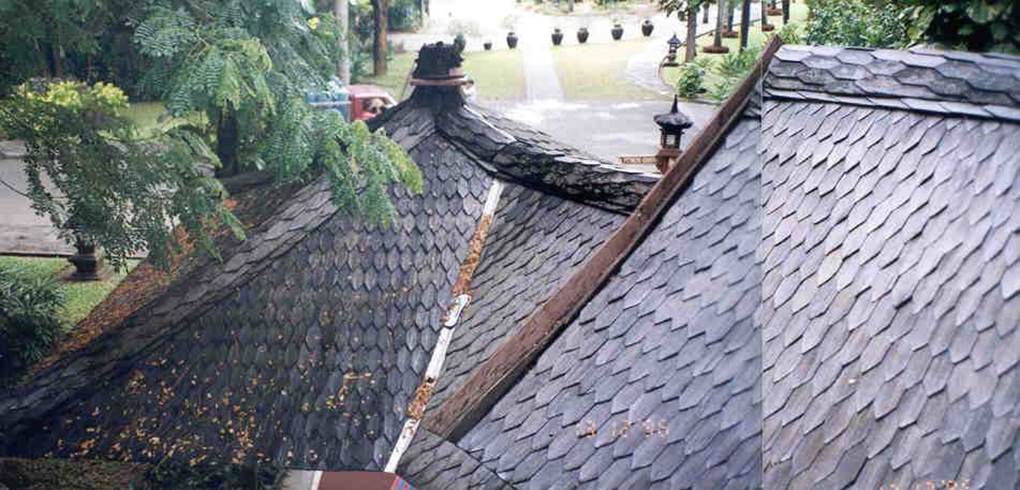
Photo by author
(6) Ivy-covered roof
In the 1980s, I discovered a house in Bali where the entire building was covered in ivy. This was a rare example of a house covered in ivy except for the windows and entrance, so I took a photo of it.
This is a good example of plants growing over man-made architecture, giving the upper hand to nature over man-made structures.

Photo by author
Door frames and doors
The people of Bali put a lot of energy into the entrance of their houses, turning them into works of art. There are many variations in design.
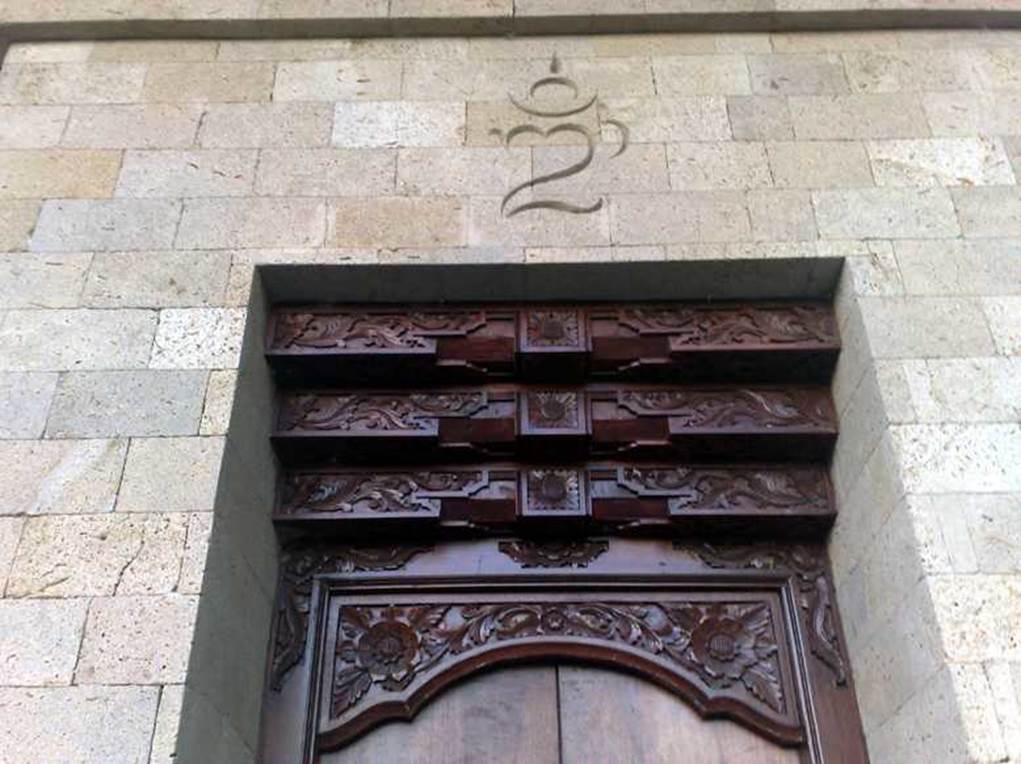
Photo by author
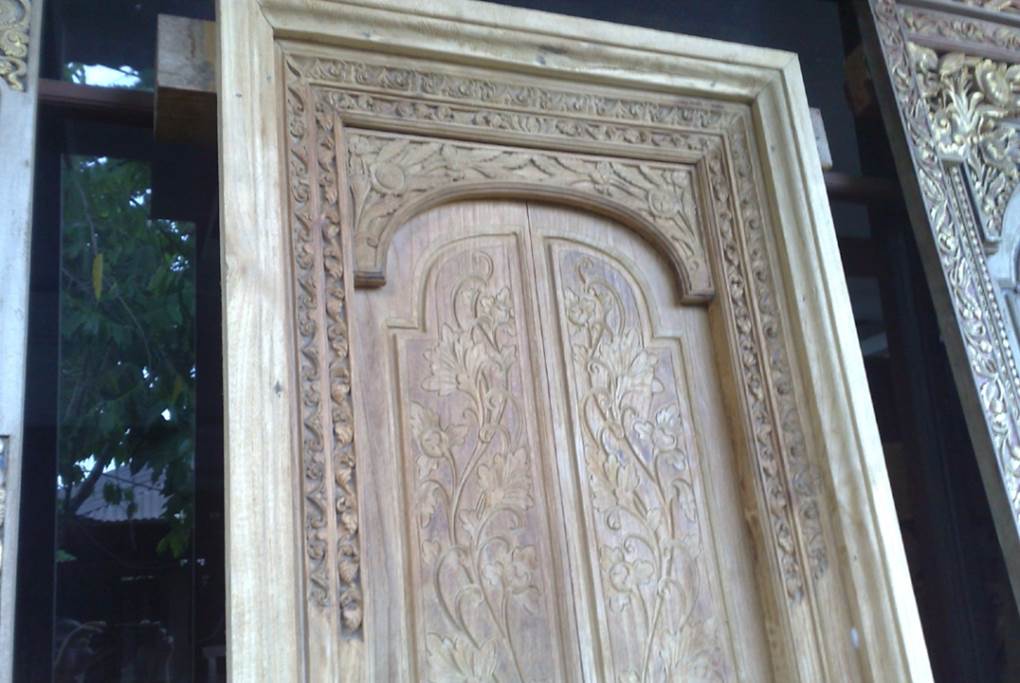
Photo by author
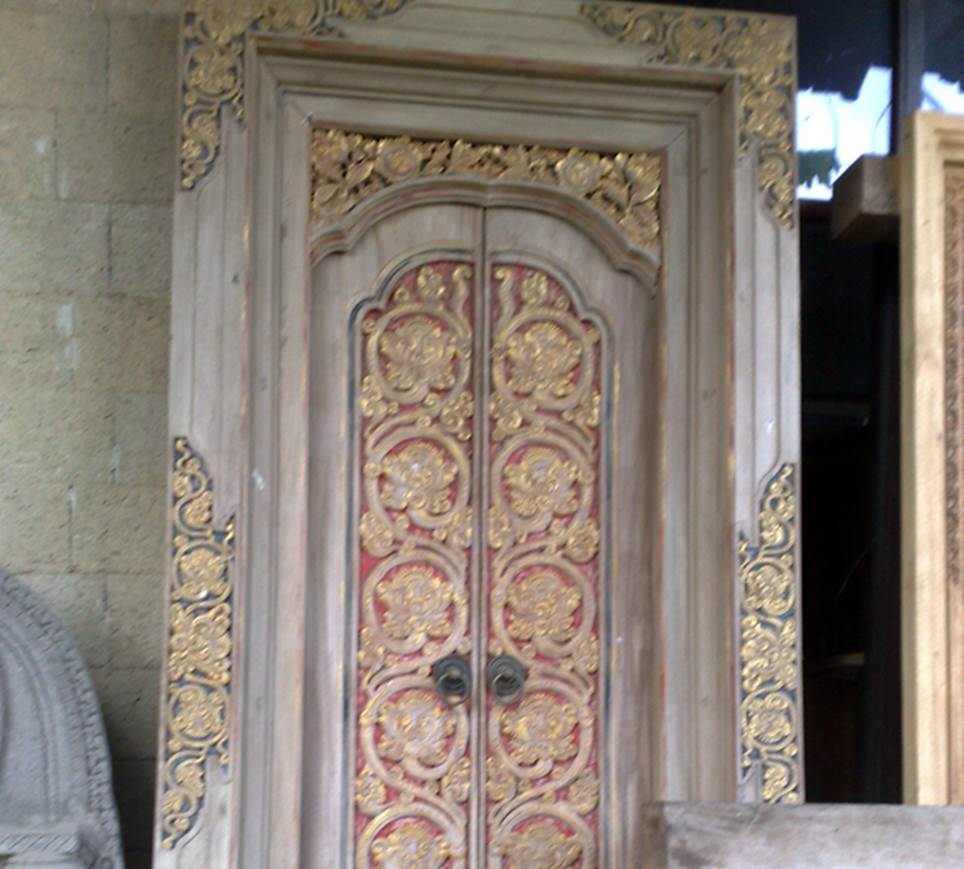
Photo by author
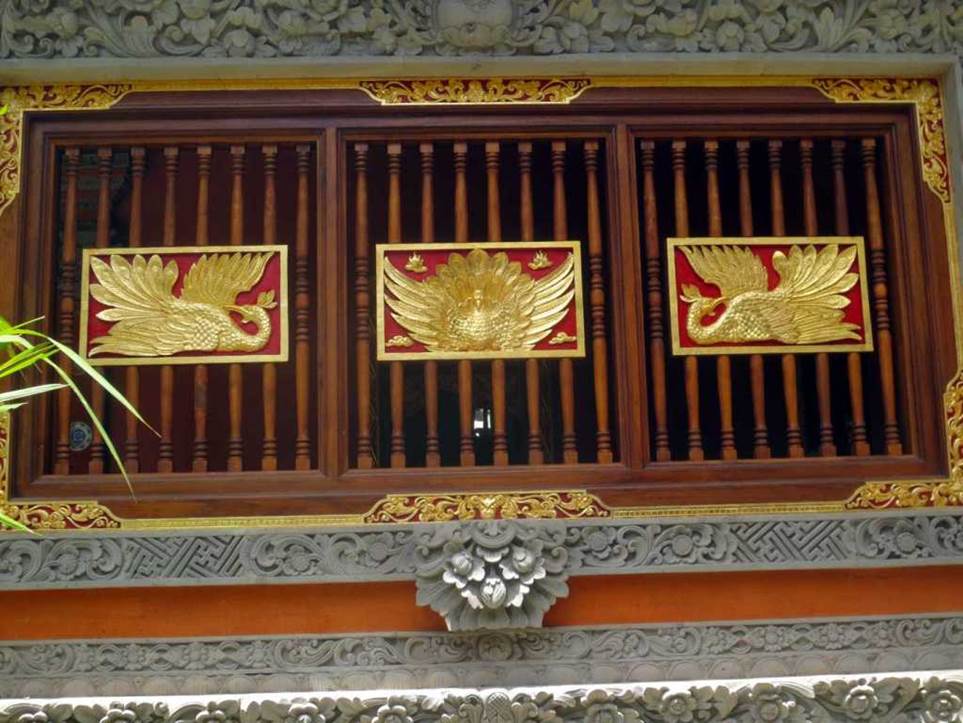
Photo by author
Bamboo Architecture
The first people to use bamboo in the context of modern architecture are thought to be Simon Velez, who designed many bamboo buildings in Colombia, influencing and popularizing bamboo architecture in Europe. His achievements in bamboo architecture also influenced Western designers living in Bali.
グリーン・スクールGreen School
The founding couple of the Green School in the suburbs of Ubud were strongly influenced by bamboo architecture that originated in Colombia, South America, and built a school using only bamboo as shown in the photo below.
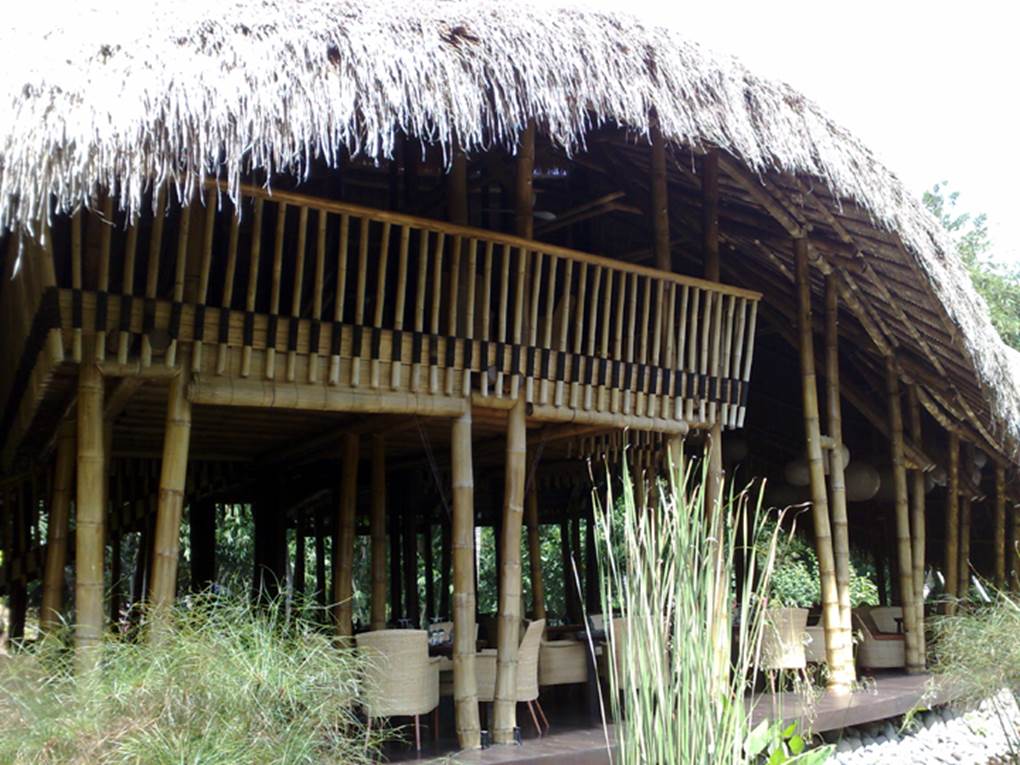
Photo by author
At Green School, bamboo is used for almost all building structure because it grows quickly and is environmentally friendly. Not only the spacious school building, but also the furniture, desks, chairs, and bridges over the river are all made of bamboo. The bamboo classrooms are supported only by bamboo poles, except for the main pillars, and have an open atmosphere with good ventilation, and no air conditioning is required even when it is hot.
The unique and beautiful design of the flowing curves attracted attention from all over the world and became popular. When I visited, it was just after completion and I was able to see it, but after that, there were restrictions on visiting.
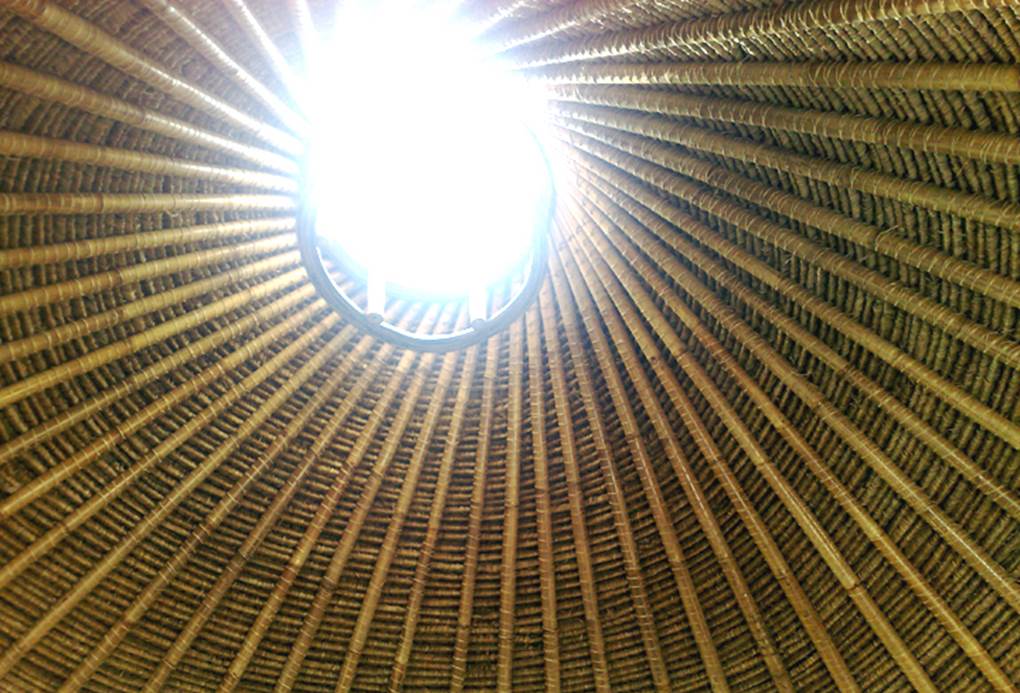
Photo by author
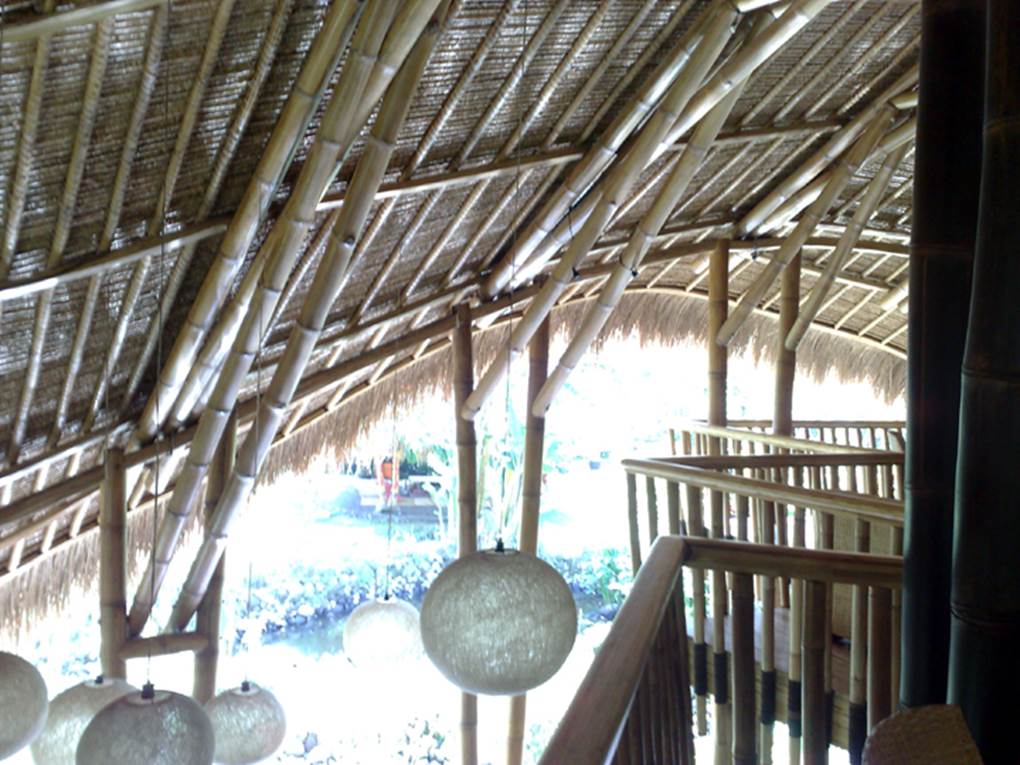
Photo by author
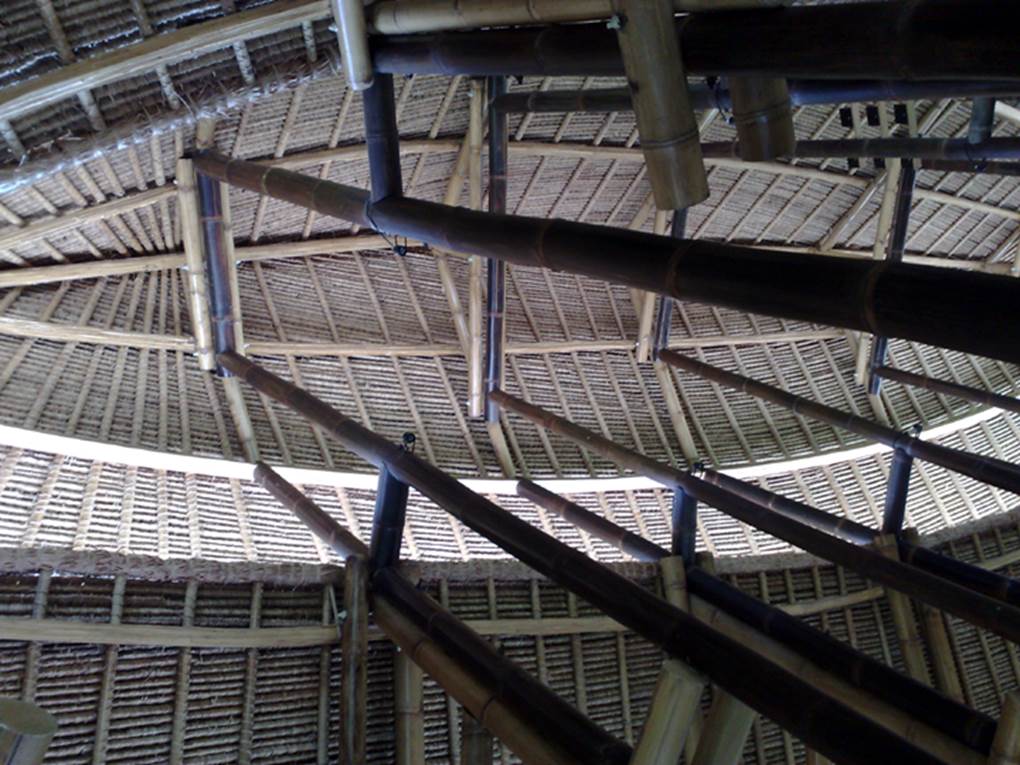
Photo by author
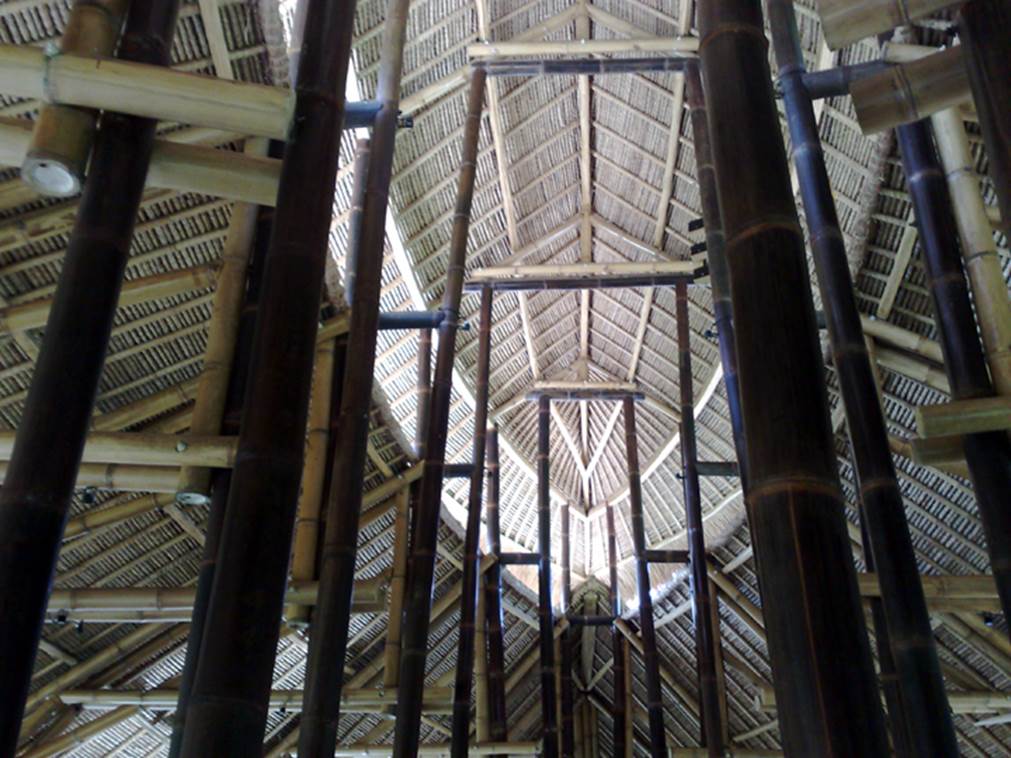
Photo by author
Bamboo is used as a building material only after it has been boiled in boiling water or smoked to remove the sugar contained in the bamboo and prevent it from harmful substances such as ants and insects. Bamboo wood is vulnerable to insects and fires, so it is a risk to use it for large public spaces.
Bamboo architecture restaurant in the middle of a rice field.
A restaurant in the southern outskirts of Ubud, with pillars and beams entirely made of bamboo.
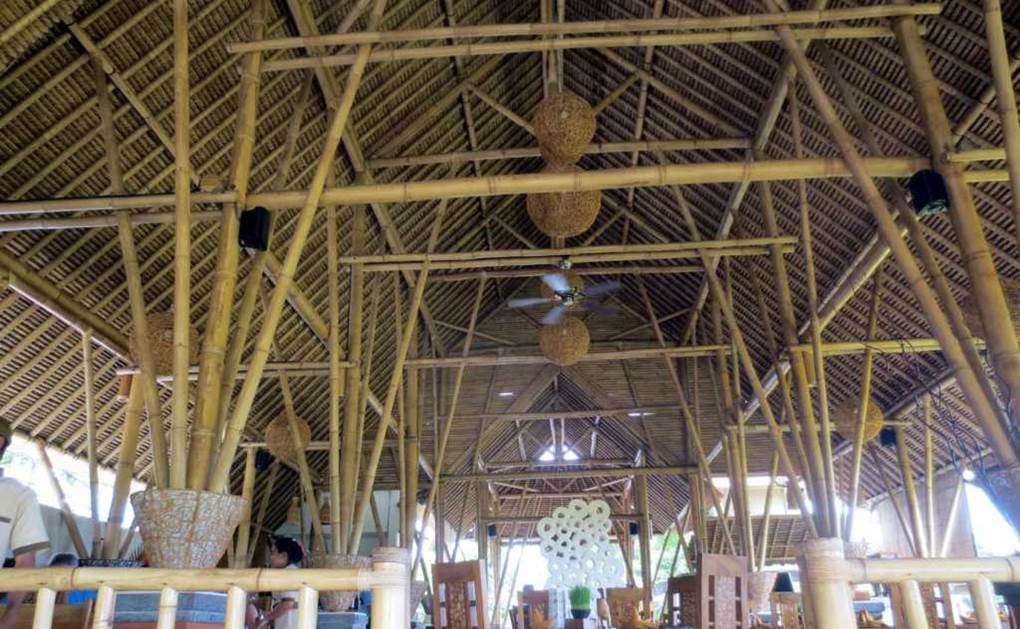
Photo by author
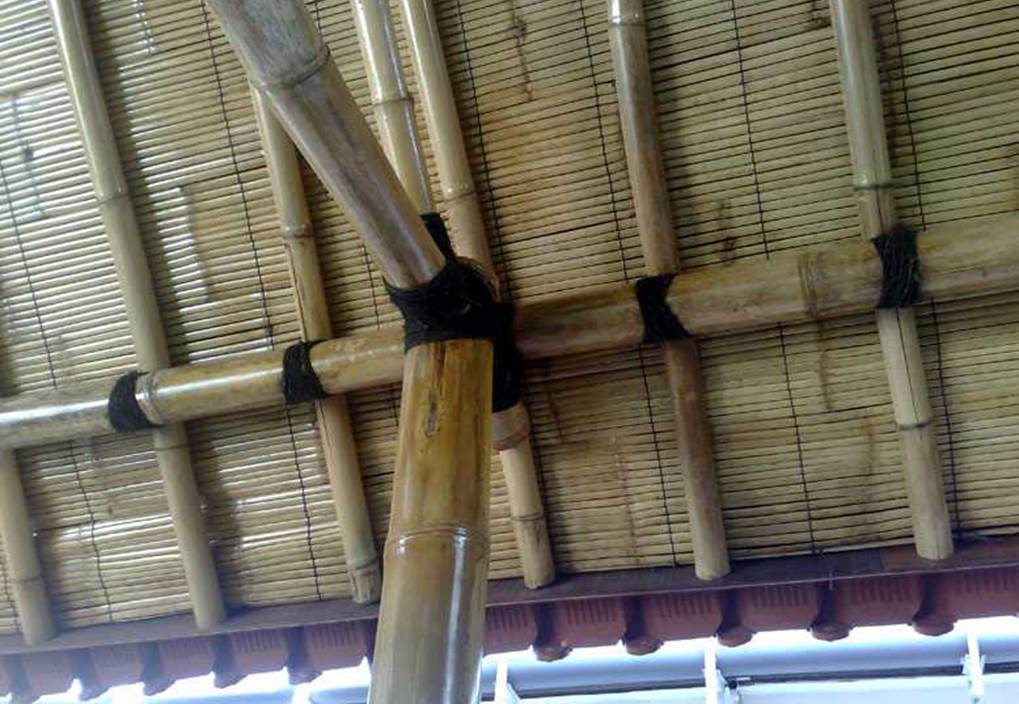
Photo by author
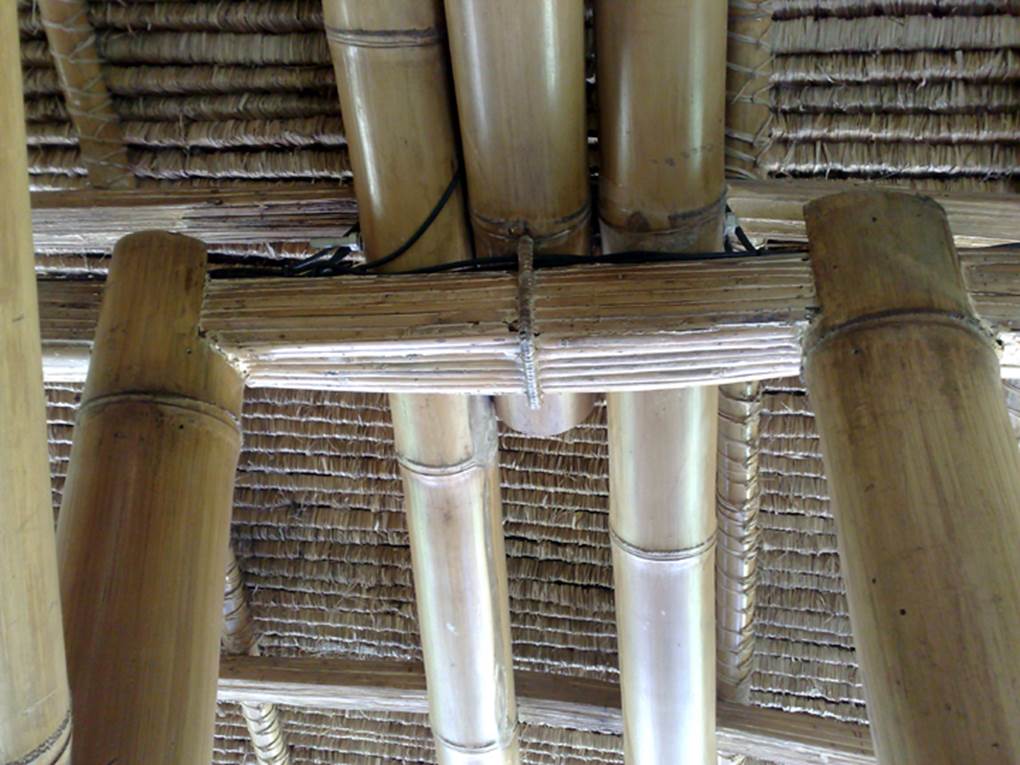
Photo by author
Bamboo furniture in bamboo restaurant
I discovered a restaurant in the jungle near Ubud that was made entirely of bamboo! It left a strong impression on me, so I’d like to share some photos with you.
The entrance hall and reception hall made entirely of bamboo.
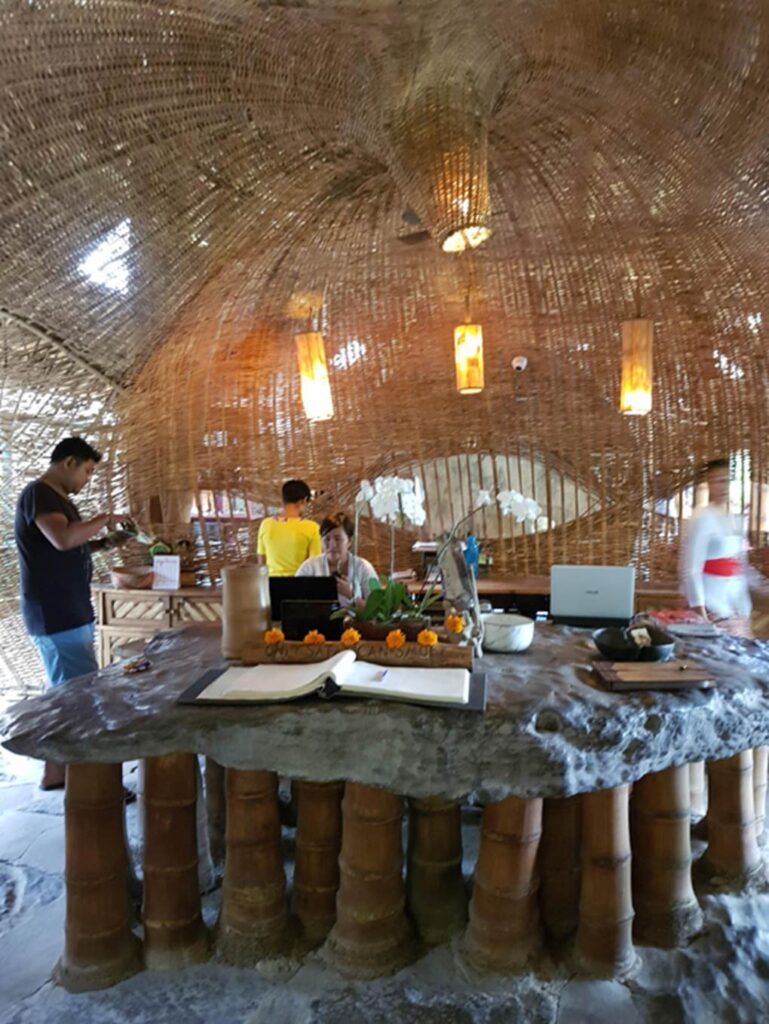
Photo by author
Dining table made of Bamboo.
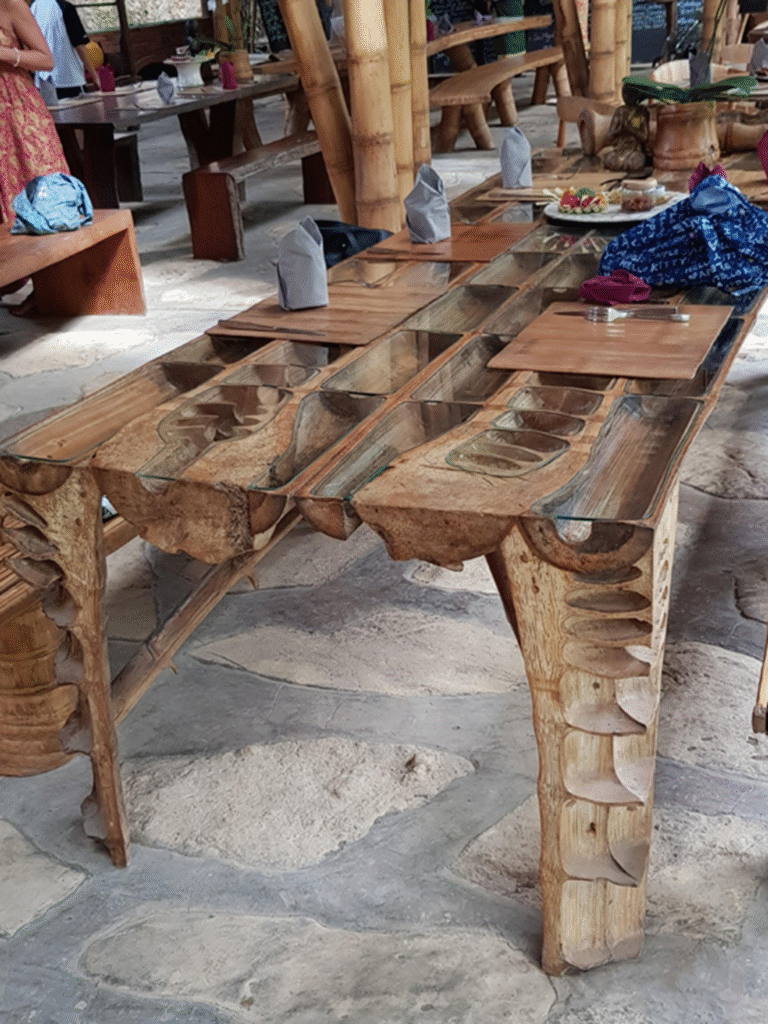
Photo by author
The bamboo is split to reveal the inside, allowing visitors to enjoy the natural shapes through the glass.
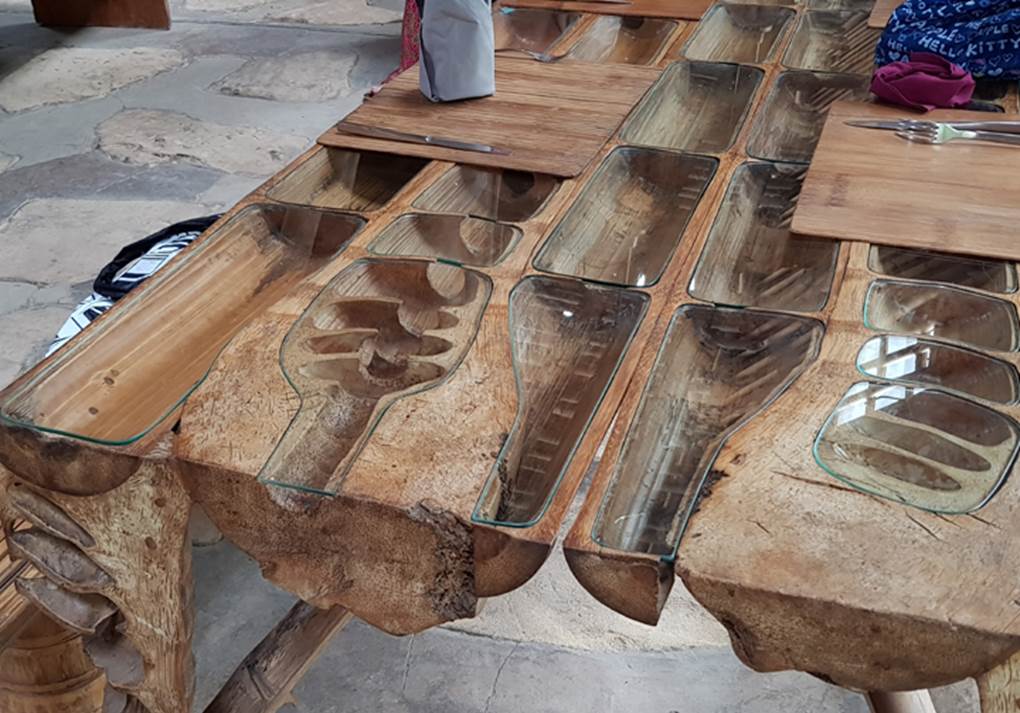
Photo by author
Bamboo sculptures in an all bamboo restaurant in Ubud.
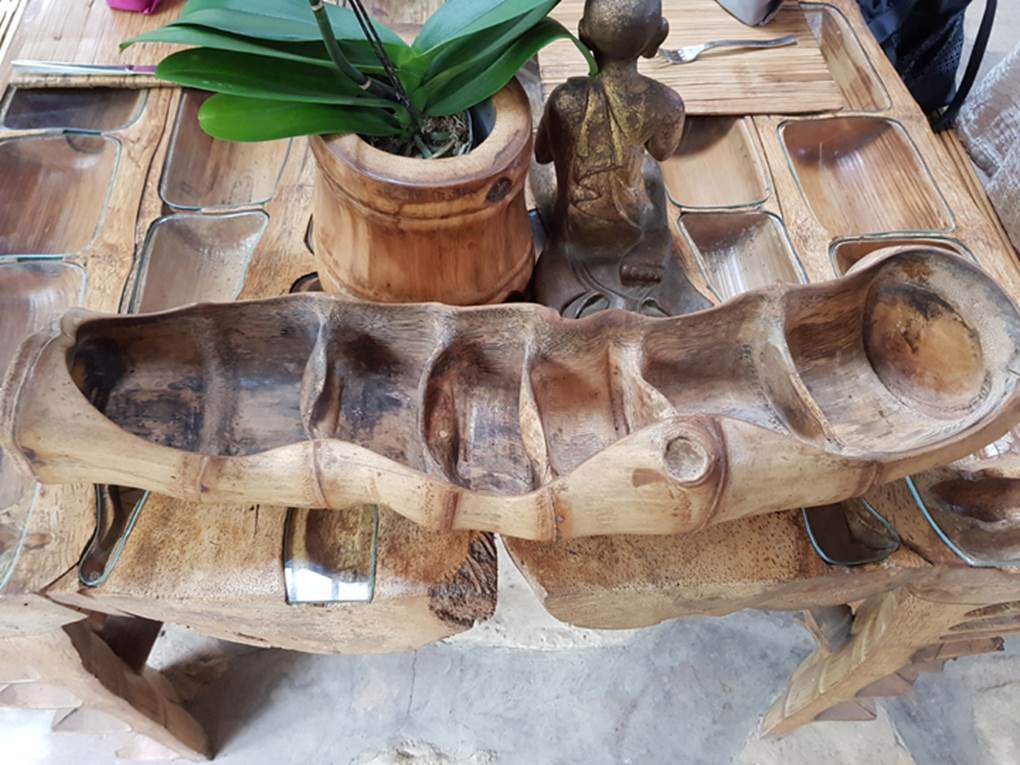
Photo by author
The glass ceiling of the washroom is shaded with reed stalks.
This is the Nehan spa at Ubud Green Resort Villa, designed by the author.

Photo by author
All Photos by author