JAP | ENG
Around Bali #6/10
Building Materials #1
Local production for local consumption
When observing the building materials used in Bali, what is surprising is that even now in the 21st century, the island remains committed to using local building materials and has continued to use them for many years.
Most of these natural materials are sourced from within this 5,500 km2 island, with the exception of some imported from other Indonesian islands. It has been able to keep the CO2 emissions generated by transporting from remote areas low.
Therefore, it can be said to be a typical example of a Island whose so-called carbon footprint can be kept low compared to other countries and regions around the world.
1 Bricks
Adobe bricks (Sun dried red bricks)
In Bali, it is common to use handmade sun-dried red bricks for the walls of traditional buildings. This building material is abundant in Bali.
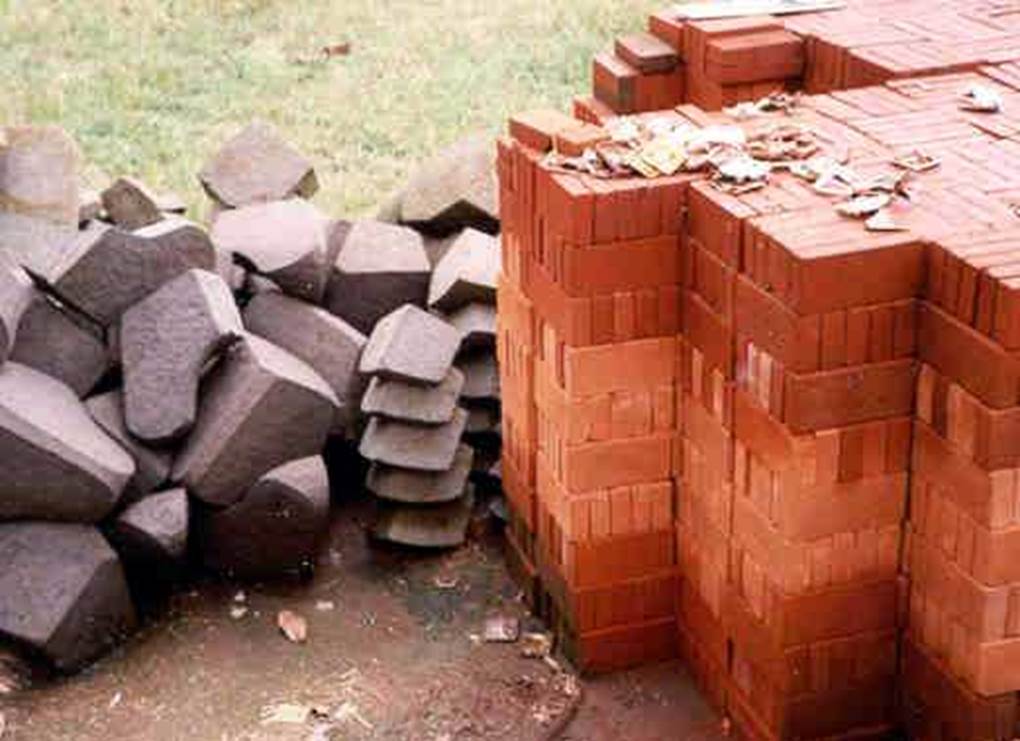
Photo by author
Sun-dried bricks are used for building exterior walls and fences. The bricks are soaked in water, each brick is carefully rubbed against each other, the muddy part that comes out of the brick is used as an adhesive, and each brick is stacked and integrated to form a wall.
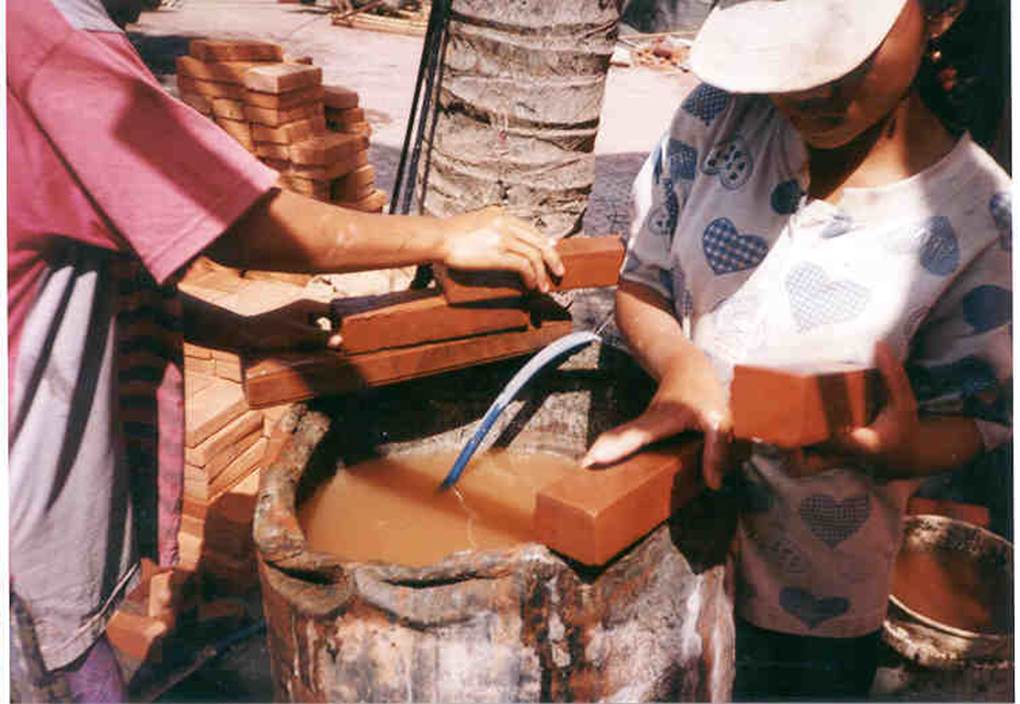
Photo by author

Photo by author
In this case, cement is not used as an adhesive. There is no need to use cement and mortar for finishing, and only the wall material itself can be used to create a sense of unity in the finish.
In other words, the material itself is also a finishing material.
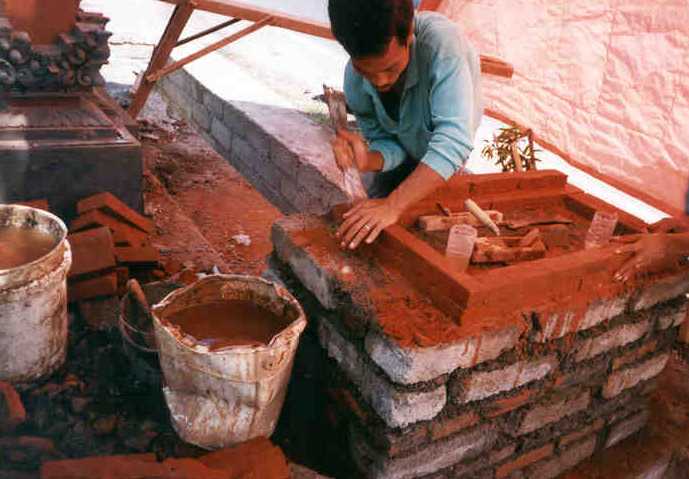
Photo by author
As the years pass after the building is completed, moss grows naturally on the surface of the red brick, and minerals and plants become one.
Resort Hotel Ubud Green designed by the author
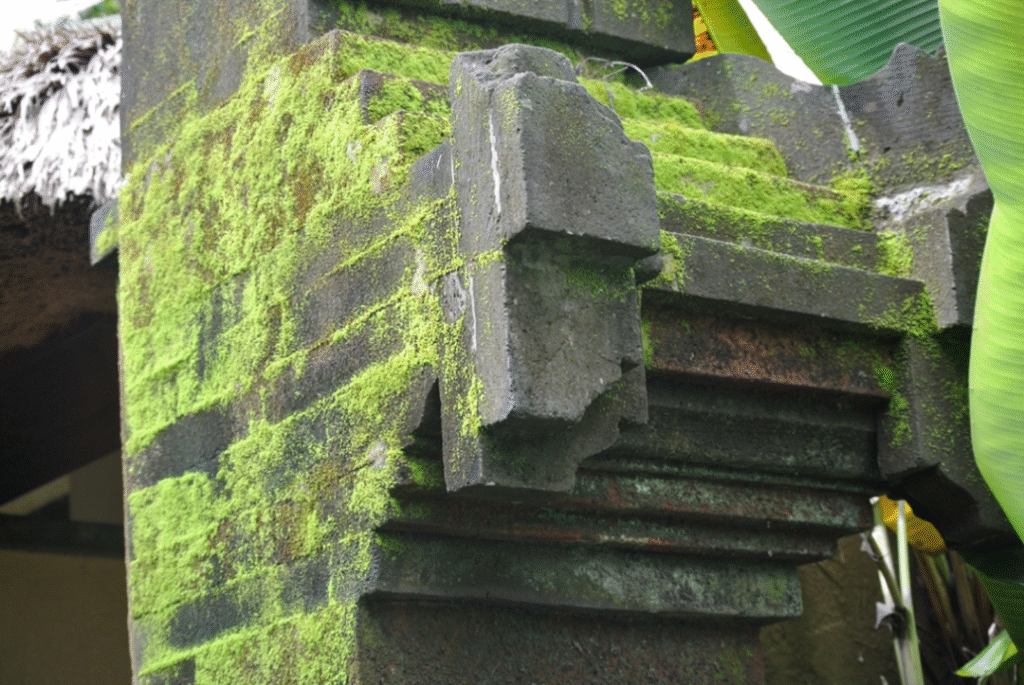
Photo by author
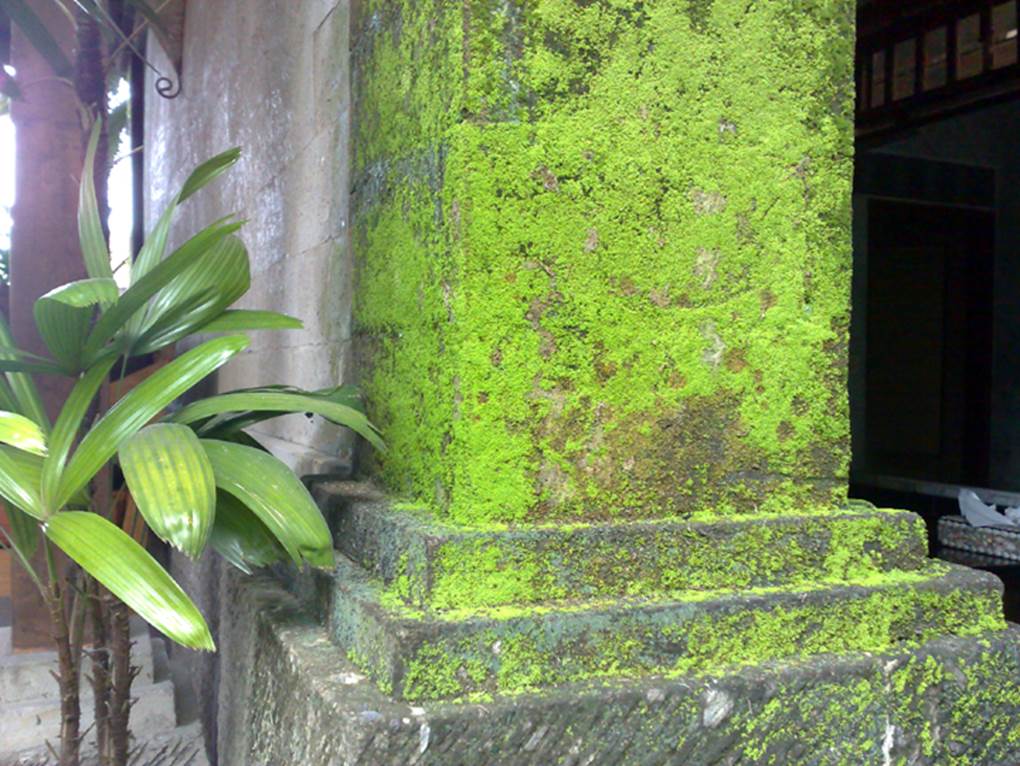
Photo by author
Plants grows, architecture disappears, and plants becomes dominant.
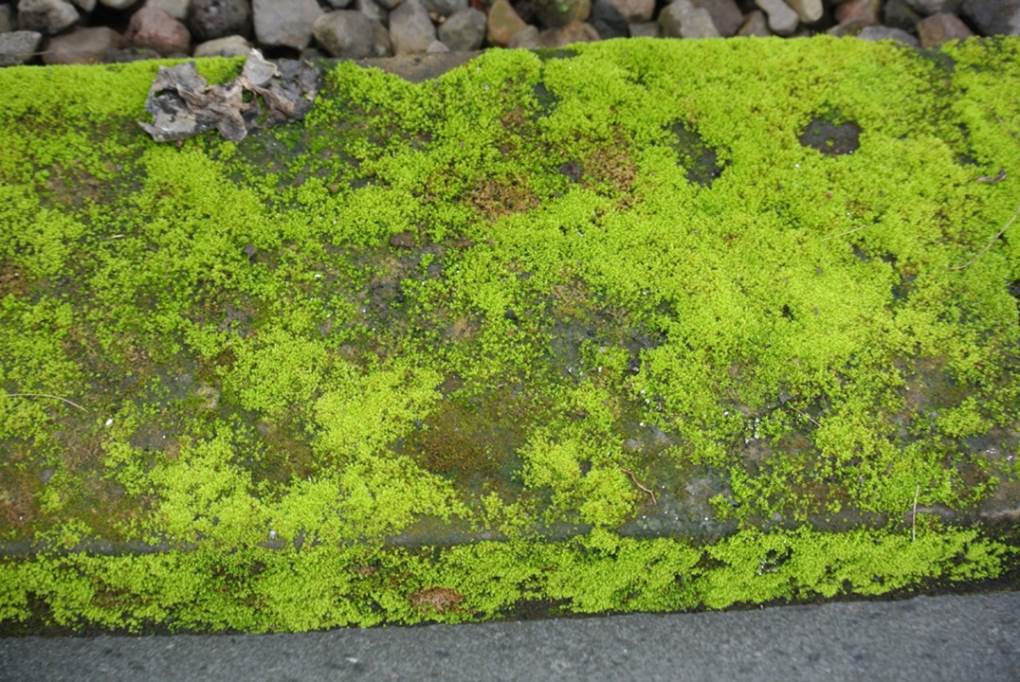
Photo by author
Sun-dried red bricks can also be stacked in tiers to create a slope and used as roofing material. Plants can find a home on top of them and generate and release oxygen.
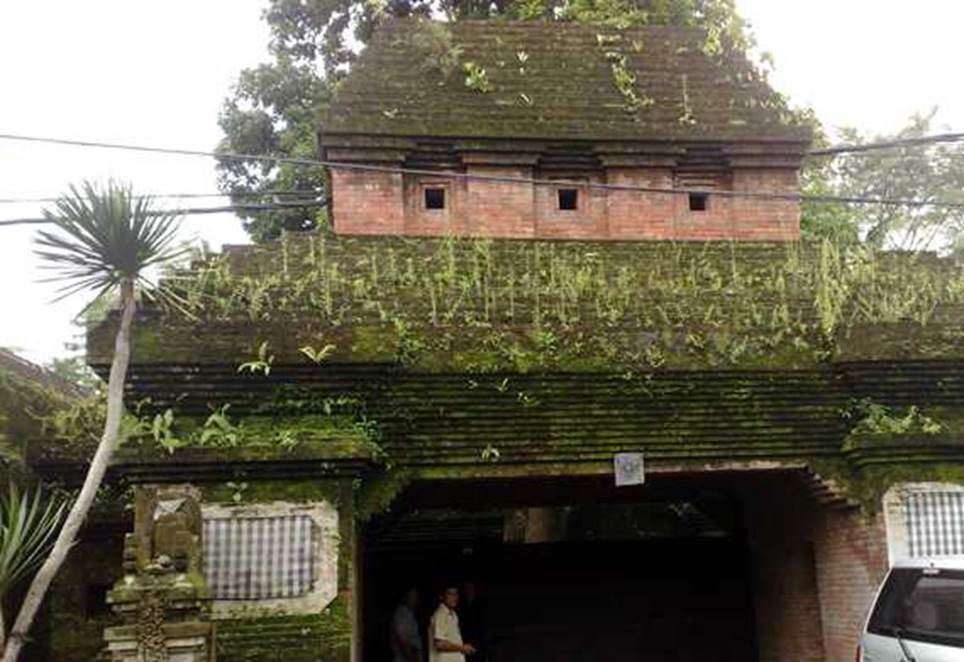
Photo by author
The sun-dried red bricks have a high water retention effect, which is good for the growth of parasitic plants.
This completes the architecture that coexists with plants.
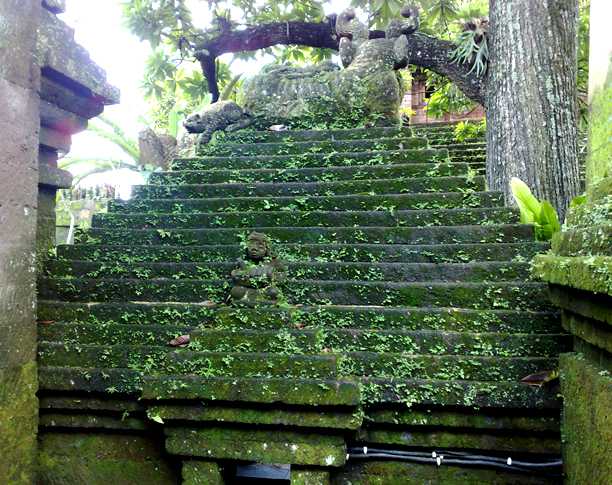
Photo by author
2 Stone
① BATU KALI (River Stone), crushed stone blocks
It is widely used in building foundations, retaining walls, exterior wall and fence foundations. They are all hand-dug.
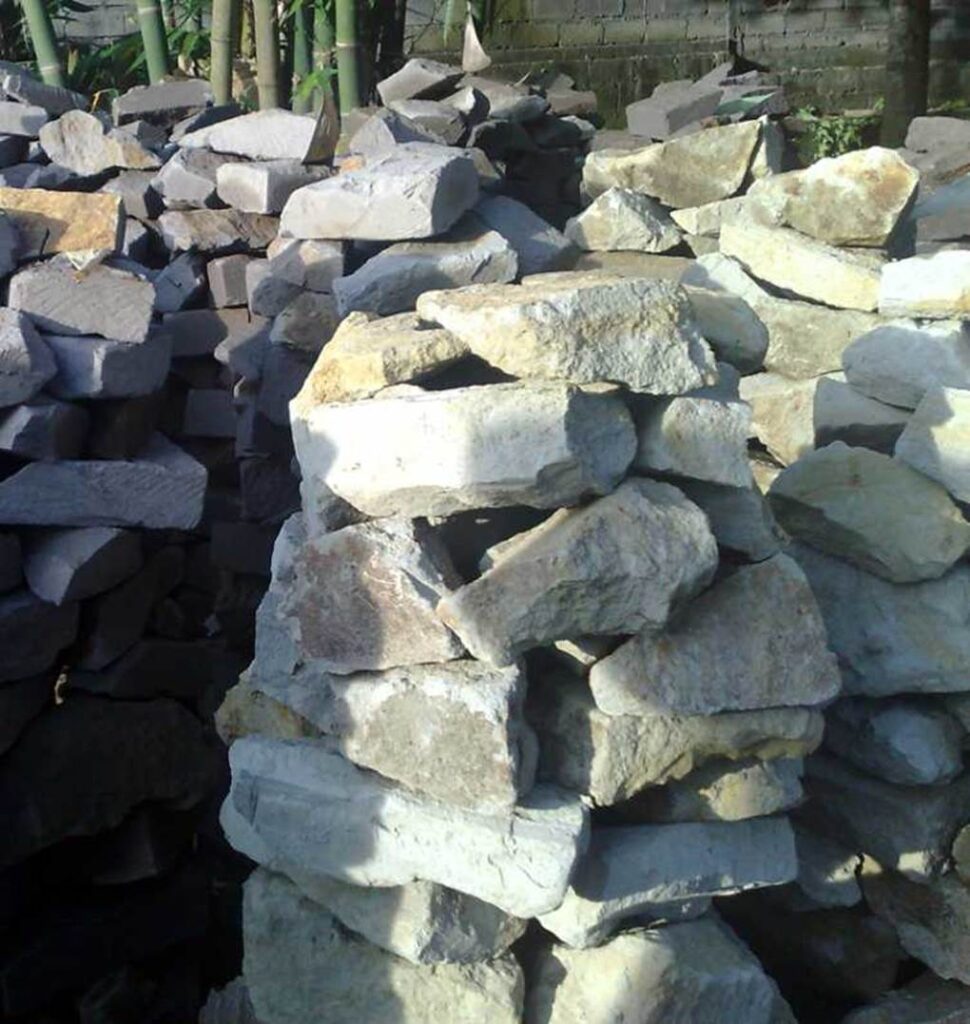
Photo by author
All earthwork and foundation work is done by hand, without use of any machinery. Construction will be carried out with minimal use of electricity and diesel fuel.
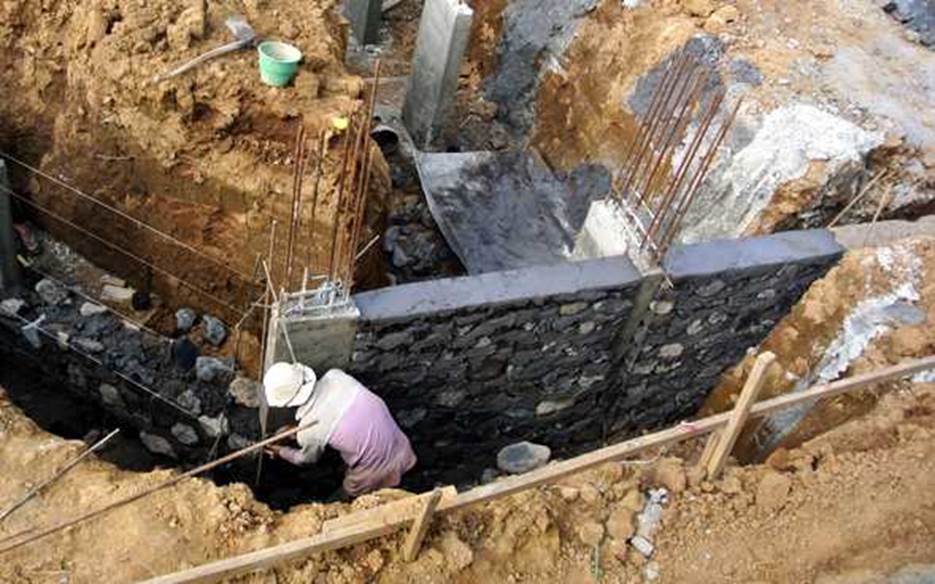
Photo by author
② ANDESITE STONE
A type of andesite
The name Andesit comes from the name of a volcanic rock found in the Andes Mountains. It is the second hardest stone after marble.
Marble is not suitable for the exterior walls of buildings and exterior floors due to weathering and deterioration caused by sunlight.
Therefore, andesite is suitable for paving walkways, which do not require the same hardness as granite.
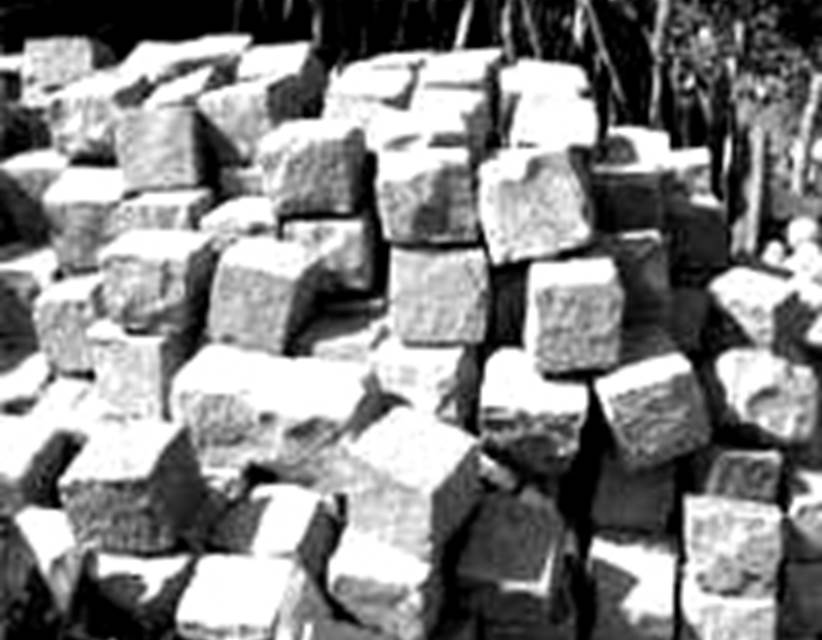
Photo by author
When the surface of Andesit is polished, there are variations in shades and colors as shown in the photo below.
It is useful for creating an atmosphere, such as on exterior floors.
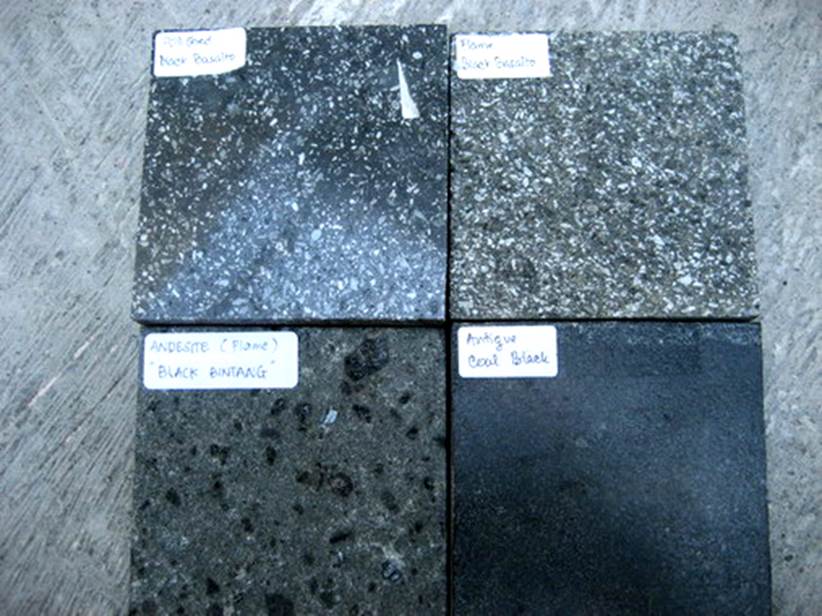
Photo by author
Examples of andesit applications.
With granite, it is difficult to achieve such a soft touch.
Entrance to Ubud Green, an Resort Hotel designed by the author.
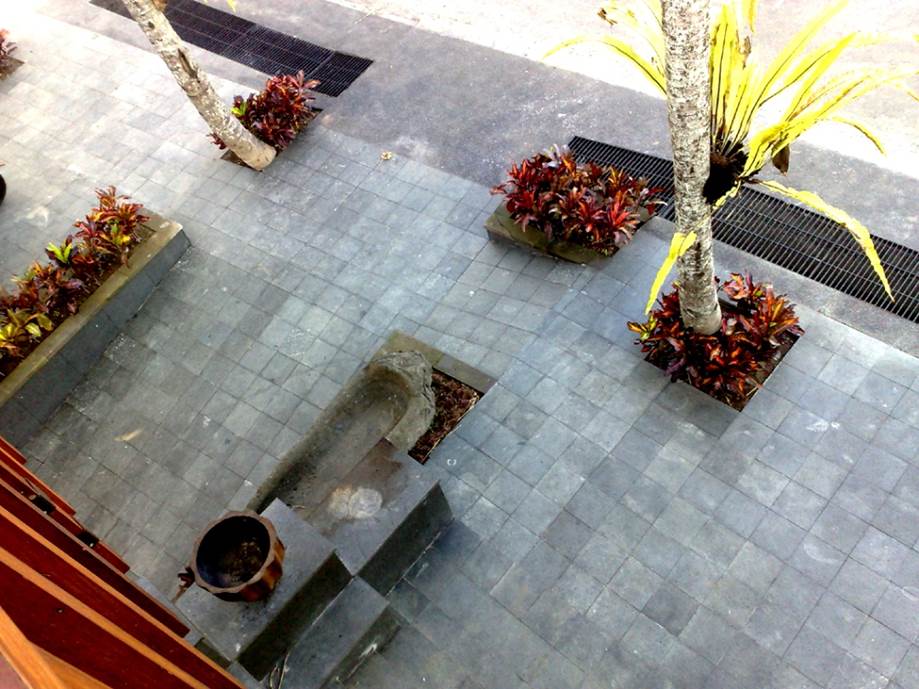
Photo by author
Examples of applications of andesit stones.
By adding bumps and grooves, it is possible to create a three-dimensional texture and express a soft touch on the wall surface.
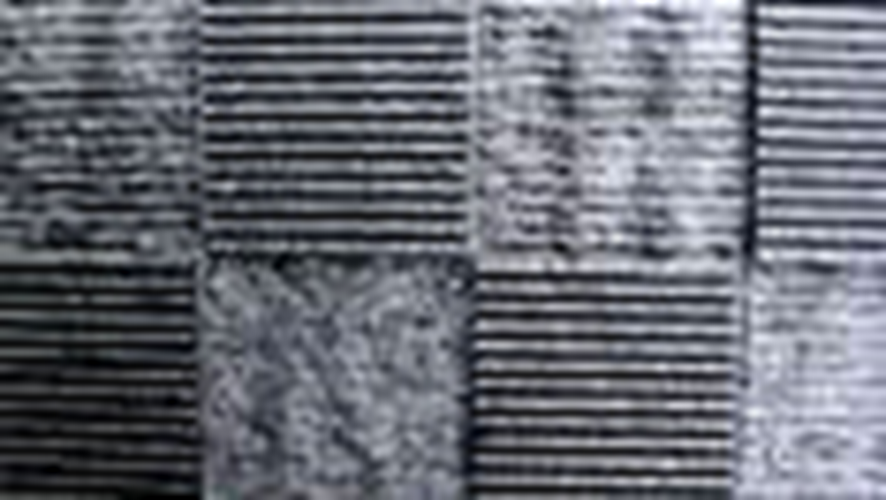
Photo by author
③ Pallas stone (gray color)
A type of tuff, which are rocks that are solidified by the accumulation of volcanic ash caused by volcanic eruptions.
In Bali, water flowing from the mountains carves away at the earth, cutting out mudstone-like stones exposed in the riverbed.
I have seen it cut out by hand from a depth of about 5 meters at the riverbed.
In addition, it is carried to the surface by human power.
This mudstone stone, like wood or ice, can be cut into the desired size with a saw. It is used for the exterior walls and fences of buildings.
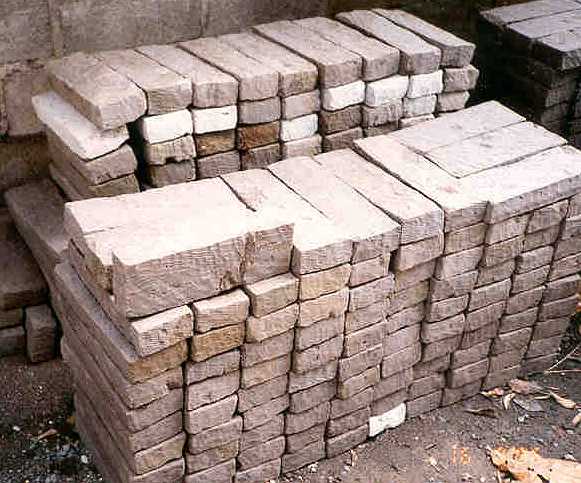
Pallas Stone Blocks, photo by author
After the blocks are stacked, the surface is scratched by hand using a kind of metal scrubbing brush to create a texture and make it look good on the eye.
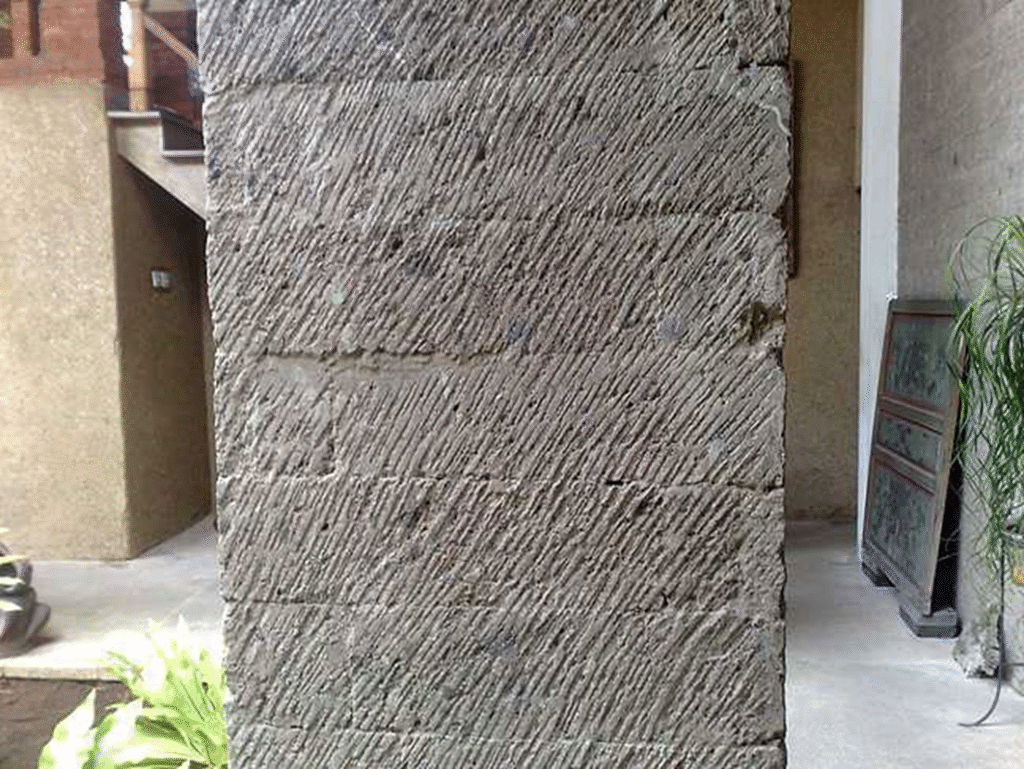
Pallas stone columns, walls photo by author
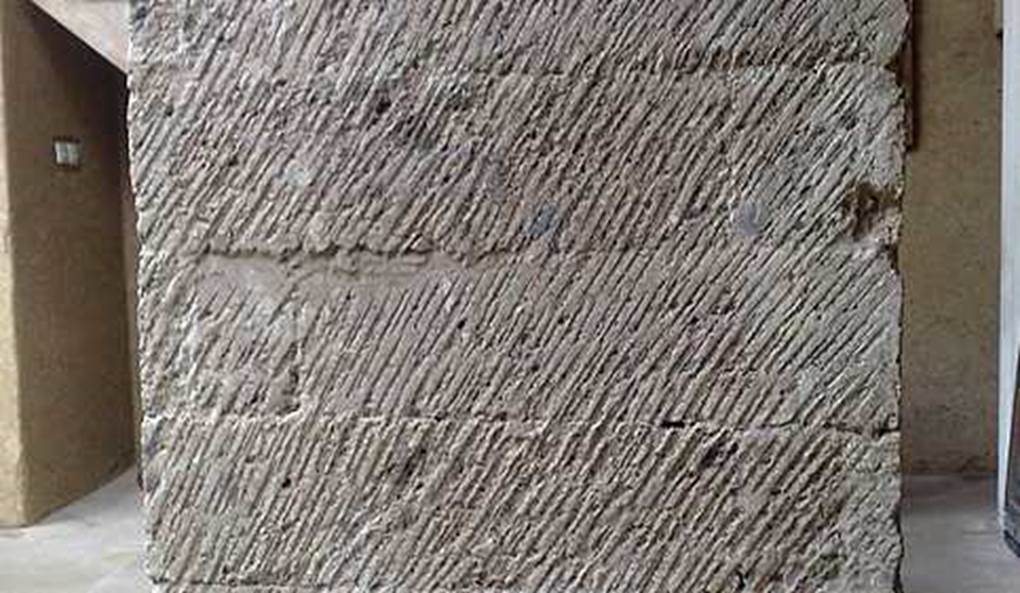
Pallas stone columns, walls photo by author
Pallas stone is easy to work with, so it is possible to create this kind of expression.
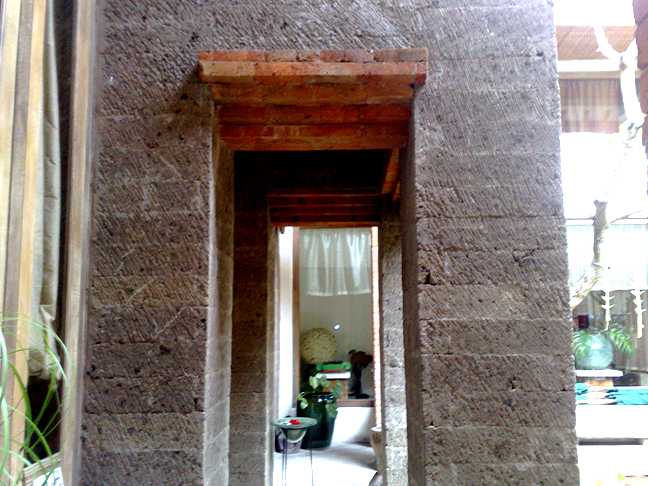
Photo by author
A number of masks made of pallas stone, which is easy to craft.
Failed works and unsold works are reused as part of the wall material.
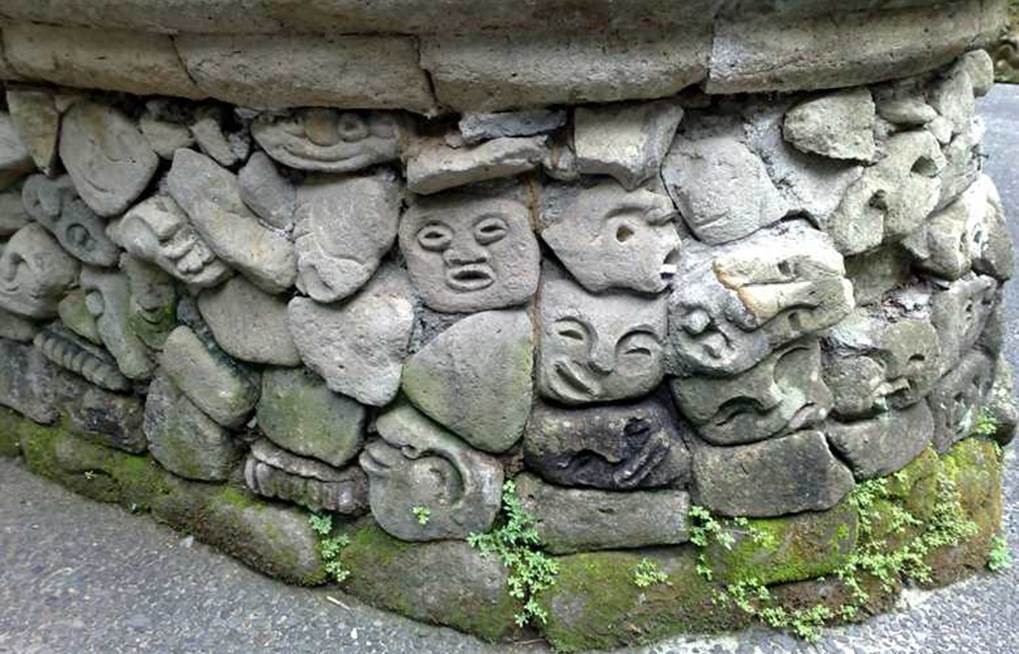
Photo by author
④ Pallas stone (white)
A type of limestone
This material is extracted from rocky mountains that are formed by the accumulation of sand, volcanic ash, clay, coral, and shells that were carried to the bottom of the sea.
It is easy to process and is used in Bali as a decorative material for walls and for carvings.
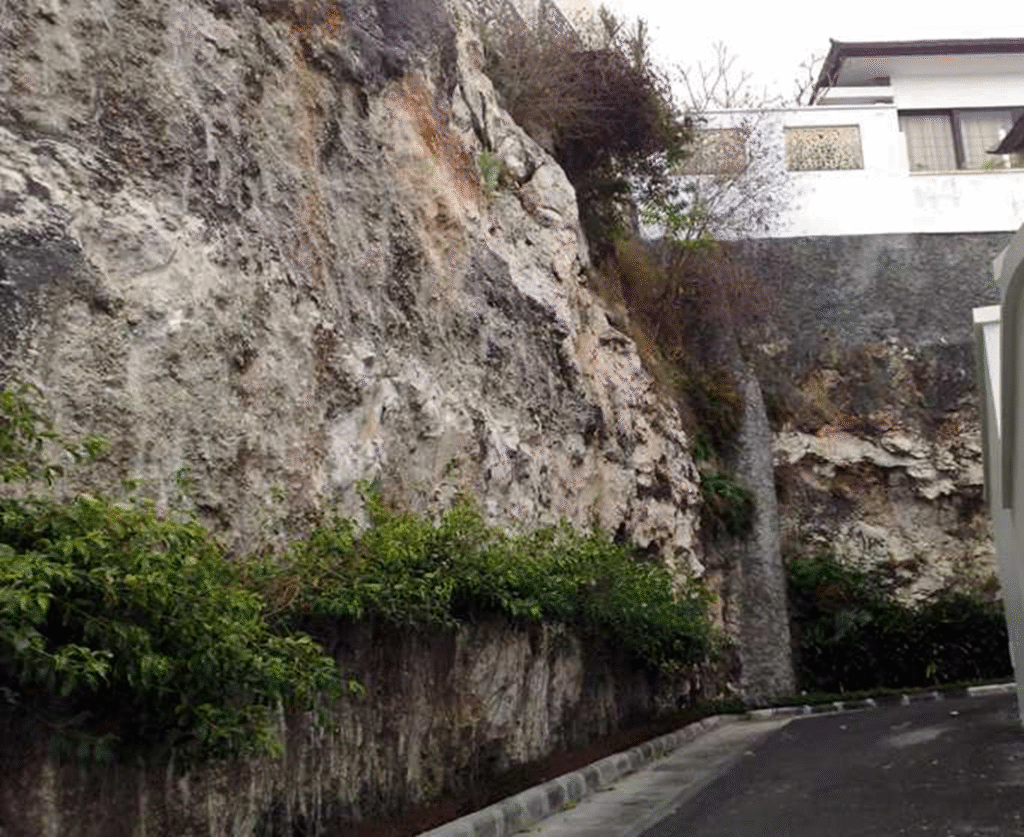
Photo by author
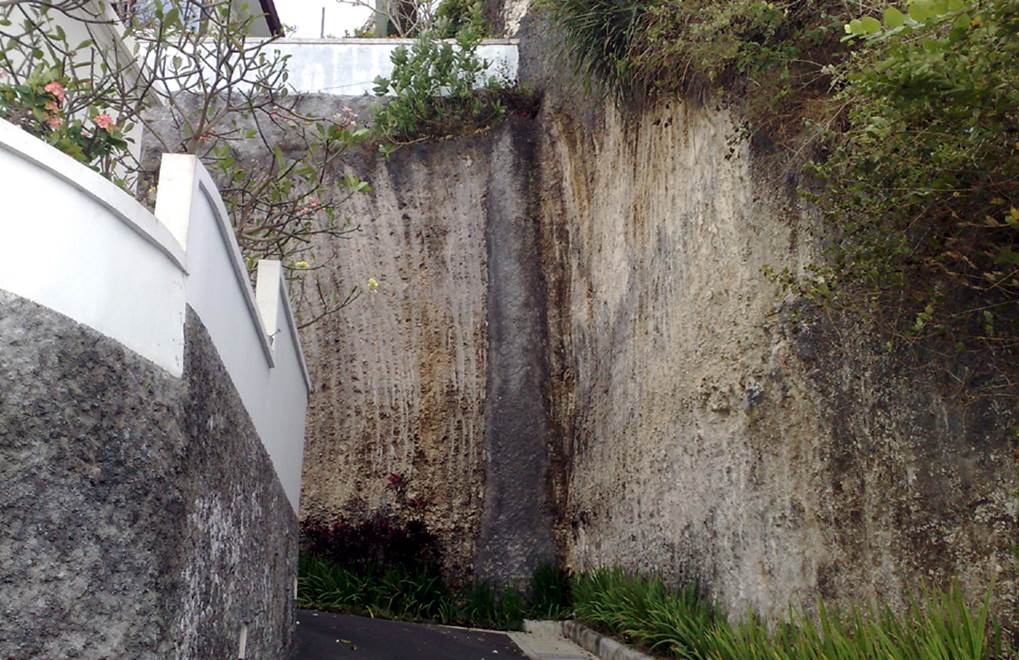
Photo by author
White Pallas stones are moulded one by one and stacked without gaps to create a decorative wall.
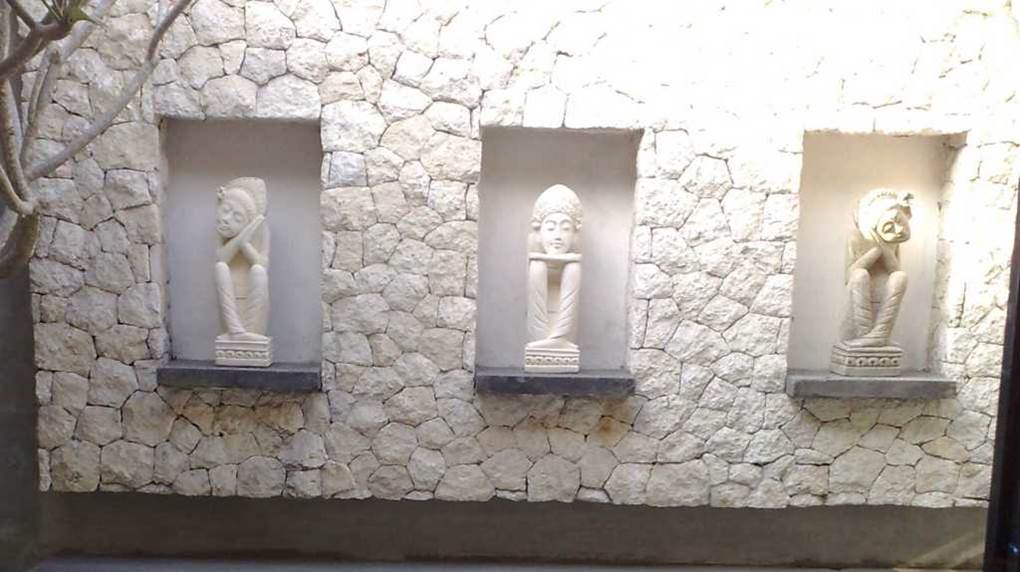
Photo by author
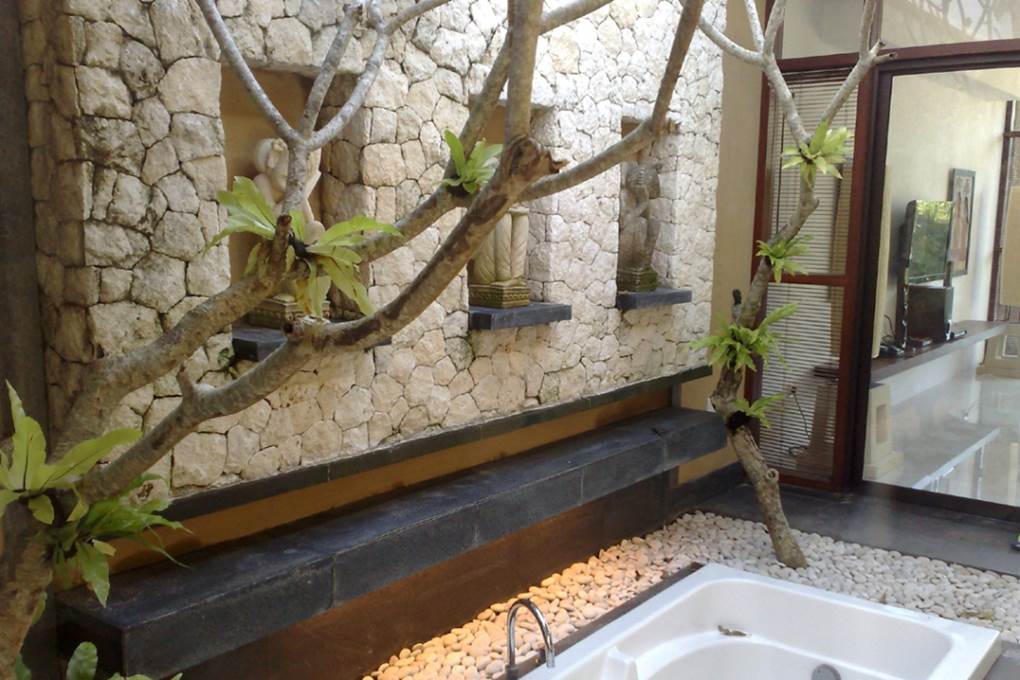
Photo by author
One by one, the craftsmen cut them into unequal scales polygons and combine them to create a wall surface with a rich texture.
It is a handiwork using traditional construction methods unique to Bali.
Resort Hotel Ubud Green designed by the author
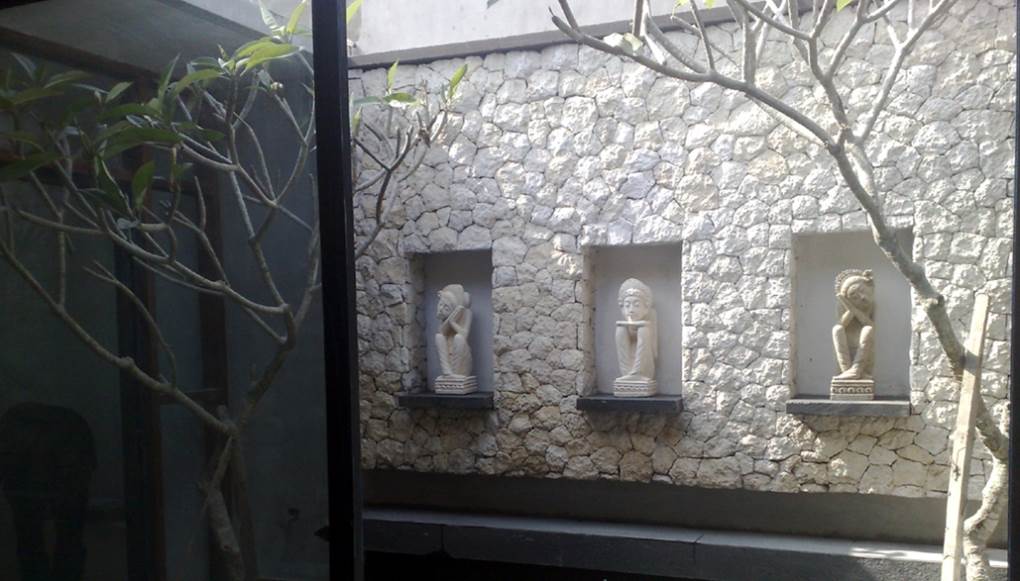
Photo by author
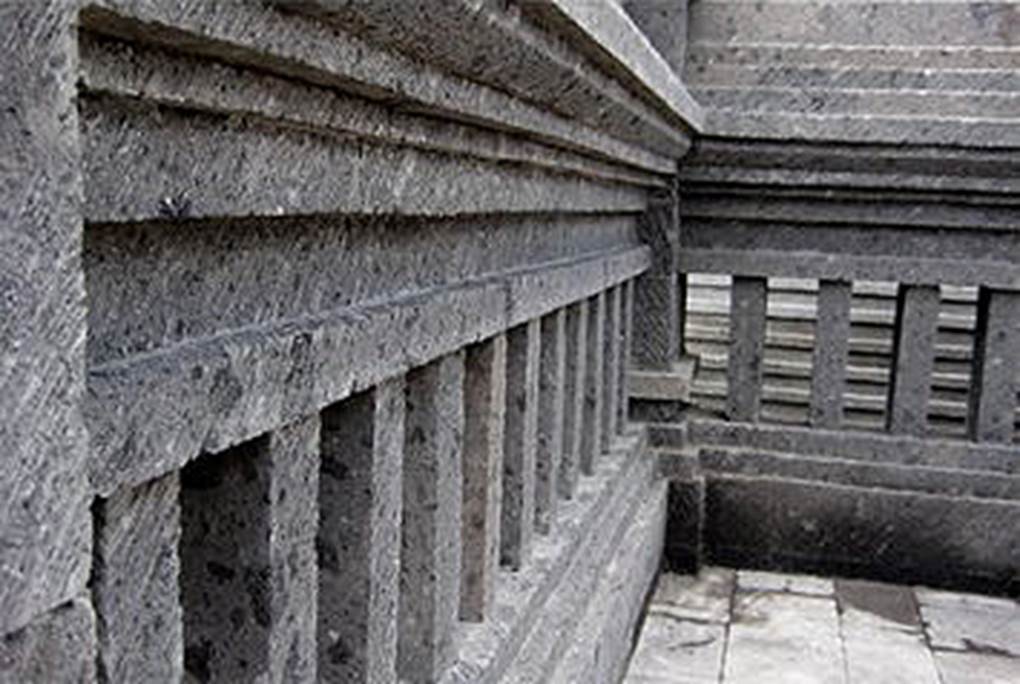
Photo by author
A Balinese craftsman who can’t write Chinese characters brilliantly carves the character “Nirvana” for the hotel’s spa facility.
Resort Hotel Ubud Green designed by the author
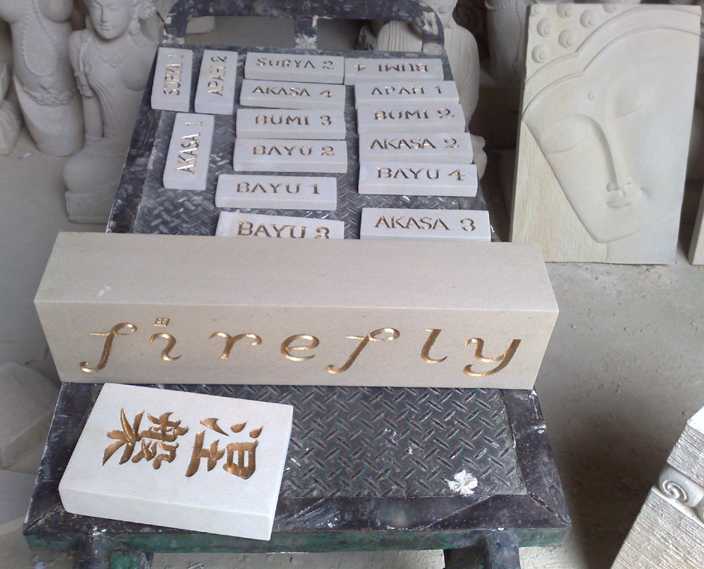
Photo by author
In the suburbs of Ubud, Bali, there are many stonework workshops.
There are several skilled stonemasons who are always dedicated to making stone statues and lithographs.
Lithographic engraving with the motif of the classic Indian story of Ramayana.
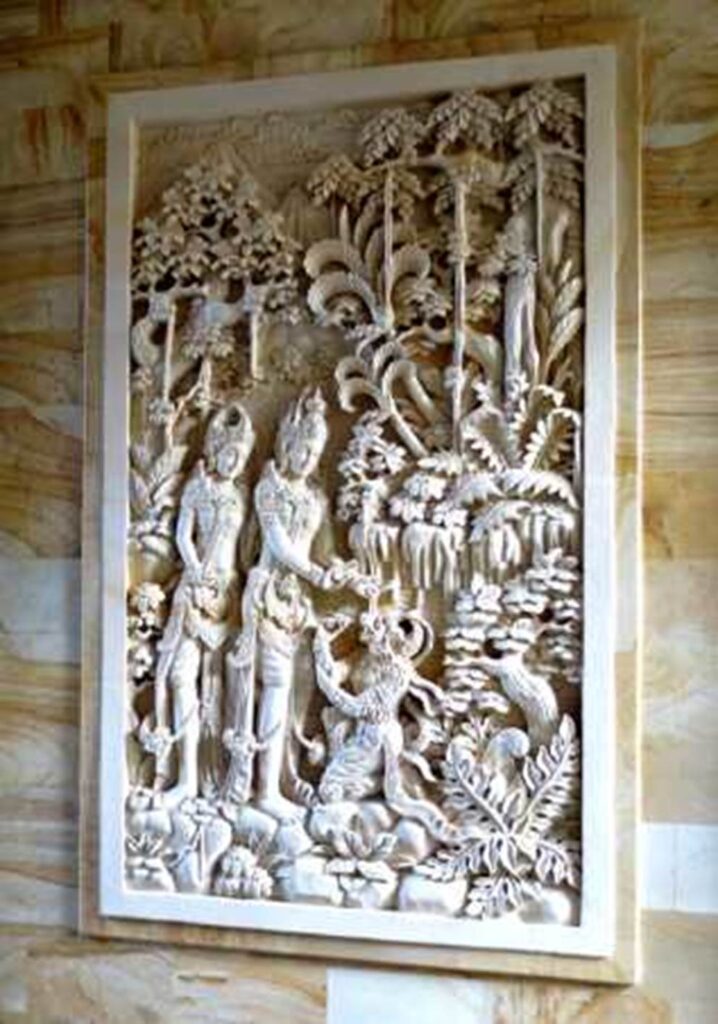
Photo by author
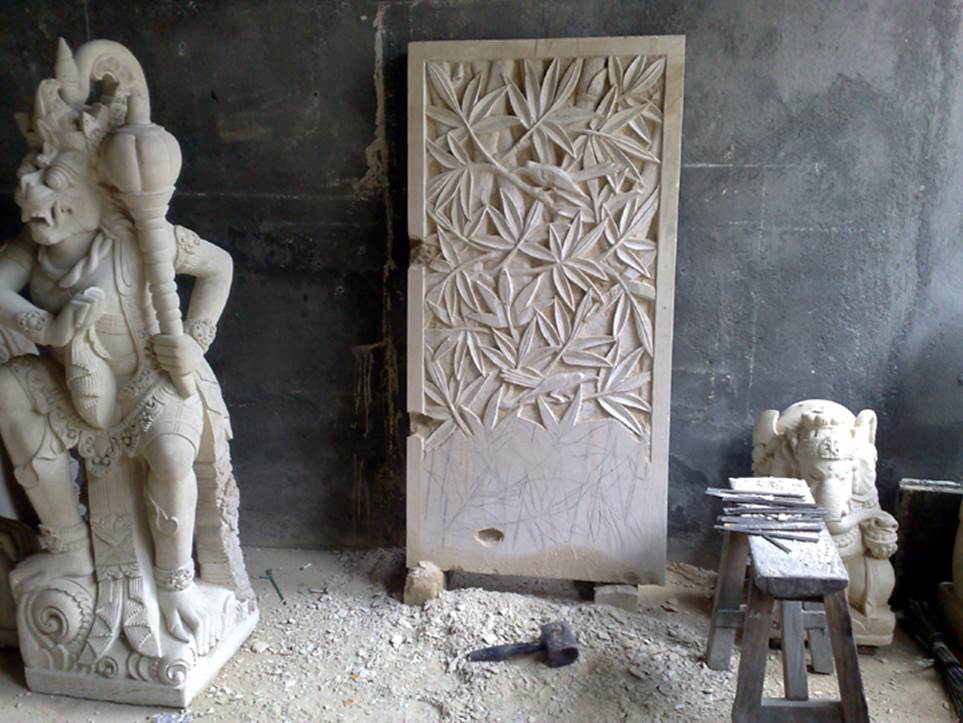
Photo by author
This is a stunning lotus arabesque pattern with a nature motif!
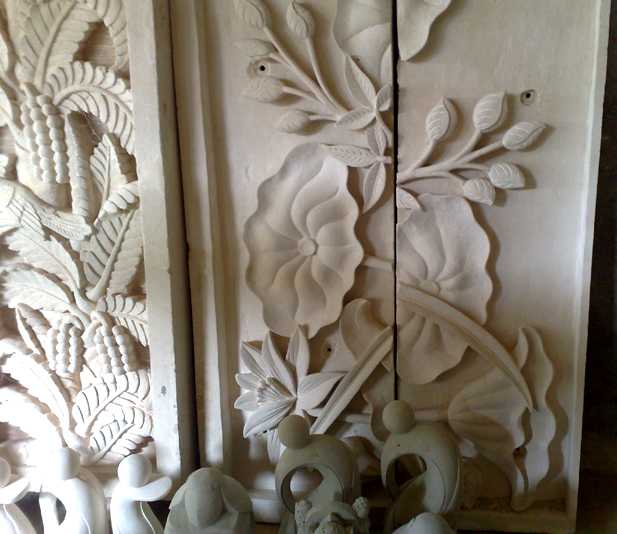
Photo by author
⑤ Batu Serai
A type of sandstone, for exterior wall decoration.
Irregular natural stones are carved and fitted together to create decorative walls. This stone is quite hard, but the ability to carve each irregular stone so that there are no gaps is a source of pride for Balinese stonemasons.
Resort Hotel Ubud Green designed by the author
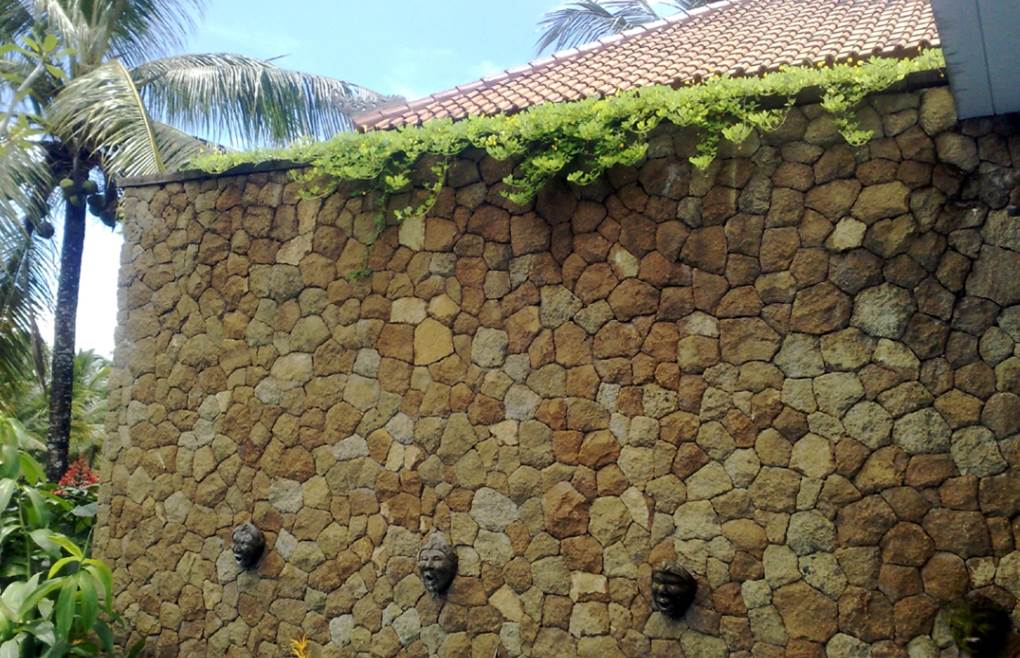
Photo by author
⑥ Volcanic pumice
Bali is a volcanic island. Volcanic pumice collected at the foot of the mountain is used on top of the base floor of the concrete roof to improve drainage. It is a natural material that is perfect for planting on top of it and creating a green roof.
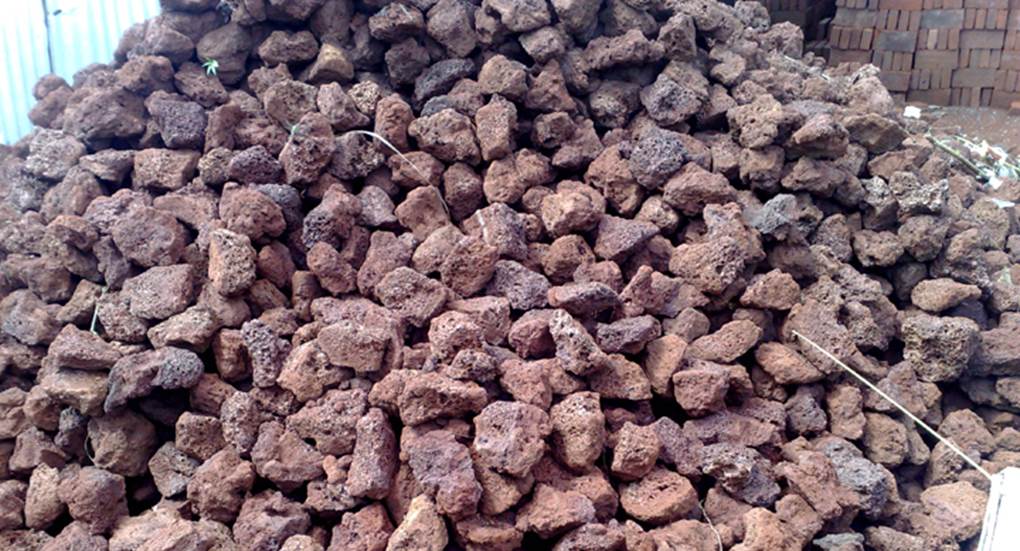
Photo by author
A “green roof” formed on top of volcanic pumice. “Green Architecture”. This is an attempt to re-establish the original ground plantings that were lost due to architectural activities and transfer them back to the roof.
Resort Hotel Ubud Green designed by the author
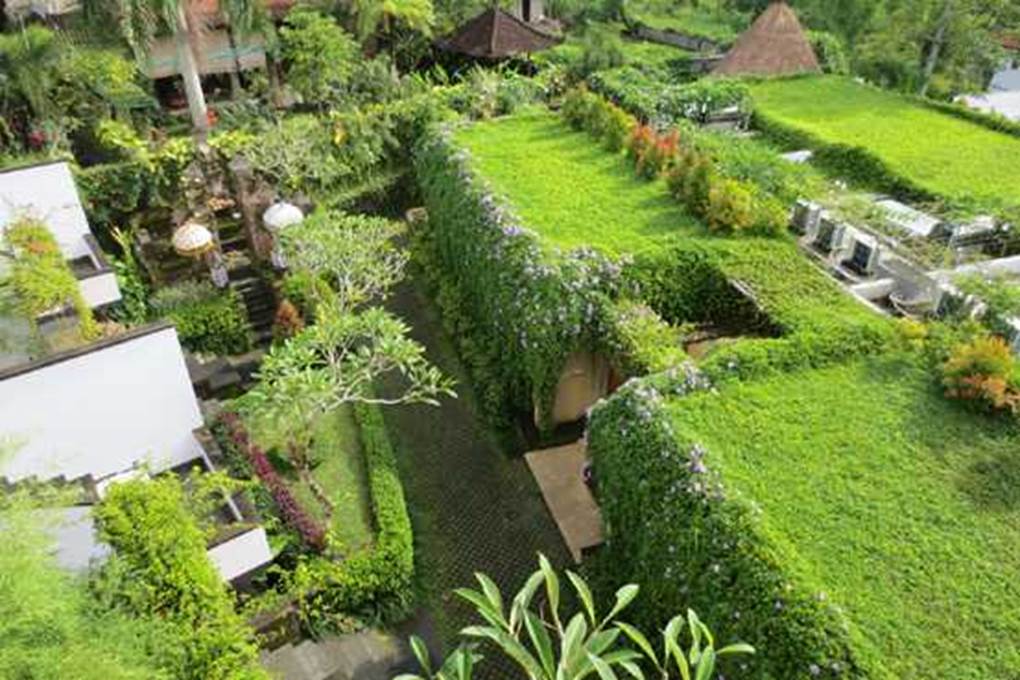
Photo by author
⑦ Other stone materials
The stones are collected from the upstream river and piled up one by one. Great care must be taken to ensure that there are no gaps between the cobblestones.
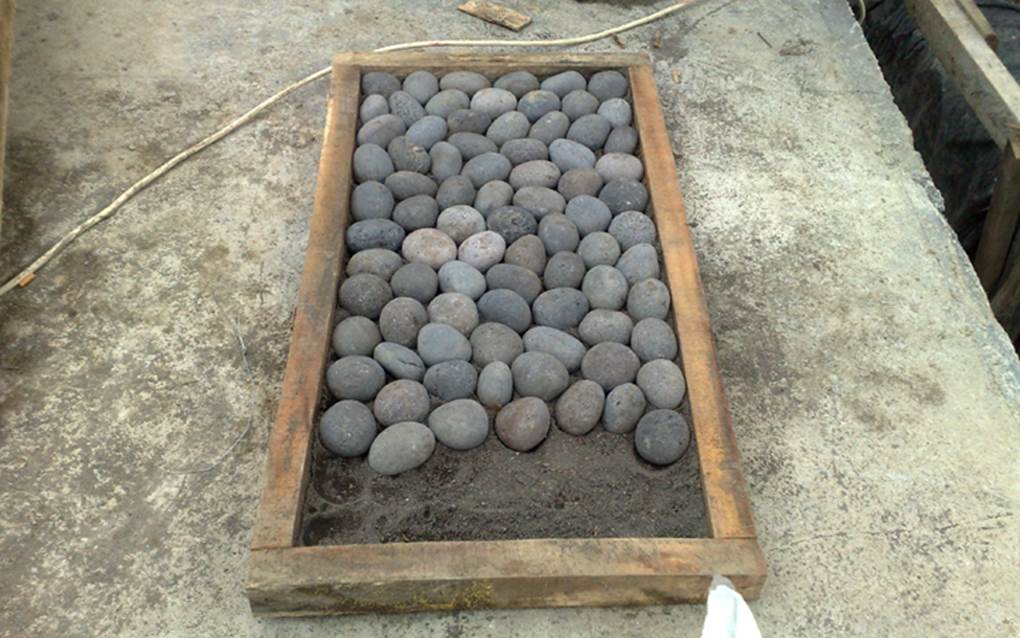
Photo by author
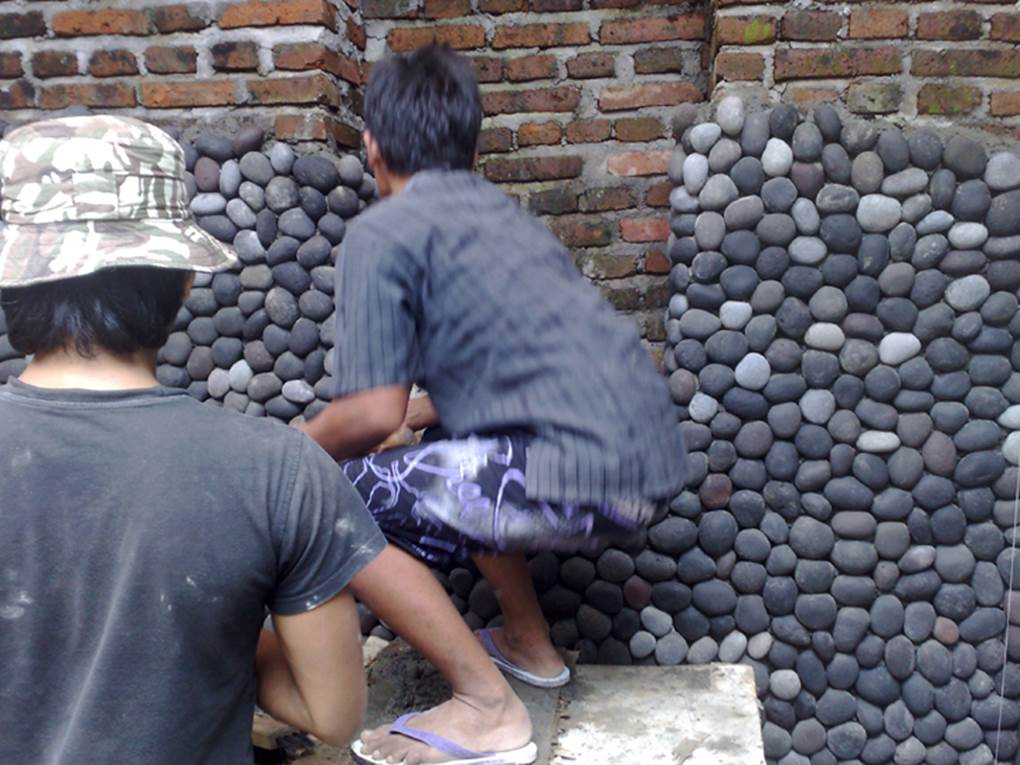
Photo by author
If you give the plant a place to grow, it will flourish and bloom after a while.
This softens the stone walls and creates a scene where they coexist with each other.
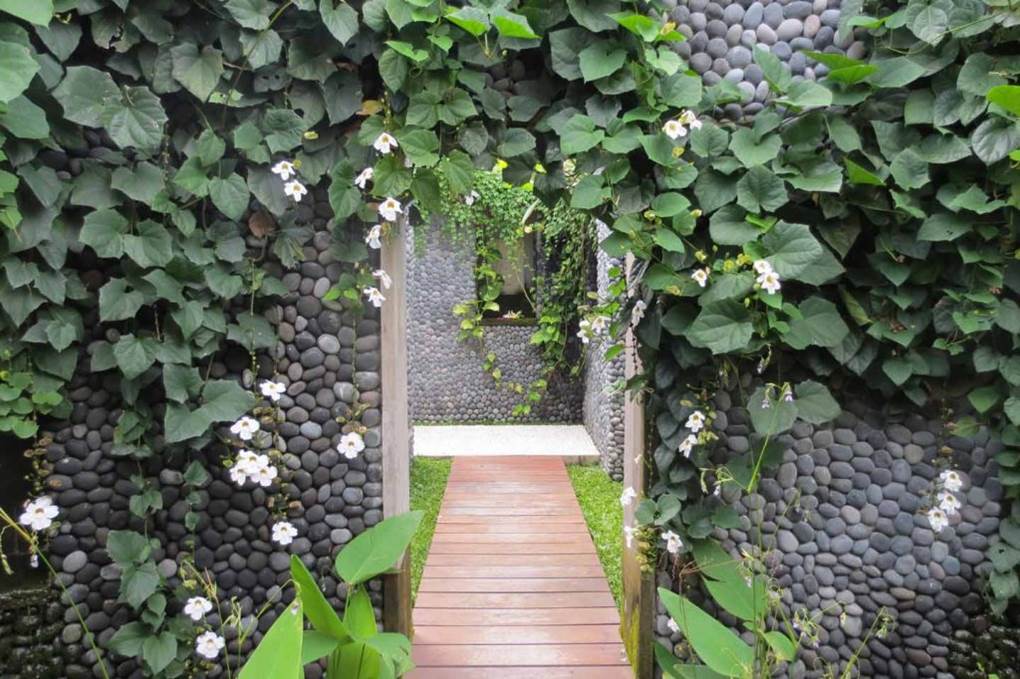
Photo by author
Countless natural cobblestones are embedded in the walls by hand, one by one.
It is a job that requires a lot of patience.
Resort Hotel Ubud Green designed by the author
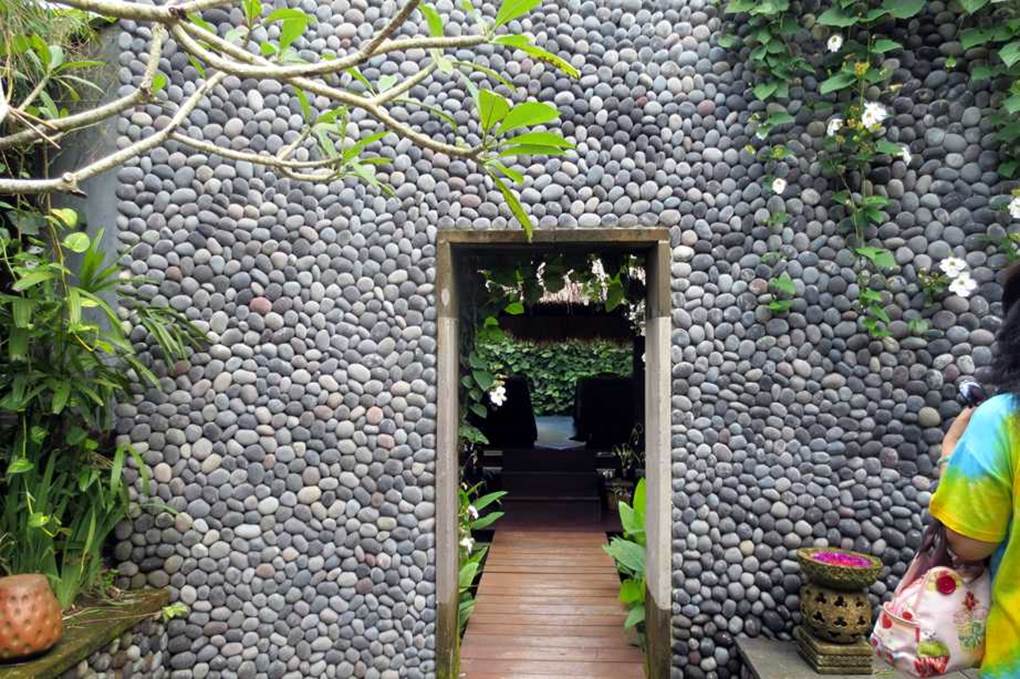
Photo by author
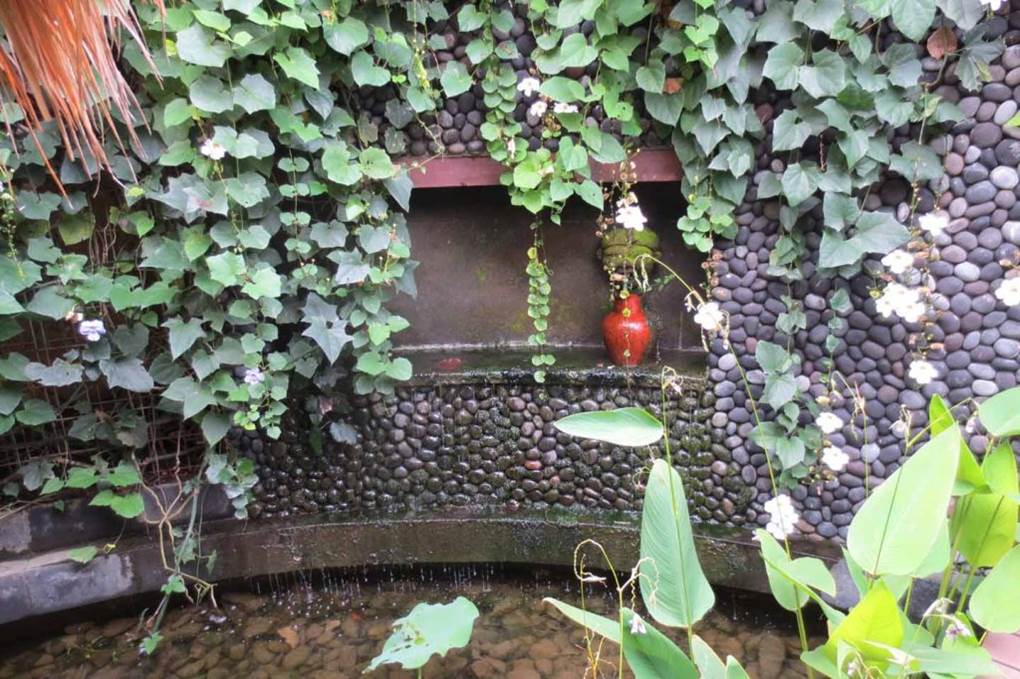
Photo by author
⑧ Recycling of stone waste materials
There are various types of waste materials discharged from construction activities.
With the aim of minimizing waste materials, we collected shavings of several types of stone and used them for landscape exteriors.
Since no cement is used for the joints, plants naturally form through the gaps in the stones.
Resort Hotel Ubud Green designed by the author
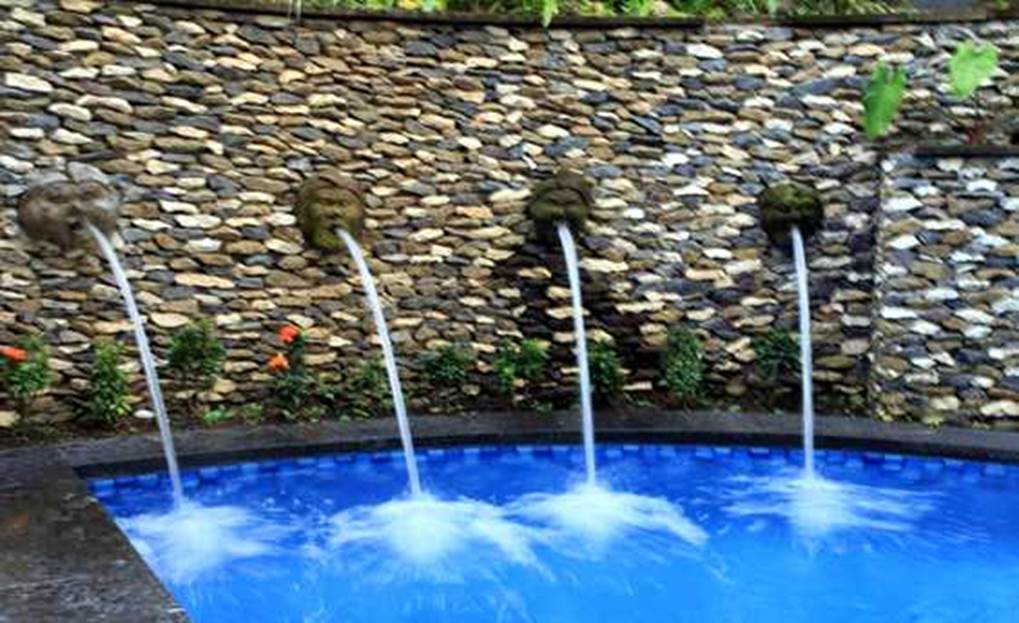
Photo by author
A retaining wall made of three types of stone shavings stacked one by one.
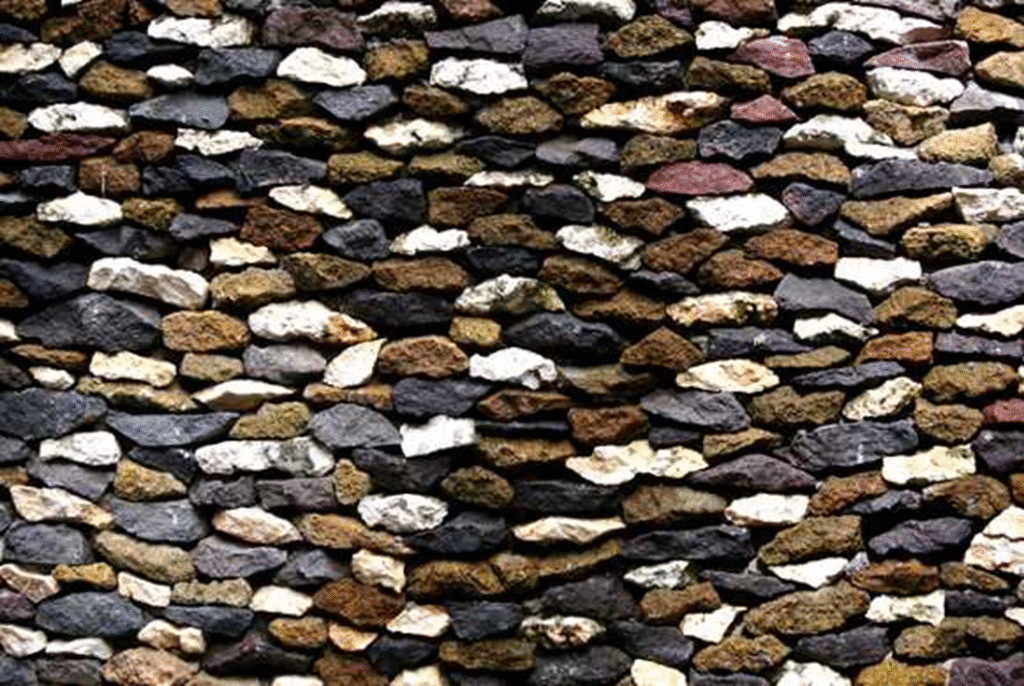
Photo by author
Over time, through the process of nature, the stone retaining wall “Grey Wall” is transformed into a plant wall “Green Wall”.
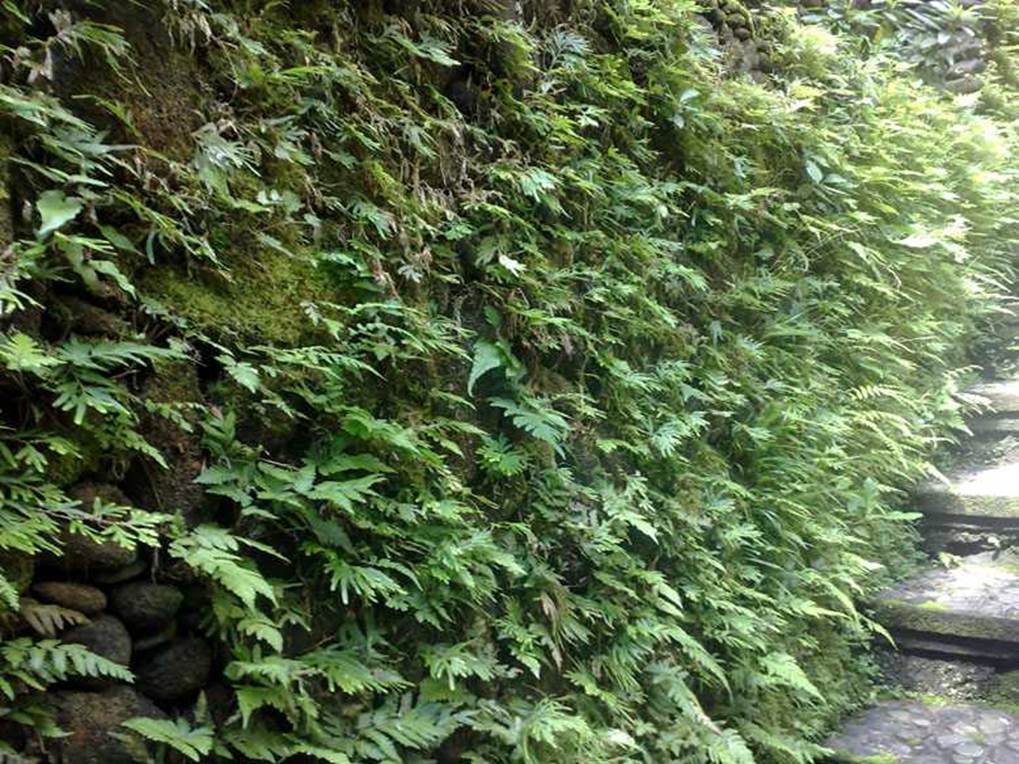
Photo by author
All photos by author