JAP | ENG
Around Bali #5/10
Temples
Temples in Bali
Hindu temples in Bali are sacred institutions that serve as spiritual pillars for the Balinese people. There are various forms of architectural composition depending on the purpose of worship, location, topography, etc., but the basic layout common to them is shown below.
Outer Garden = JABA PURA, a space where worshippers prepare for prayer.
Inner Garden = JABA TENGAH, a space for prayer for the general public.
Inner Sanctuary = JEROAN, a sacred space for monks to pray to God. Tourists and the general public are not allowed to enter.
Each is a walled space. These spaces are connected by split gates.
Basic layout of a Bali Hindu temple.
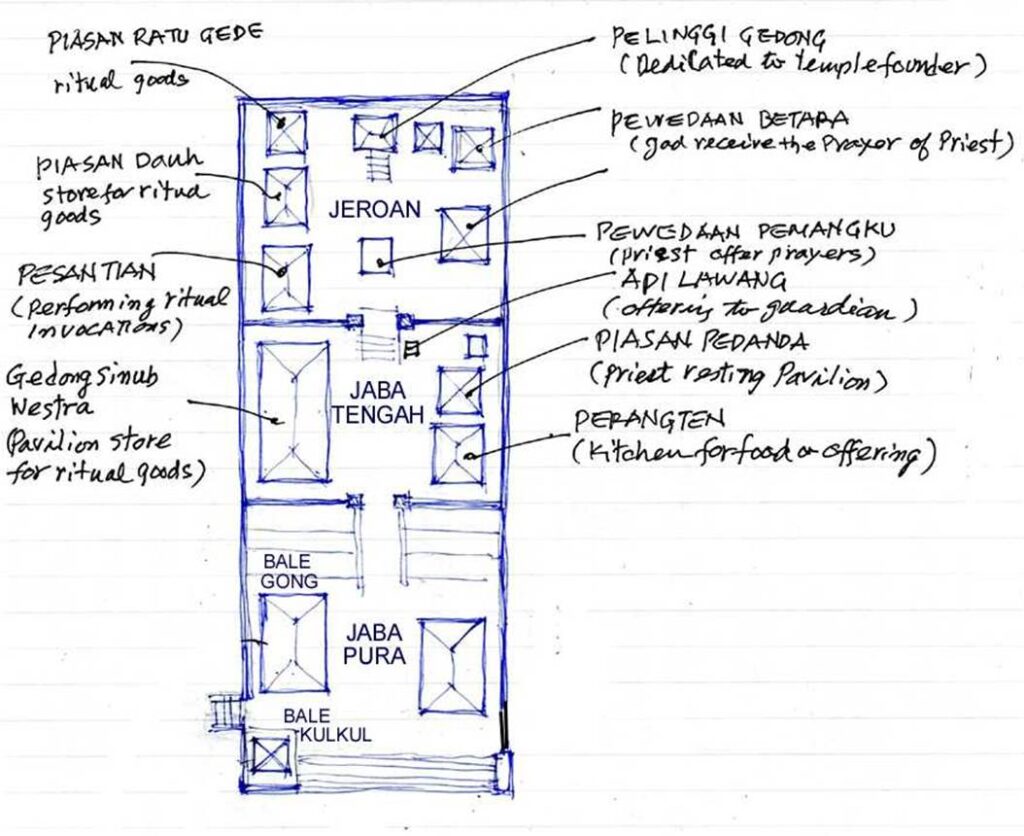
Author’s sketch
Procession of villagers heading from Desa to the temple.
This scene can be seen almost every day in Bali.

Procession near Ubud, Photo by author
Next, let’s describe the elements that make up the temple building.
1 Split Gate (Candi Bentar)
It the split gate that you pass through when entering the sacred area.

Photo by author
Statue of the guardian god. It is set up on both sides of the split gate to protect the sacred area.
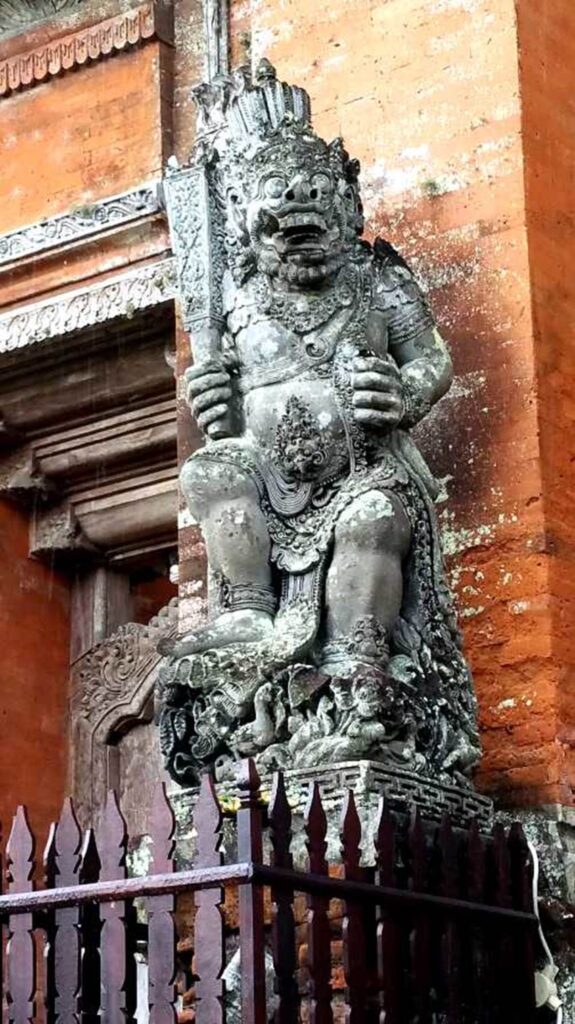
Photo by author
2 Kulkul (Bell Tower)
It is used for the purpose of signaling meetings, gathering labor, etc.
It is located on the border from the outer garden (JABA PURA) and the inner garden (Jaba Tengah).
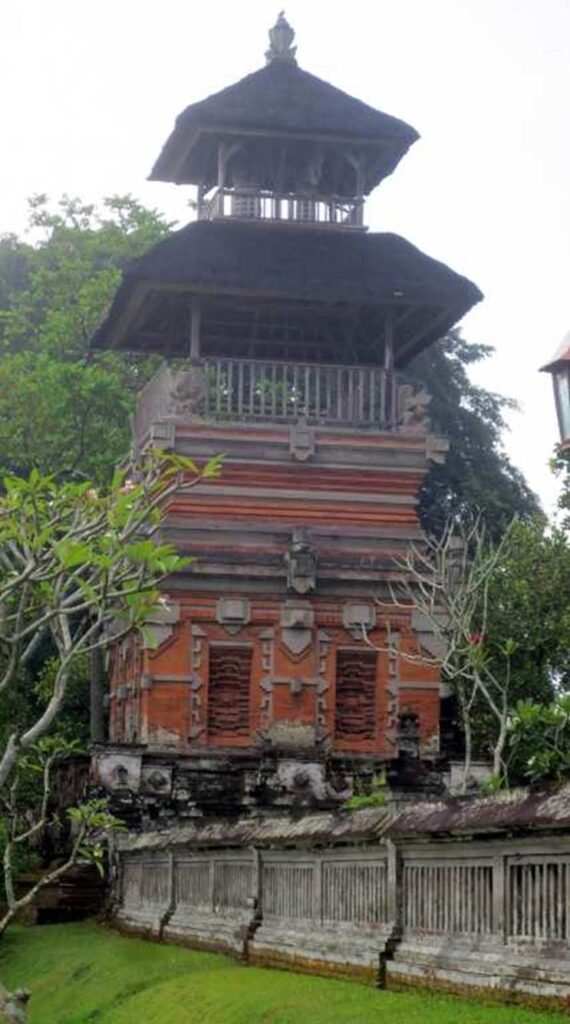
Photo by author
3 Tower of Meru
The building symbolizes the heavens, earth and underworld.
The roof is made of specially made material, the palm of a sugar palm.
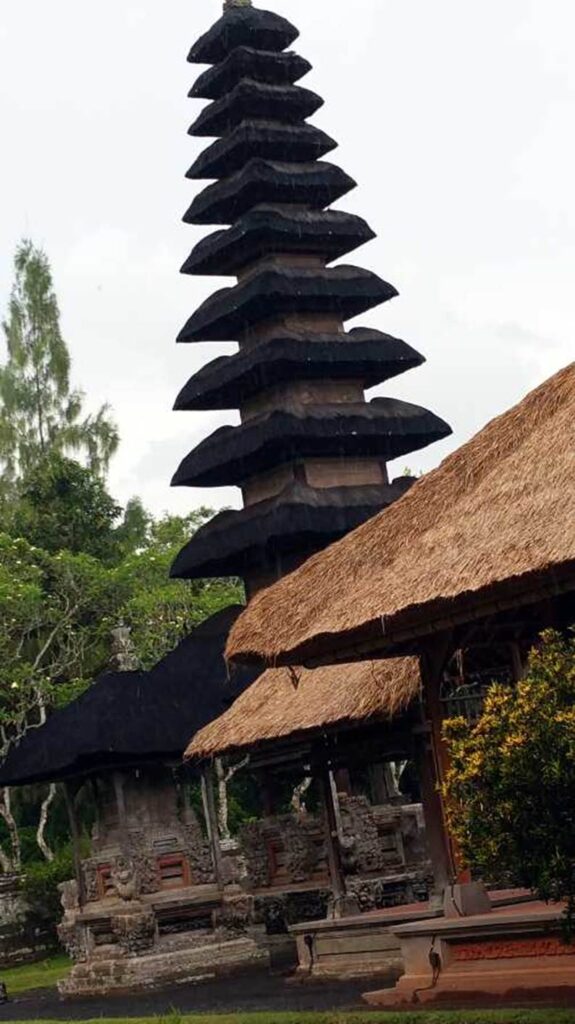
Photo by author
Below is a list of some of Bali’s most popular temples.
1. PURA BESAKIH
Besakih Temple, the main temple of Bali Hinduism, faces south against the backdrop of Bali’s most sacred mountain, Mt. Gunung.
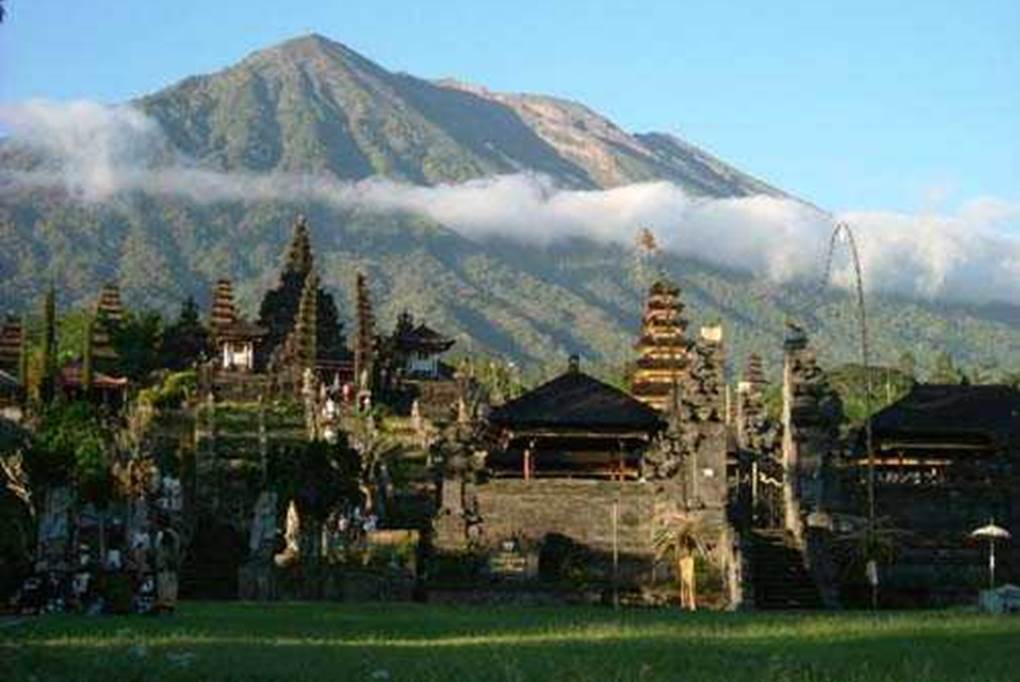
Photo by author
Besakih Temple is located about 950m above sea level on the slopes of Mount Gunung, which is 3,031m above sea level.

Photo by author

Author’s sketch
If you climb this staircase leading to the front garden of the temple and pass through the split gate, which acts like a barrier, you will feel the religious atmosphere.

Photo by author
2. PURA TIRTA EMPUL UNESCO
WORLD CULTURAL HERITAGE SITE
Approach the outer garden of the temple from the square in front of the entrance with a large lime tree.

Photo by author
Layout of PURA TIRTA EMPUL, an UNESCO World Cultural Heritage Site.

Author’s sketch
Between the outer and inner gardens is a pool of abundant spring water, where worshippers can purify themselves.
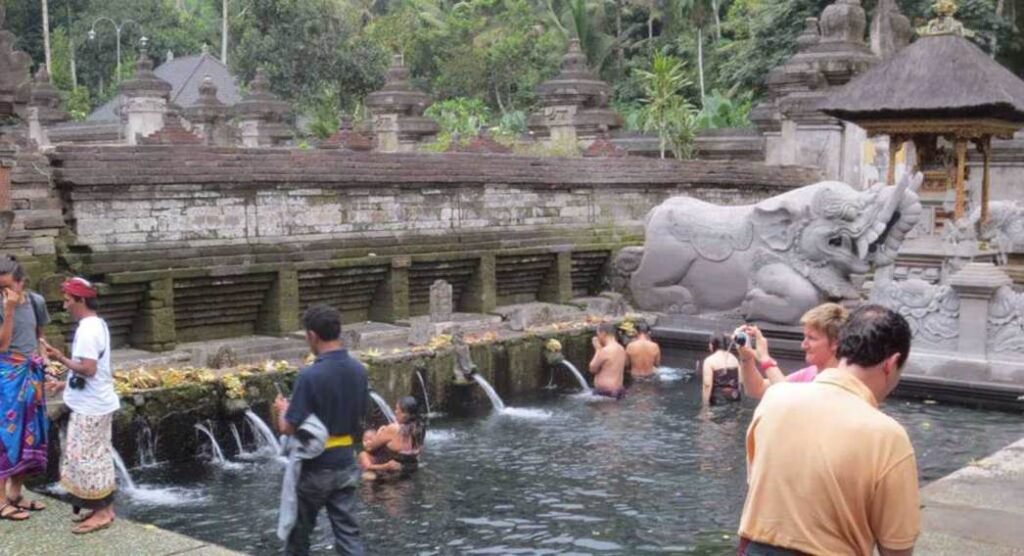
Photo by author
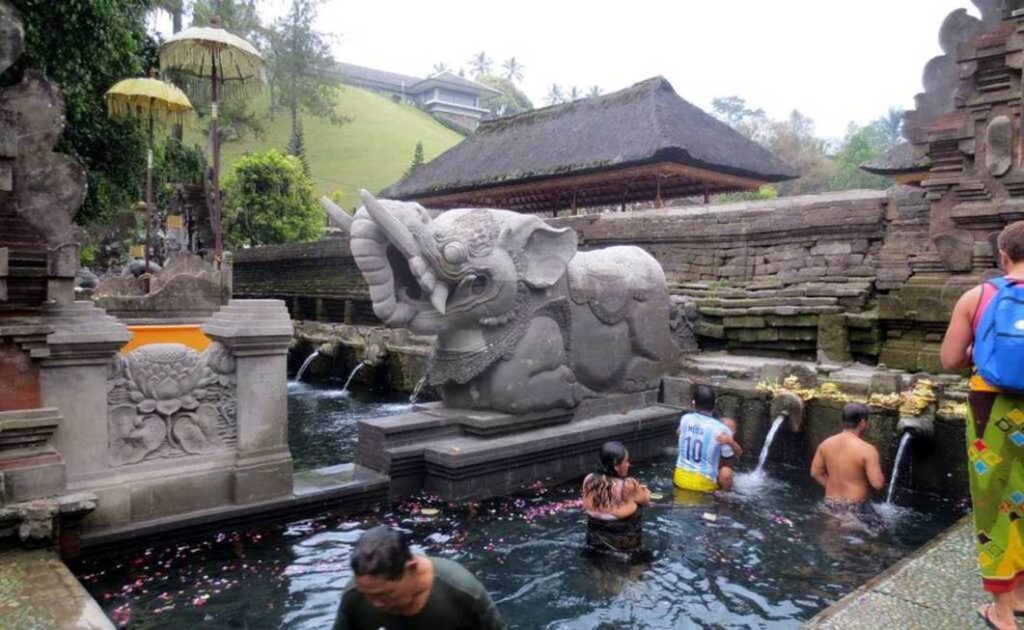
Photo by author
A building in the inner garden for storing and distributing offerings.

Photo by author
Placing the offerings on the portable mini shrine in the outer garden.
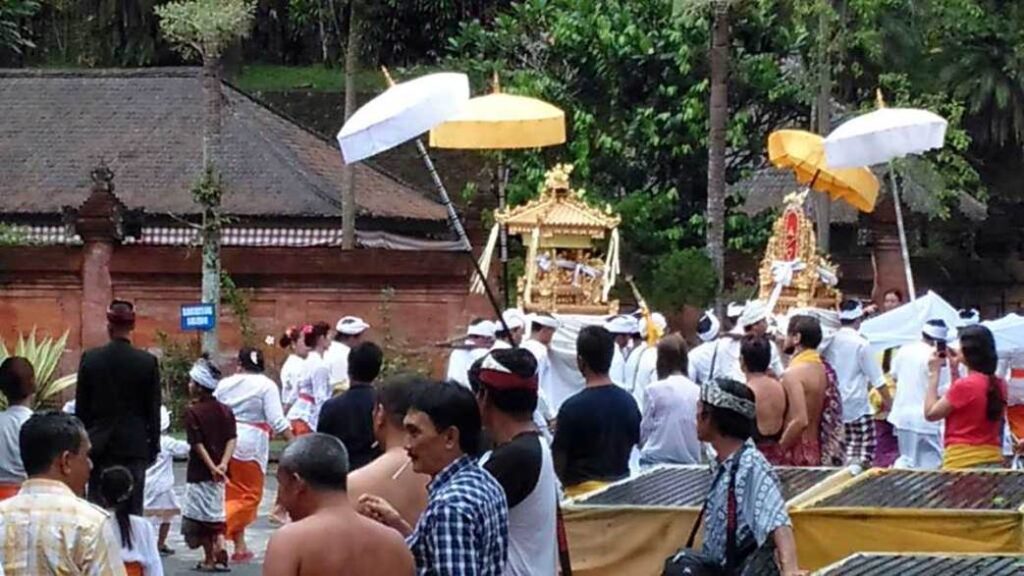
Photo by author
A group of boys performing in the entertainment section of the outer gardens.

Photo by author
Villagers come down from the neighbouring former villa of President Sukarno in a procession to the temple. They gather at the assembly hall in the outer garden, prepare prayers and offerings, and then proceed to the inner garden to pray.
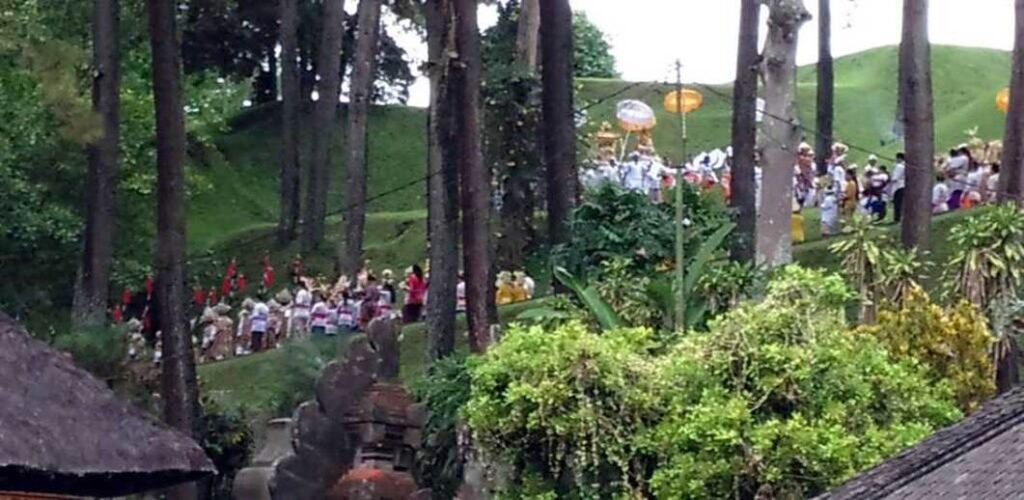
Photo by author
A local kid.
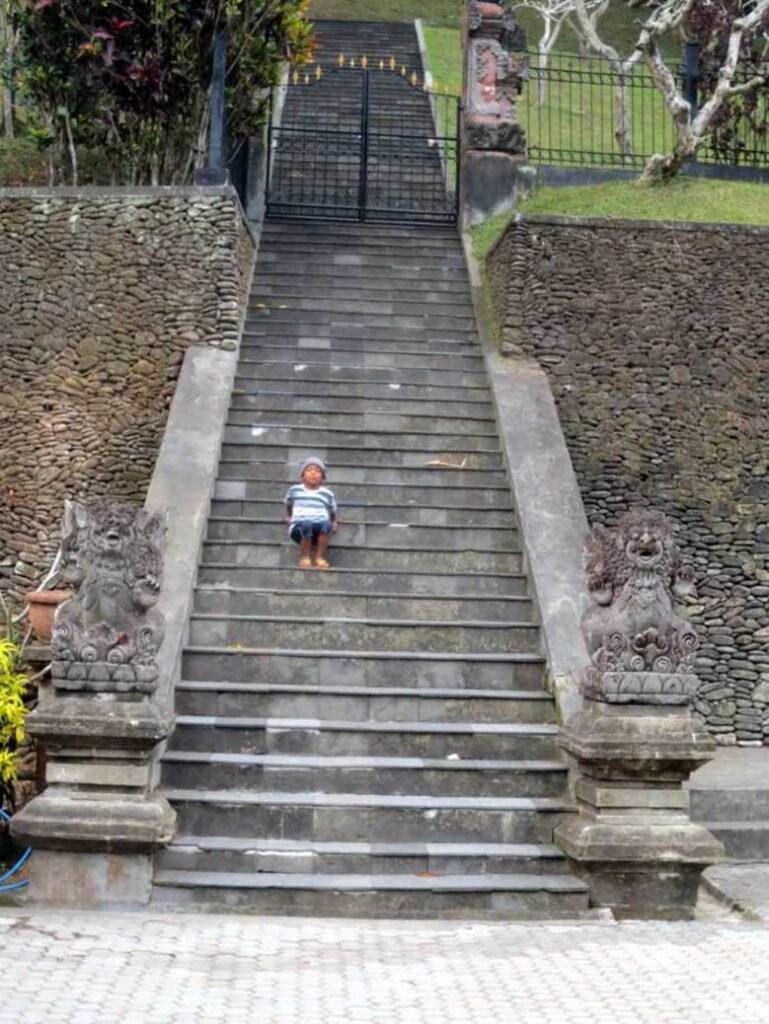
Photo by author
3. PURA GUNUNG KAWI SEBATU
The temple is located in a valley, surrounded on three sides by dense forests, and blessed with abundant spring water.
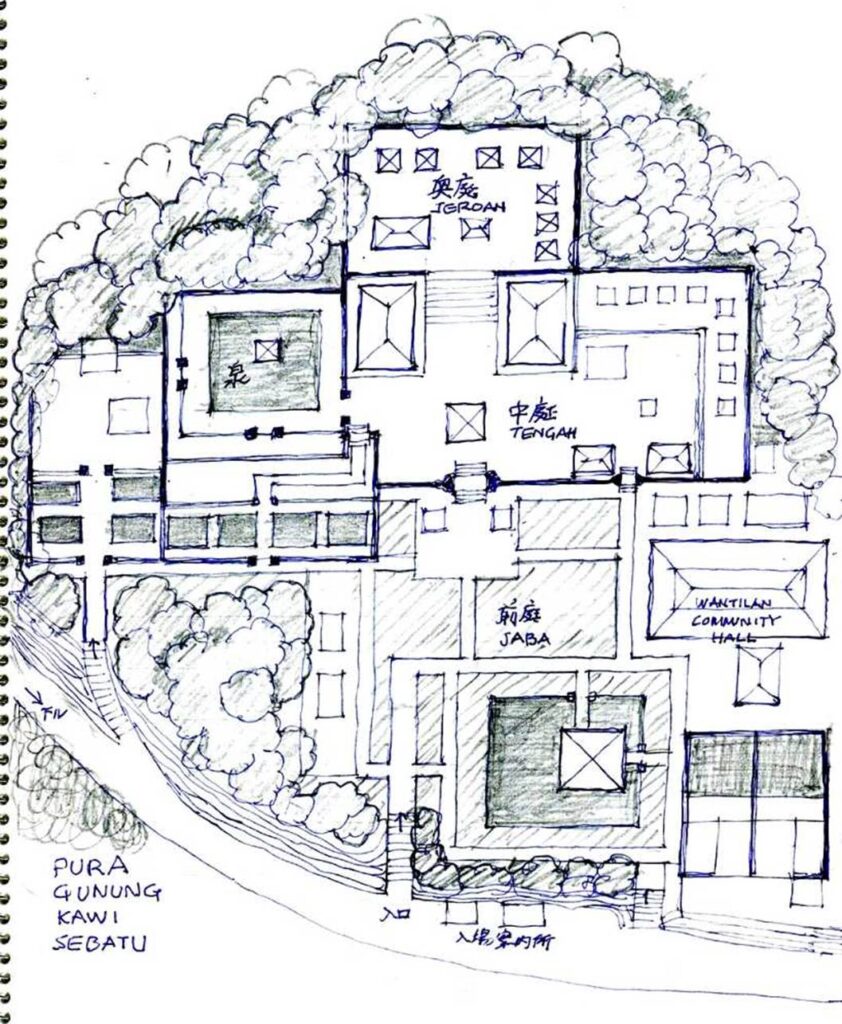
Author’s sketch
Panoramic view of the temple, taken from the southwest.

Photo by author

Photo by author

Photo by author
A shrine in a pond with a bubbling spring.
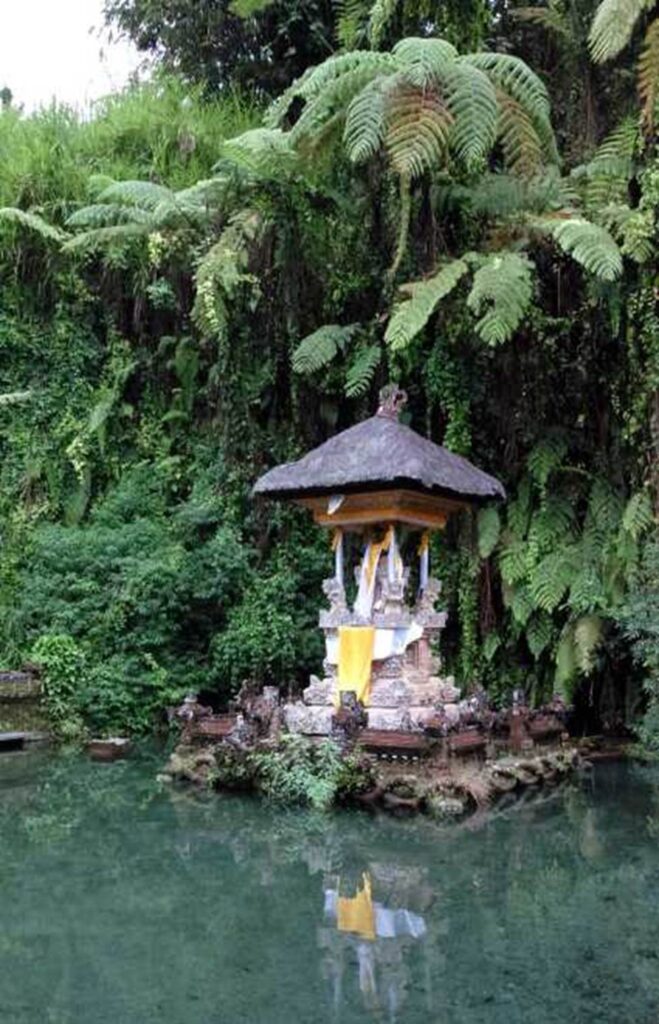
Photo by author
Villagers bathing.

Photo by author
4. PURA TAMAN AYUN
UNESCO World Heritage Site
The temple is located on flat ground and surrounded by double moats.
It is not as dramatic as the other temples mentioned here, but the grounds exude a sense of calm and spaciousness.
It is a UNESCO -approved temple, so there are few tourists and the buildings are well preserved. The grounds and inner sanctuary are surrounded by a rectangular moat, and the connection of the many moats is a unique feature.
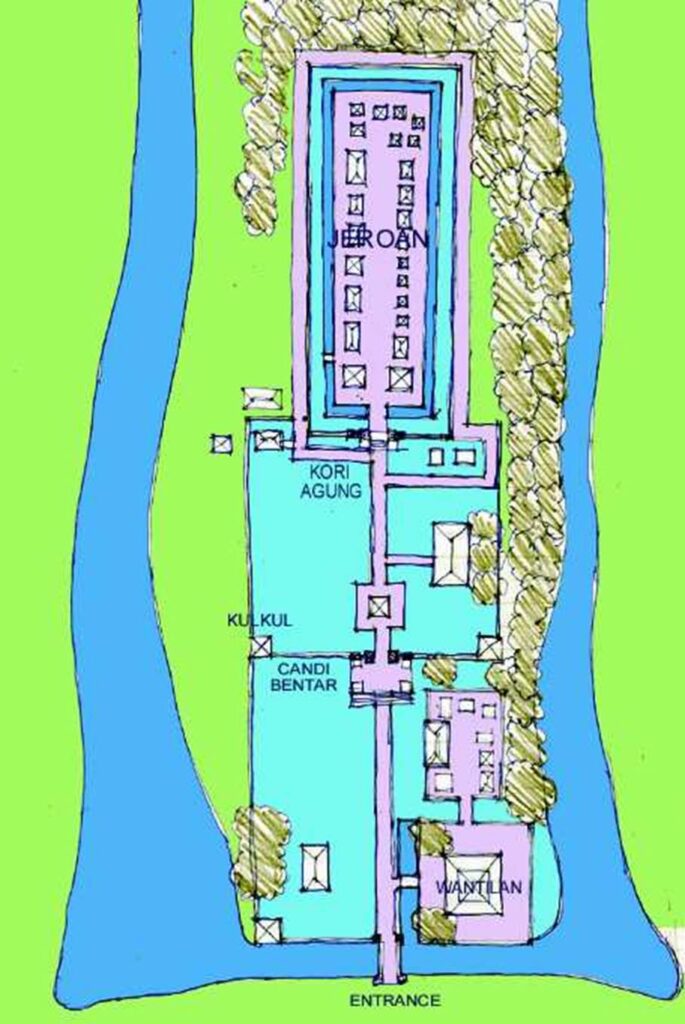
Author’s sketch

Photo by author

Photo by author

Photo by author
Mel, a series of multi-story tower.

Photo by author

Photo by author
Cockfighting arena
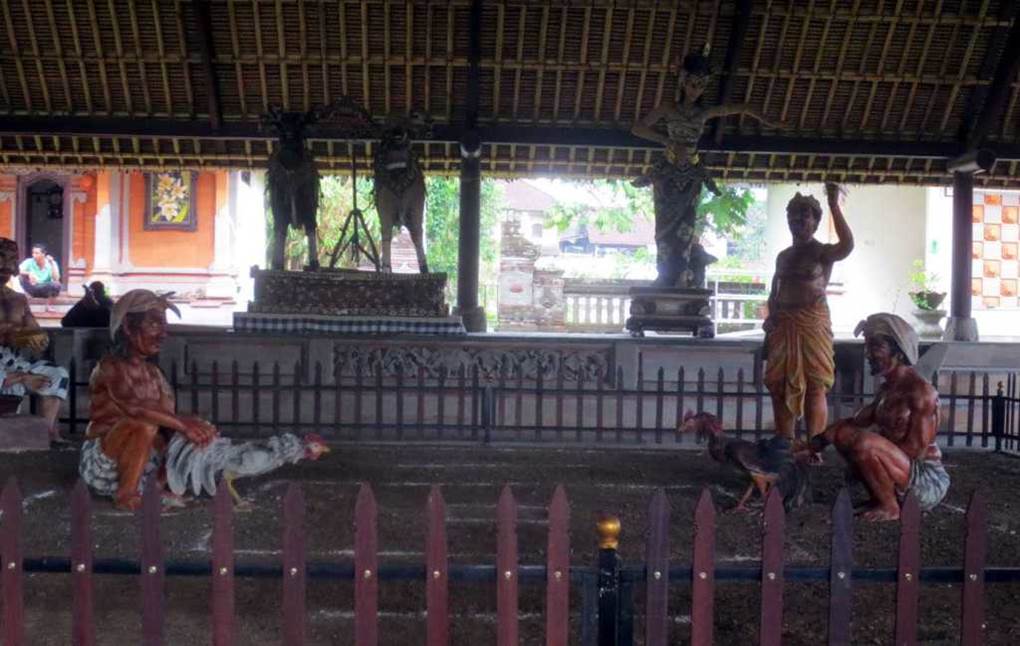
Photo by author
5. PURA ULUWATU
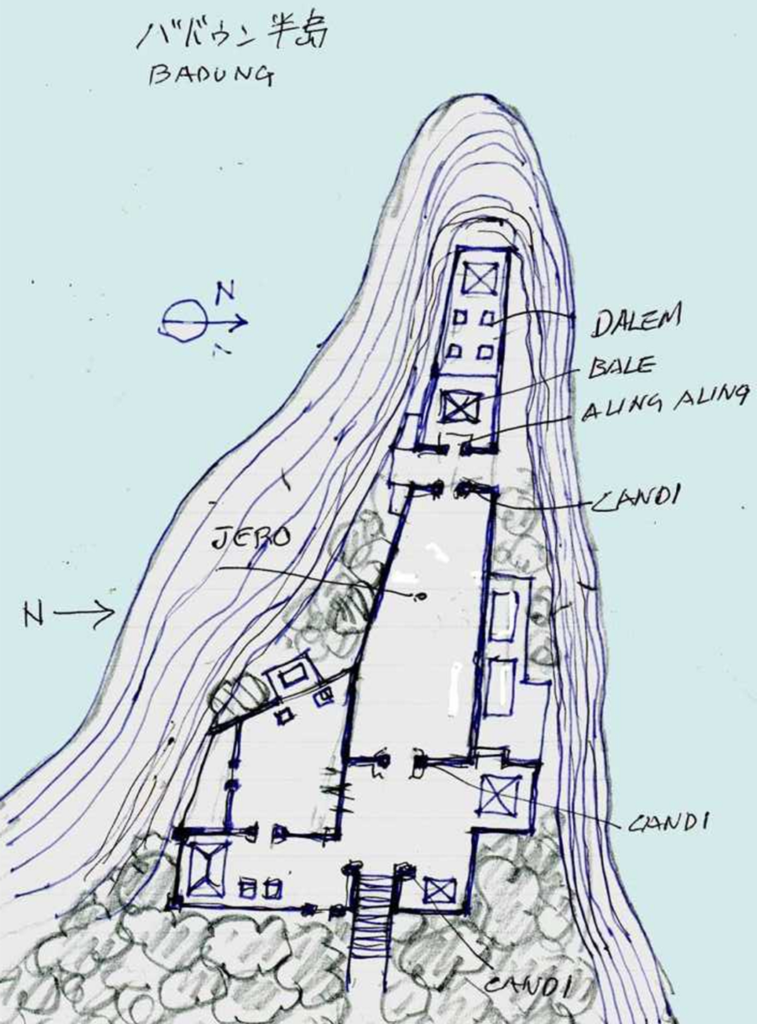
I drew a sketch of a bird’s-eye view of the Badung Peninsula.
You can clearly see the relative positions of the airport, Nusa Dua, and Uluwatu. The Indian Ocean side is a 50-70m cliff.

Author’s sketch
Uluwatu Temple sits on a cliff jutting out into the ocean facing west, making it a great location for worshippers.
The performance of the Kecak dance at sunset is fantastic.
Author’s sketch

Kecak Dance

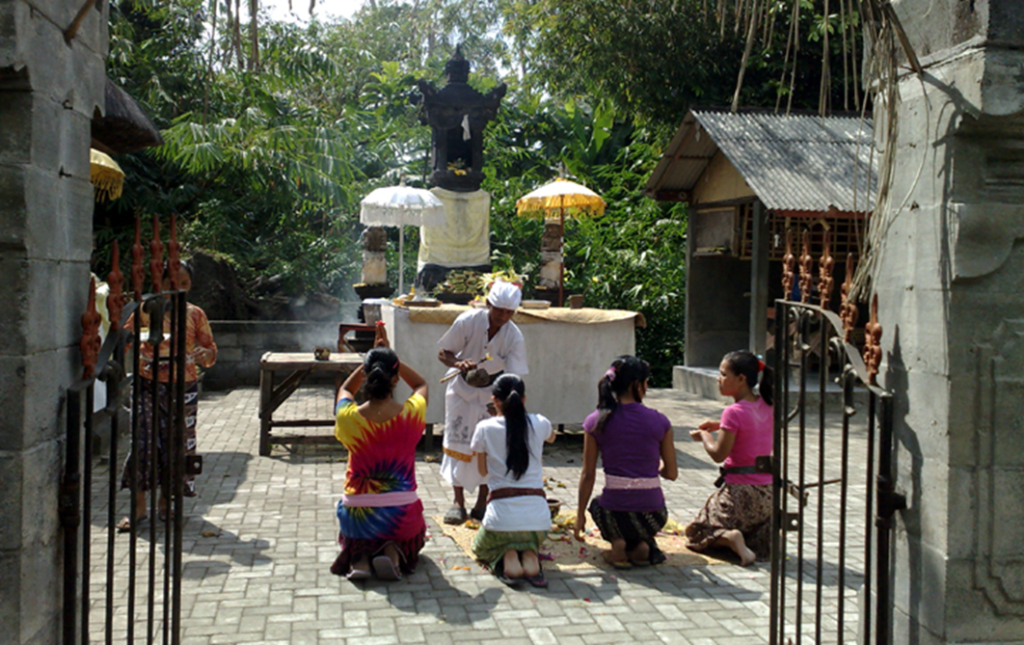
Photo by author
I tried to classified Bali temples by category.
Pura Kahyamgan Jagad:
Temple built on the slopes of volcanoes, mountains, etc.
Representative example: Besakih Temple,
Temple in the Pura Tirta valley where a spring gushes forth.
The temple serves to irrigate the rice terraces and distribute water to the villages. There is also a pool for purifying the body with holy water from the spring.
Representative example: Tirta Ampur Temple, Gunung Kawi Sebatu Temple
Pura Segara:
Temple located on cliffs and beaches facing the sea to appease the sea gods. Representative examples: Uluwatu Temple, Tanah Lot Temple
Pura Desa:
a self-governing temple for the villagers located in the center of the village (desa)
Pura Puseh:
a temple for the ancestors located on the mountain side of the village (desa)
Pura Dalem:
a temple leading to the underworld located on the sea side of the village (desa)
Side note: These temples have a fixed date of worship according to the Balinese calendar, which the islanders must follow. As a result, it is difficult to establish a manufacturing industry with strict deadlines, and workers in the construction industry depend on migrant workers from Java
All photos and sketches by author