JAP | ENG
Singapore’s Early Days
1970s
#9/10
Nightlife in Singapore
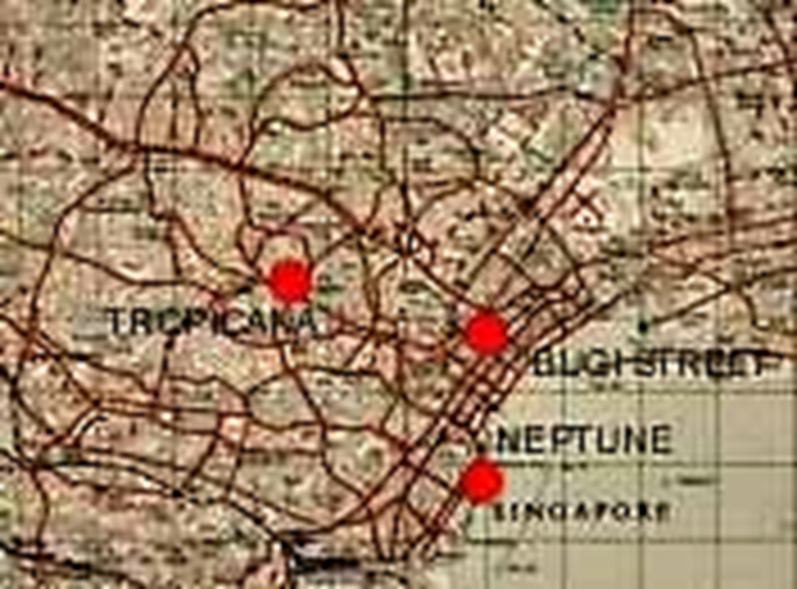
(Map of Singapore 1958 courtesy of National Archives of Singapore)
Tropicana Singapore
Nightclub Tropicana was located on Scotts Road in the Orchard area and was Singapore’s largest and most luxurious cabaret. It was the only facility that allowed “topless” to be approved by the authorities as a tourist attraction.
Used by local businesses to entertain international business travellers, the place flourished and remained open until it closed in 1989.
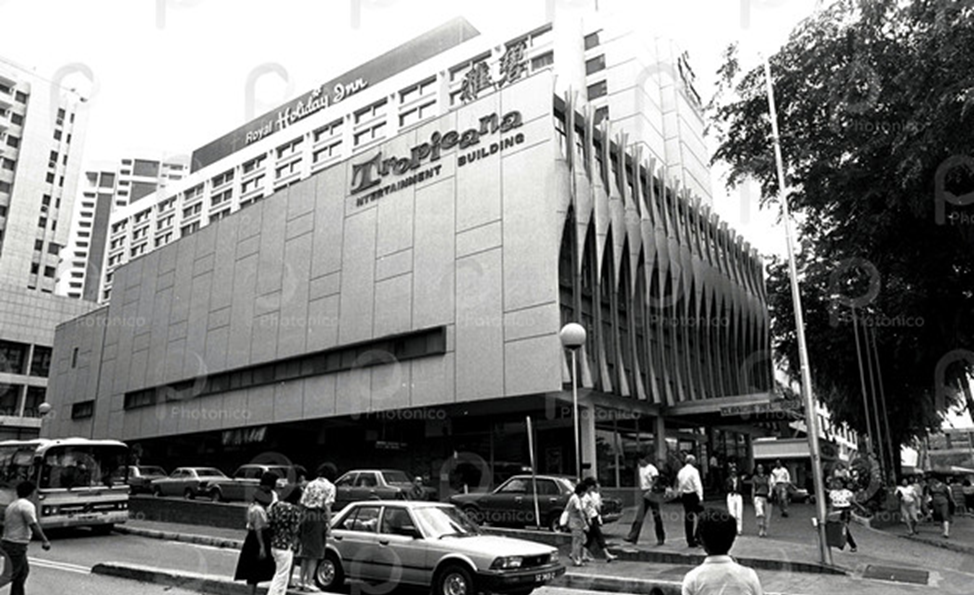
Copyright: SPH
Bugis Street
In the early 1970s, when the Orchard area was being formed as Singapore’s downtown, the area around Bugis Street, a downtown area of Singapore, was a popular area with many people gathering, and was a popular area with inexpensive restaurants and food stalls gathered on the streets
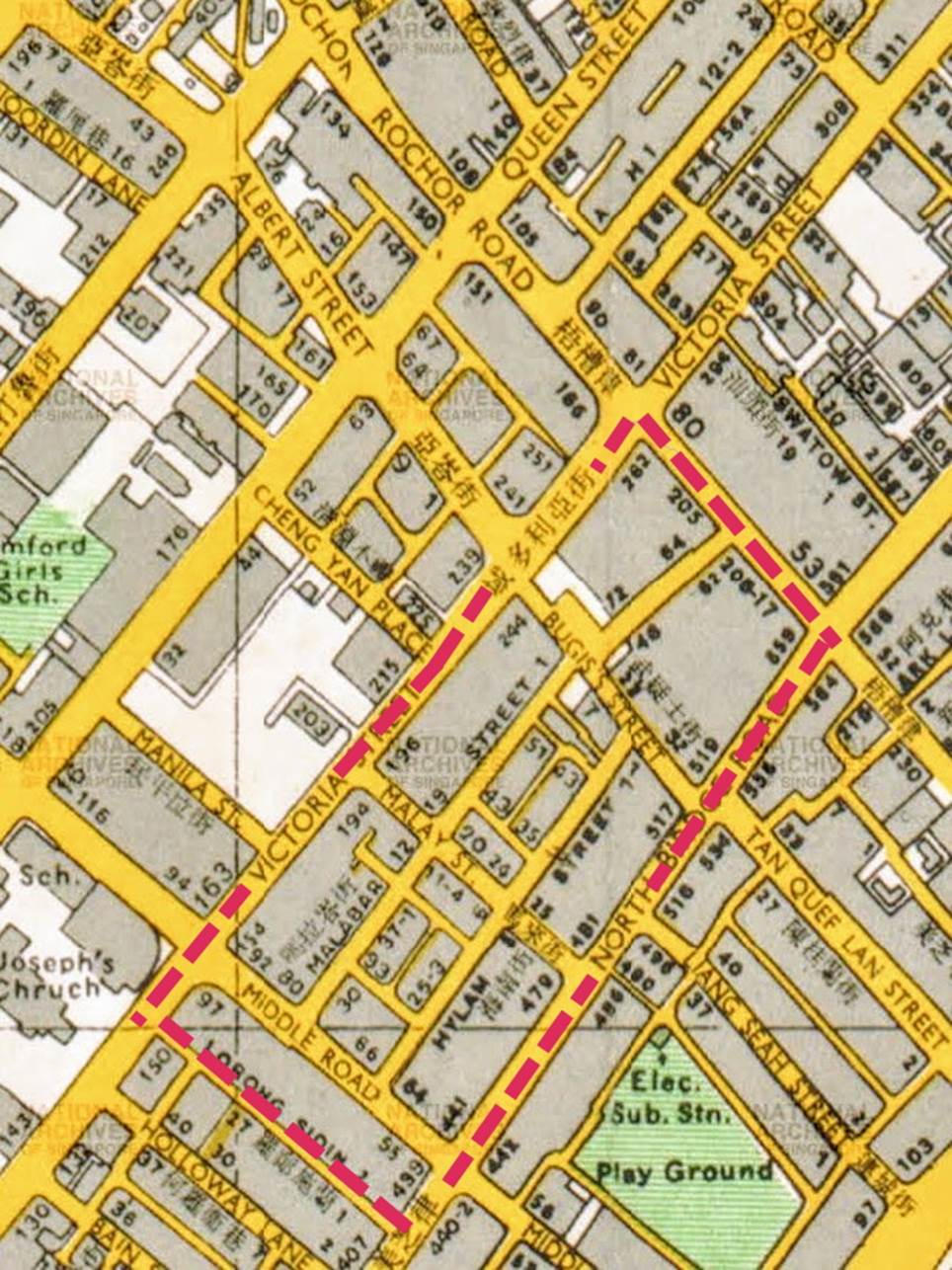
Bugis Street, a working-class area in Singapore. It is popular with a diverse range of people from both inside and outside the city, but it was known as an area with poor public safety and where caution was required.
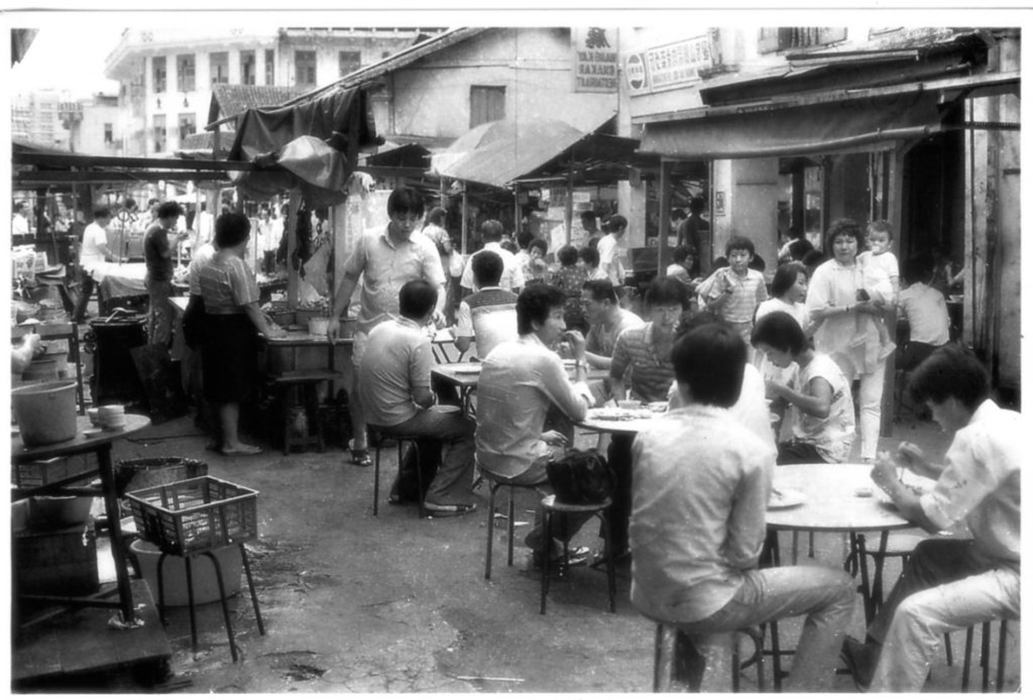
https://youyongfinalyearproject.wordpress.com/
If you look at the alley behind Bugis Street, you will see a scene like the one in the photo. The messy and unsanitary conditions were a common sight in the 1970s.
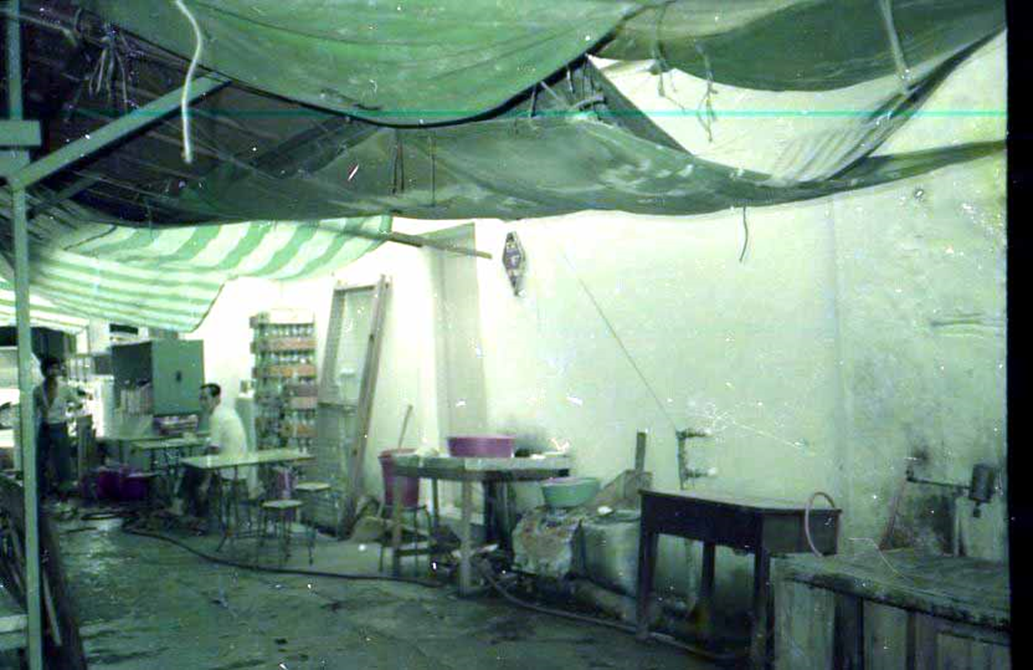
Photo by author, 1972
In the evening, locals gather at food stalls on Bugis Street, and when it gets dark, not only foreigners but also sailors from the long distance voyages gather.
Shoe shiners, street vendors, beggars, and others gather to serve them, and it becomes a bustling street.
As the night progresses and it gets to 10 o’clock, cross-dressing perverts start appearing out of nowhere. They gather at the round tables of tourists eating and drinking, take group photos, and go from table to table collecting pocket money. The diners get very excited.
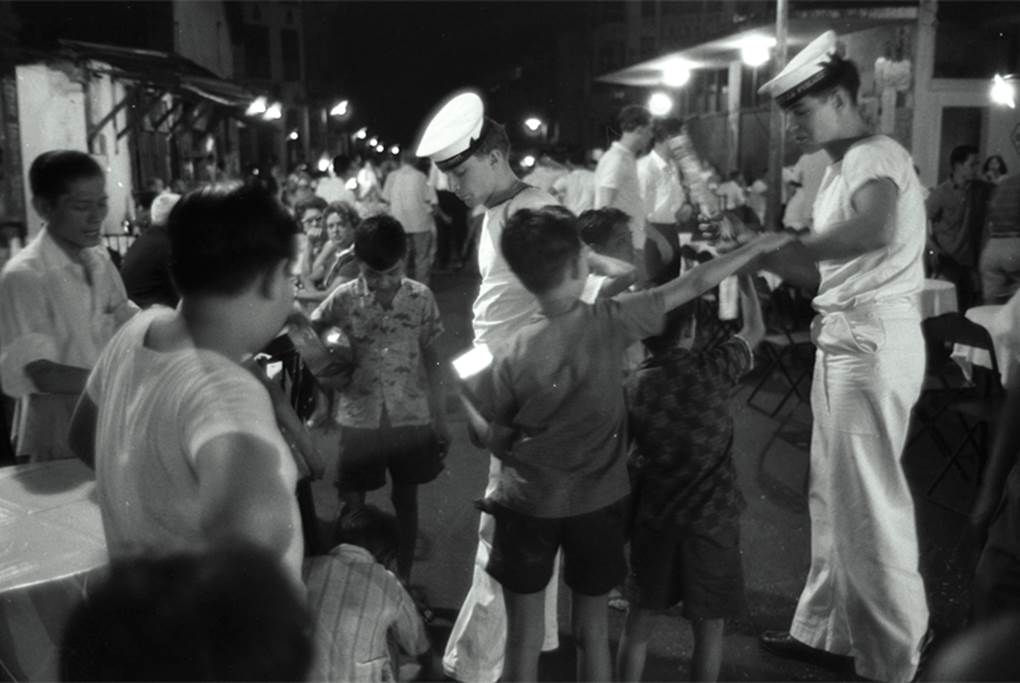
Western seamen on shore at Bugis Street in 1962.
Courtesy of National Archives of Singapore
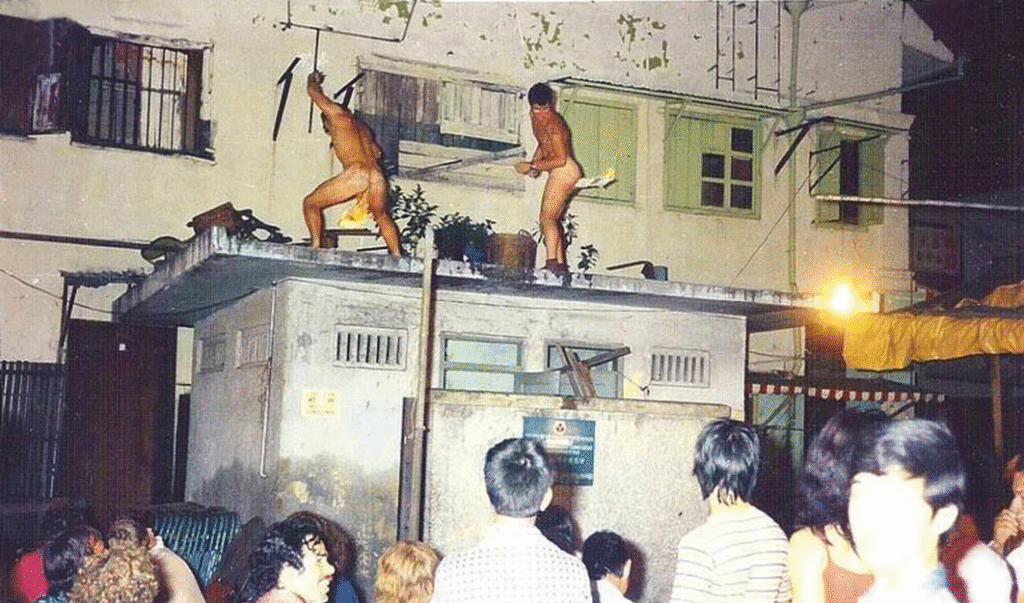
As night falls on and after midnight, some people climb onto the roof of the public toilet in the small plaza and perform as shown in the photo below. These two men were probably soldiers who served in the Vietnam War. They were immersed in the performance, using their brief holiday in Singapore amid the harshness of the war as an opportunity to relieve stress. After this, they set fire to newspapers tucked between their hips, and the show ended with applause from the audience at the tables. (Photo below)
I was still single at the time, so whenever I had young visitors in the art world from Japan, I would take them to Bugis Street and they would be pleased. However, after 3am, the number of customers decreased, and I saw fights break out between drunk soldiers and locals, which in the worst cases turned into brawls, so we had to leave the place by 2am.
In the mid-1970s, the entire block of Bugis Street was demolished by bulldozers from the authorities. Hotels and shopping malls were built on the vacant land, and it is now a place of the past that only those in the know knows.
source: www.flickr.com/photos/77467605@N00/3356402506/
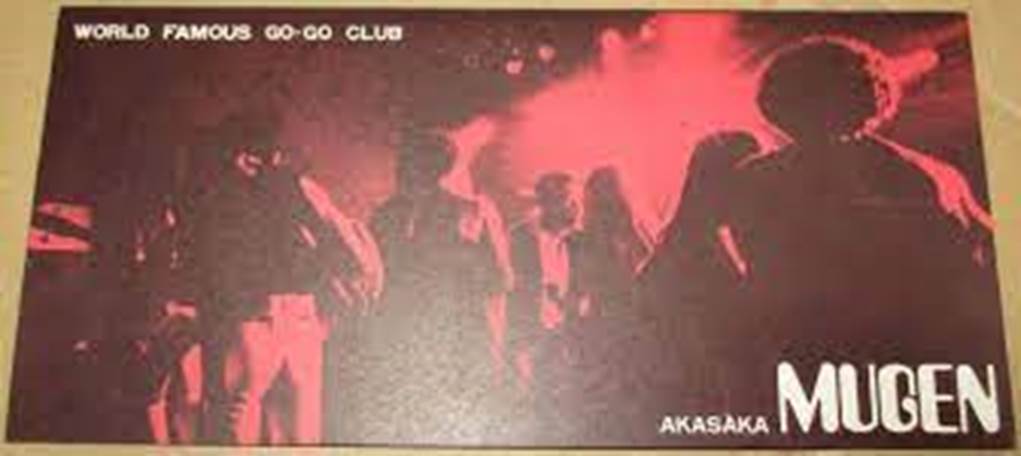
Go-Go Club Live House “Mugen”
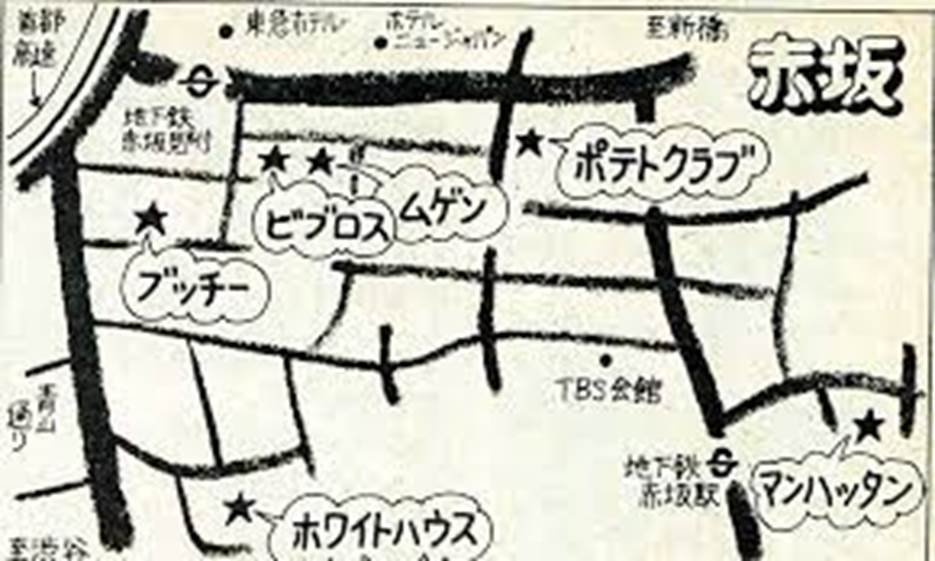
After that, I returned to Japan temporarily, and received an invitation to visit, the psychedelic stage of the high-end go-go club live house “Mugen” in the basement of Akasaka Caesars Palace. At the after-party, I was also invited to the underground theater in Imoaraizaka, Roppongi, and I was immersed in these different spaces so that I could use them for my future work at the site.
blog livedoor jp
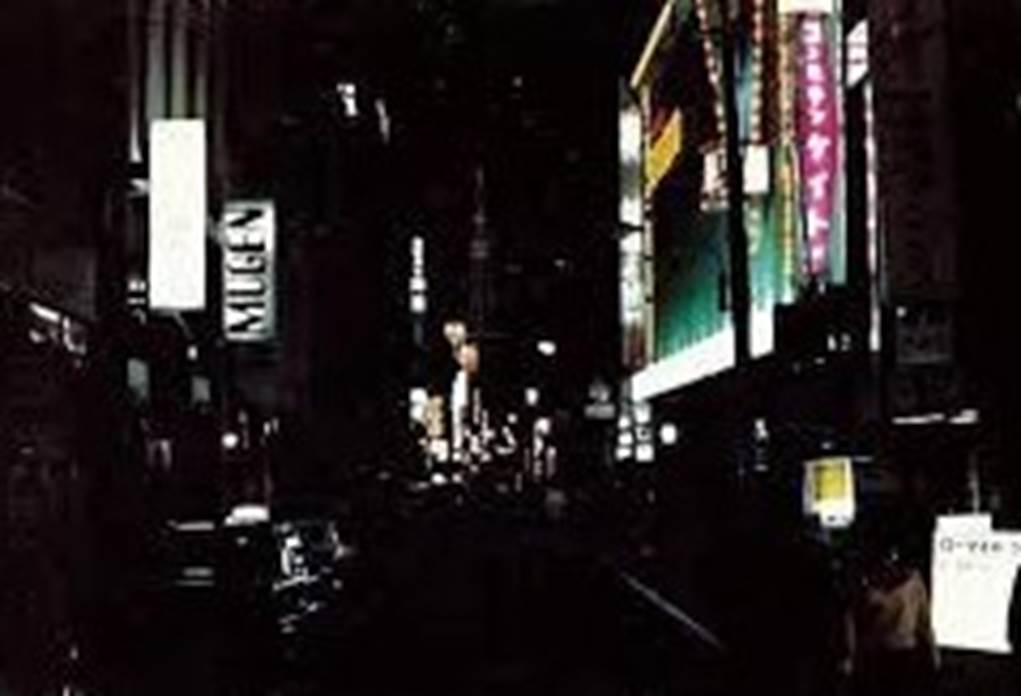
Akasaka Esplanade Street in 1971. This was where the go-go club live houses “Mugen” and “Byblos” were located.
Source: akasaka mugen home facebook
In 1971, these types of discos were still called go-go clubs. Mugen opened in 1968 and closed in 1987. It could be said to have been a child of Japan’s coming high-growth era.
Source: disco memory net
Neptune Theatre Restaurant
The Neptune Theater, which I was involved in supervising the construction work of, can be clearly seen directly below.
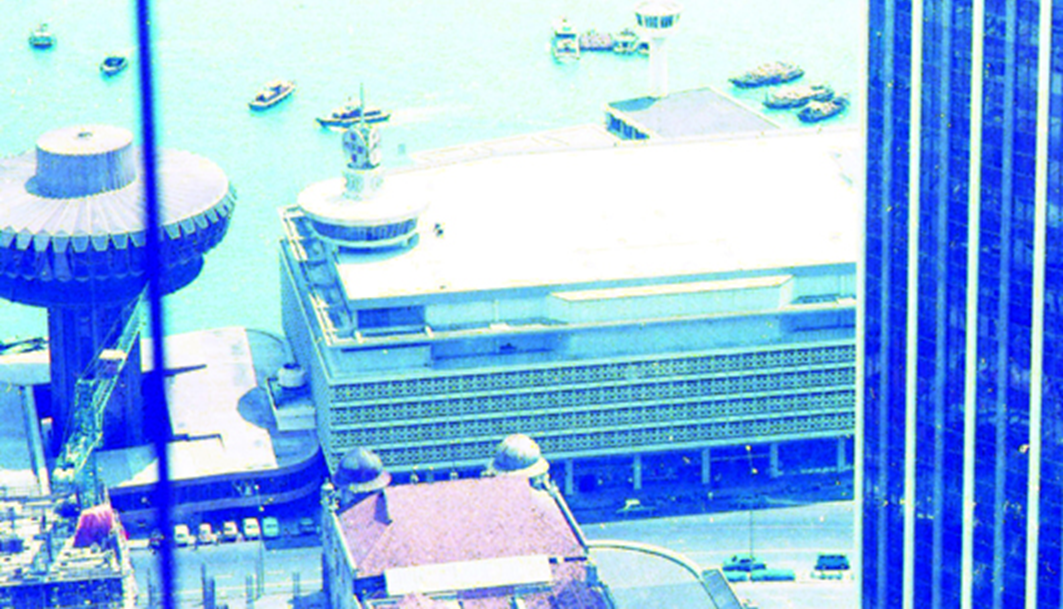
Photo by author, 1972
The stage set was designed by a specialist in Tokyo, and a company in Osaka was contracted to manufacture it, and I was involved in coordination work, travelling back and forth between Singapore, Tokyo, and Osaka.
The interior and stage work were successfully completed, and preparations for the opening of the store were underway. (4 photos below)
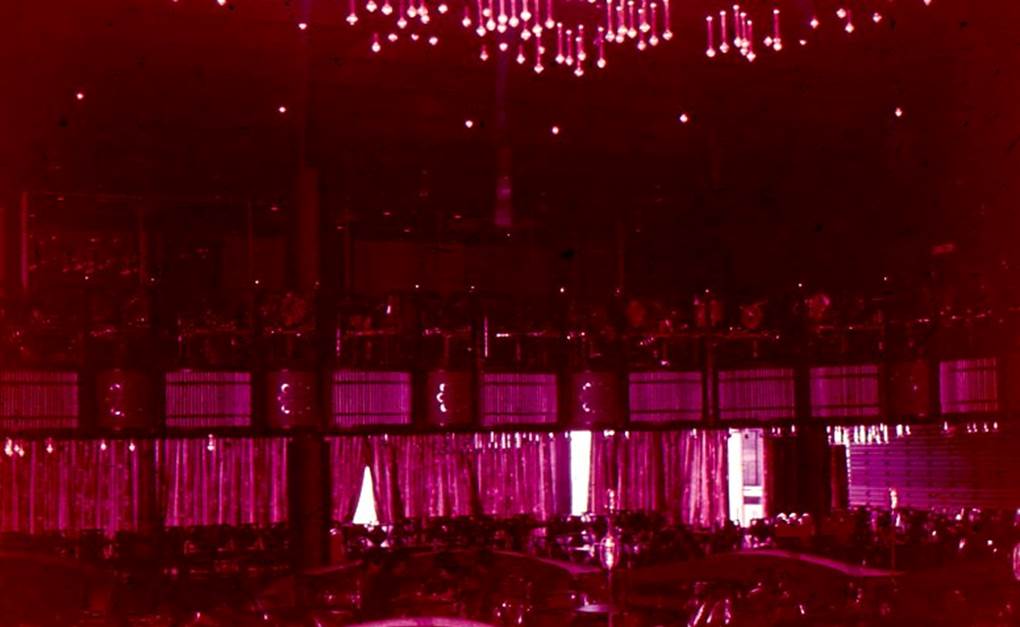
Photo by author, 1972
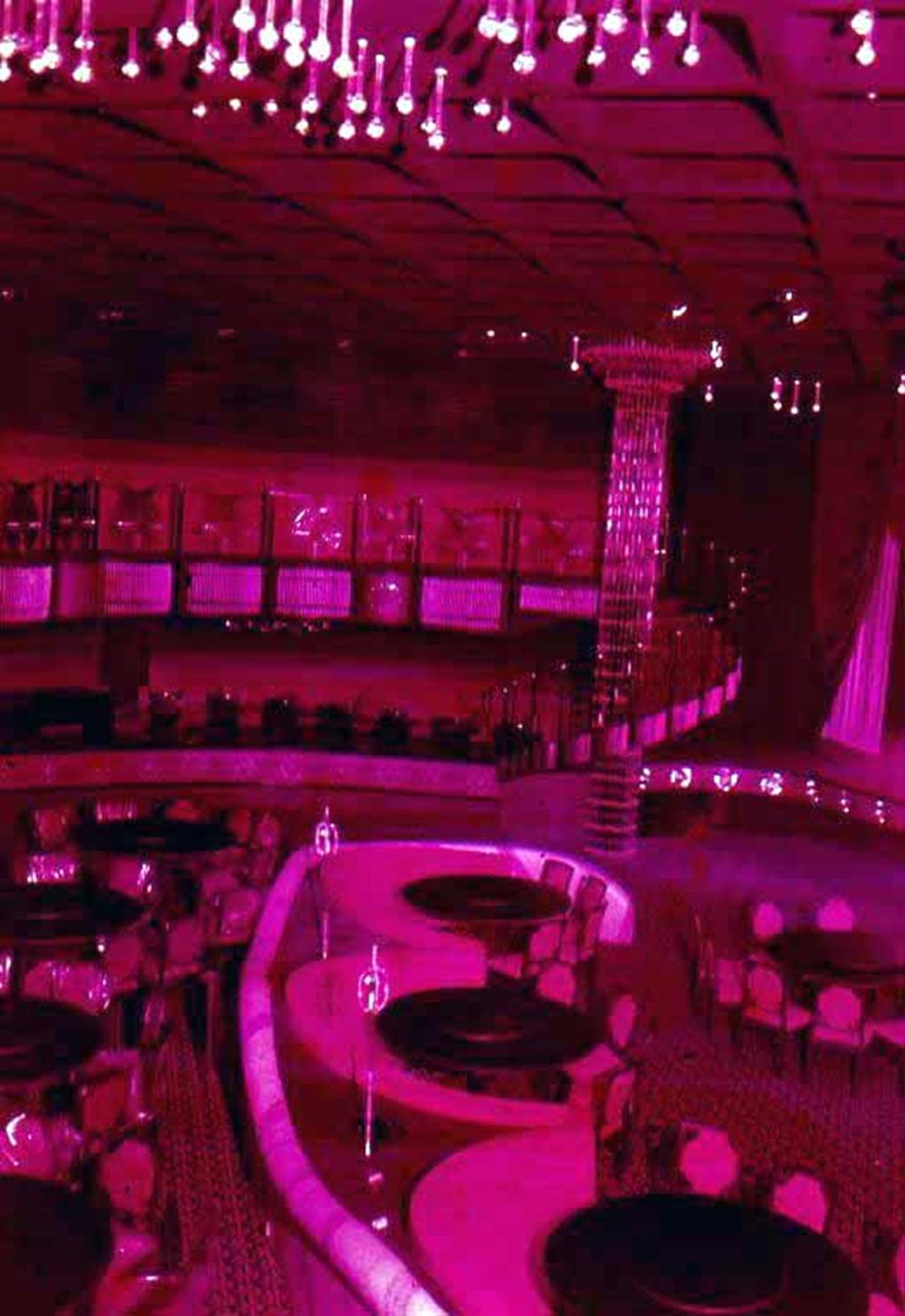
Photo by author, 1972
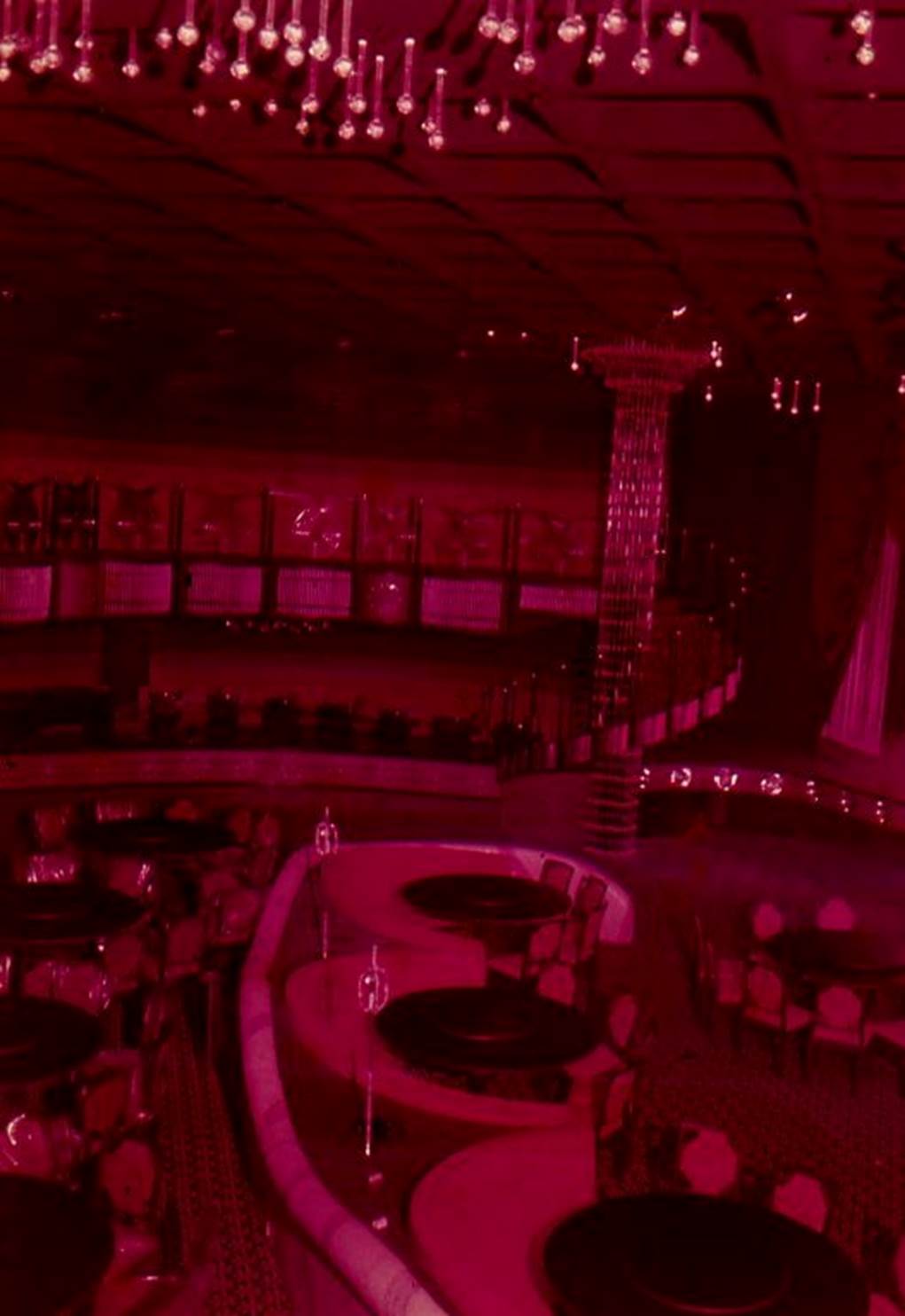
Photo by author, 1972
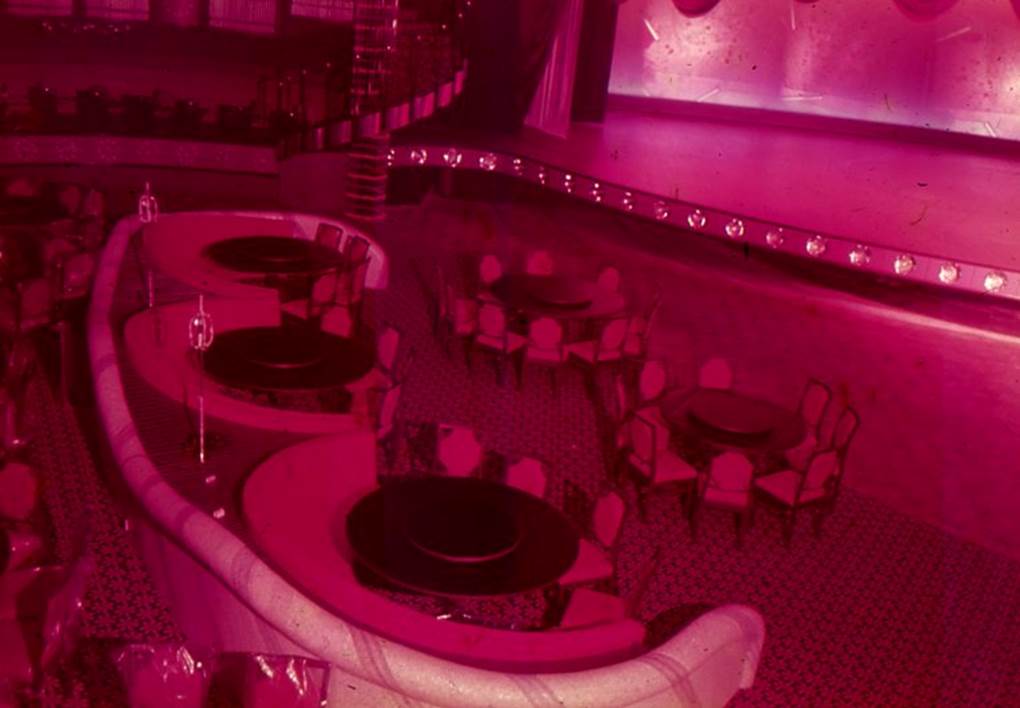
Photo by author, 1972
Adjusting the stage lighting just before opening
Custom-made stage lighting #1
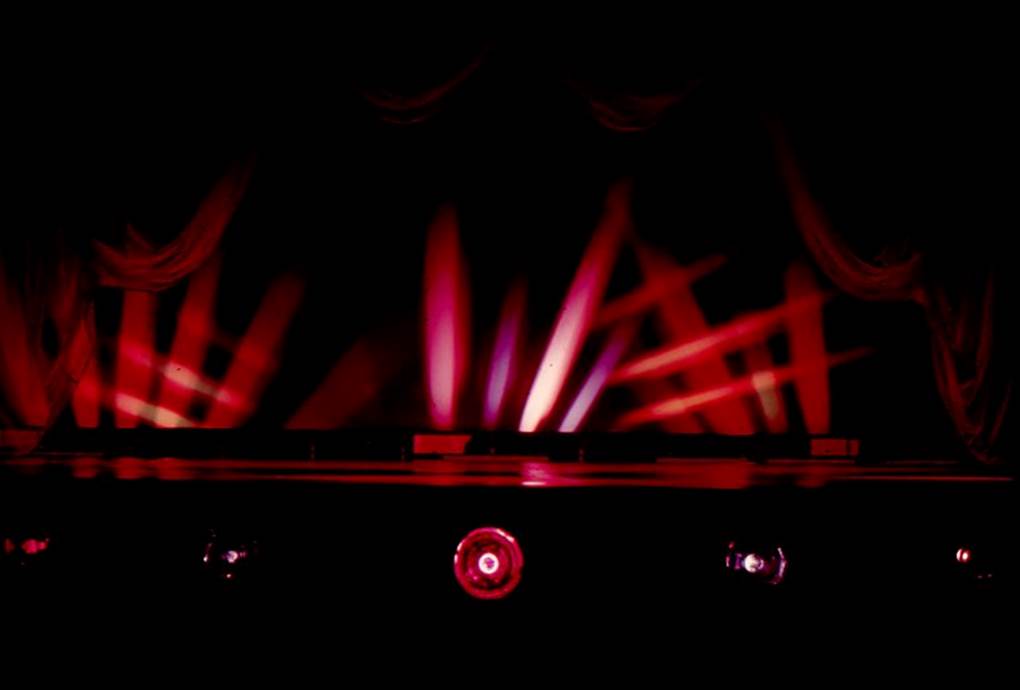
Photo by author, 1972
Custom-made stage lighting #2
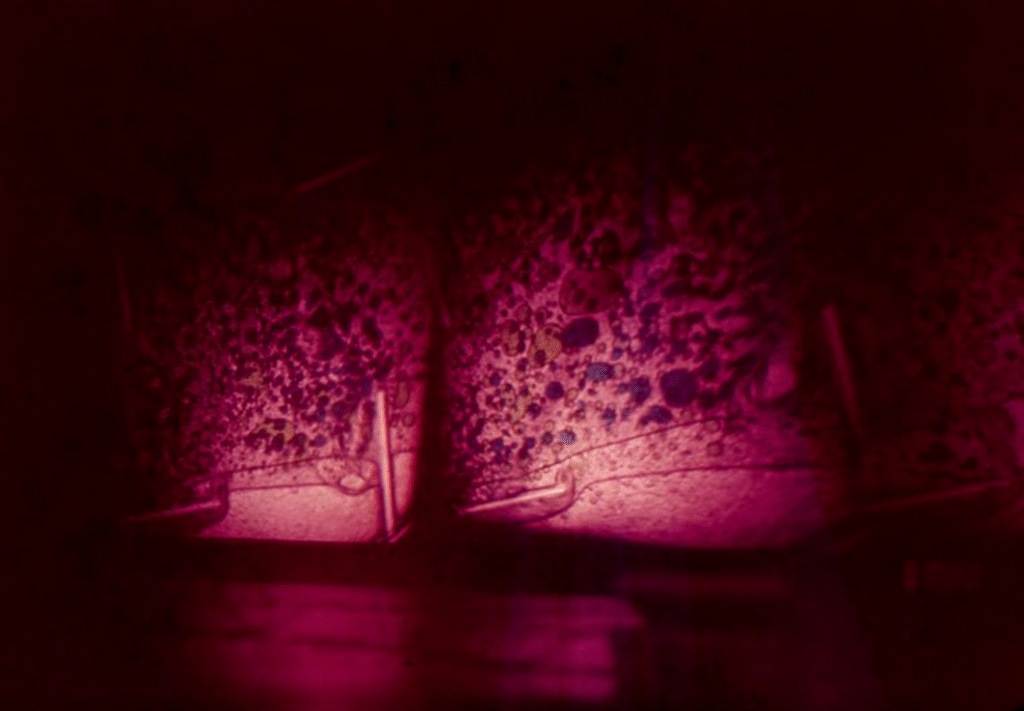
Photo by author, 1972
Custom-made stage lighting #3
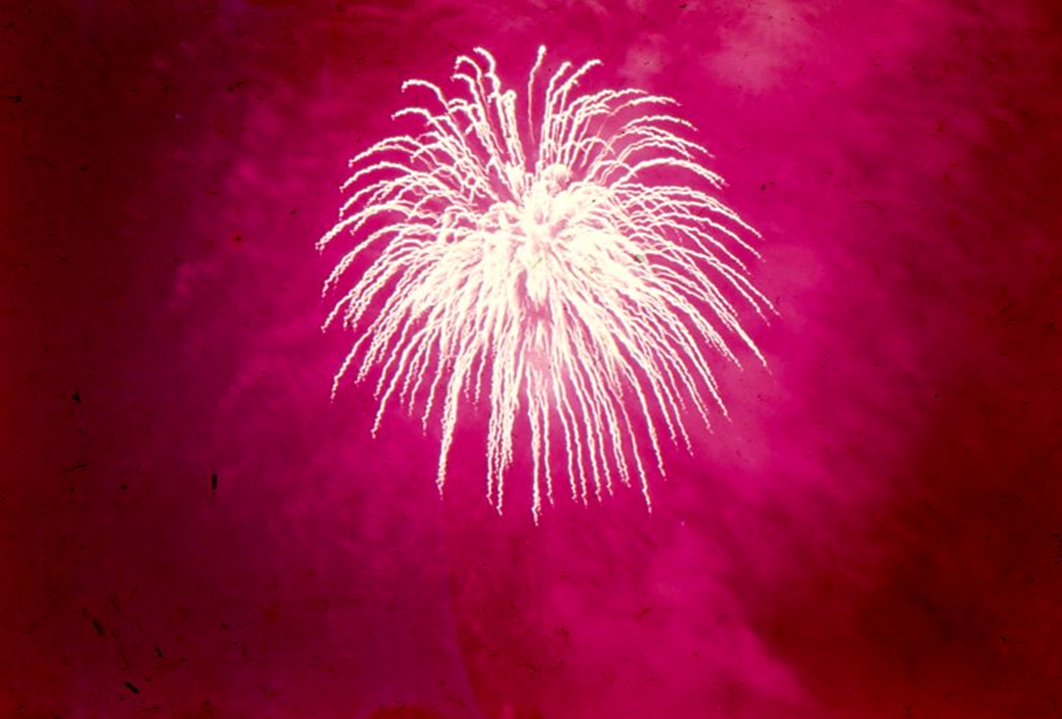
Photo by author, 1972
Special Acrylic Ball Ceiling Lighting
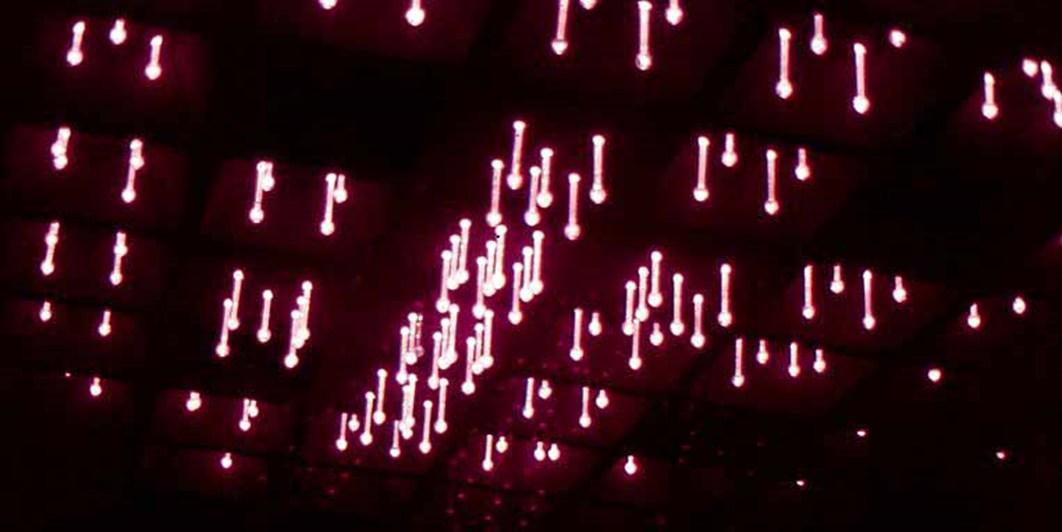
Photo by author, 1972
Opening and start of business
In October 1972, Singapore’s largest Neptune Theatre restaurant opened for business. Las Vegas-style topless shows, which were specially approved by the authorities, became popular.
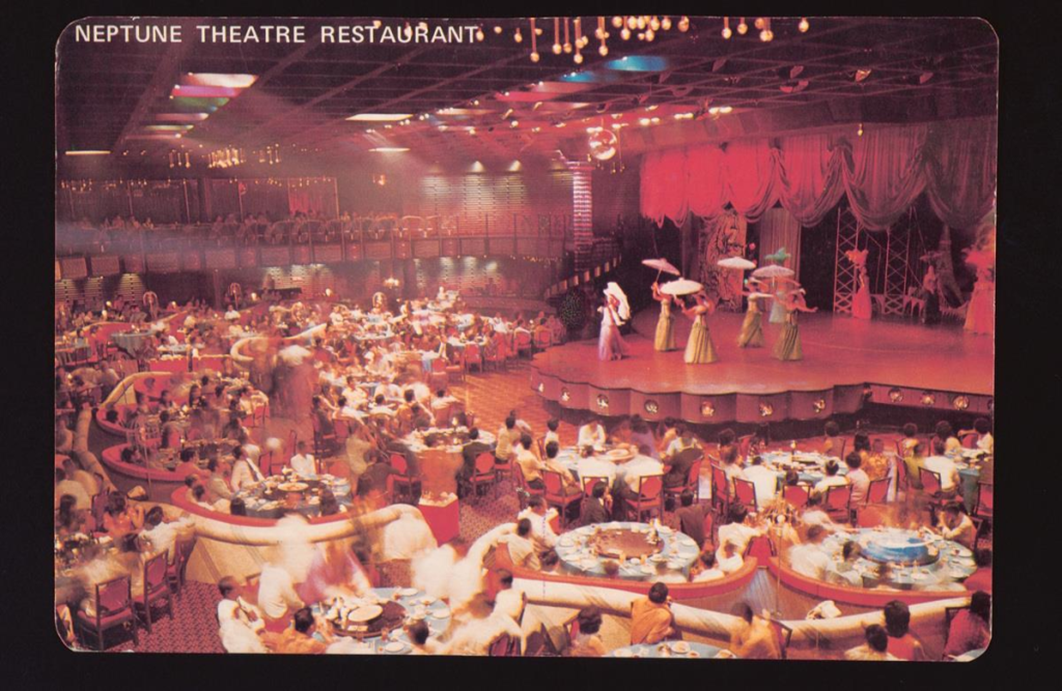
Source: Roots.sg
This large-scale restaurant took the world by storm with concerts and world-class entertainment performers.
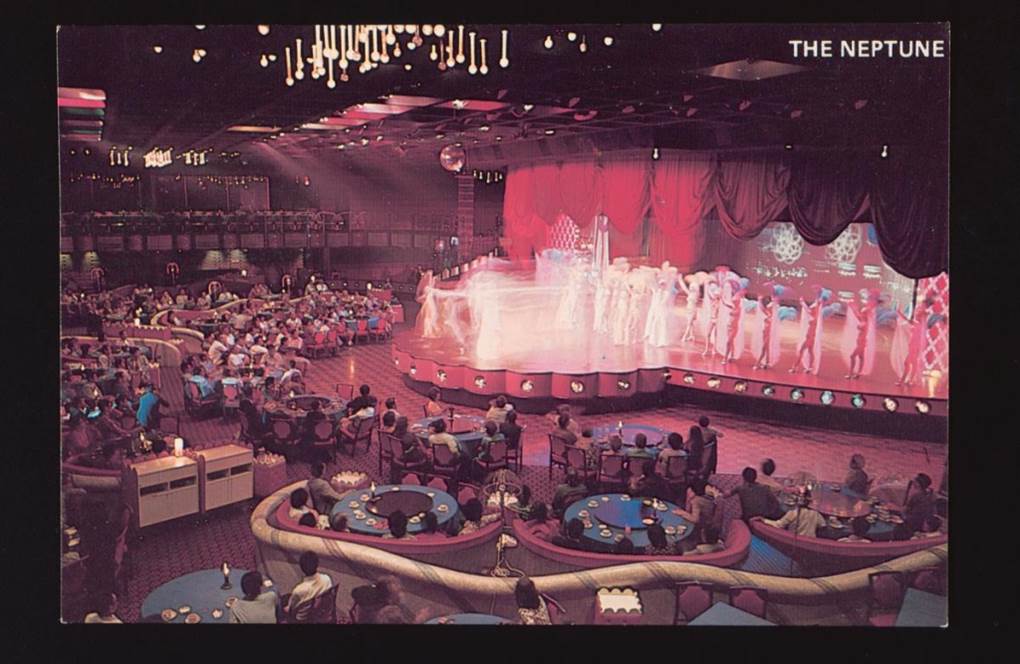
Source: Roots.sg
It came to an end in 2006.