JAP | ENG
Singapore’s Early Days
1970s
#3/10
City blocks and suburban areas
Near Kampong Glam
Around 1971, I went with a fellow expatriate living in Singapore to the vicinity of the “Thieves’ Market” that existed at the time. Compared to the Orchard area, where there are relatively many Westerners and Japanese, this place had the atmosphere of a completely different country.
There was no distinction between the roadway and the sidewalk, and the line between the storefront and the road was blurred, and the atmosphere was reminiscent of the black market in post-war Tokyo.
The differences were the fact that it was hot and humid all year round, the color of people’s skin, the fact that the taxis were Mercedes-Benz, and the presence of a magnificent mosque in the background.
Kampong Glam District, Singapore
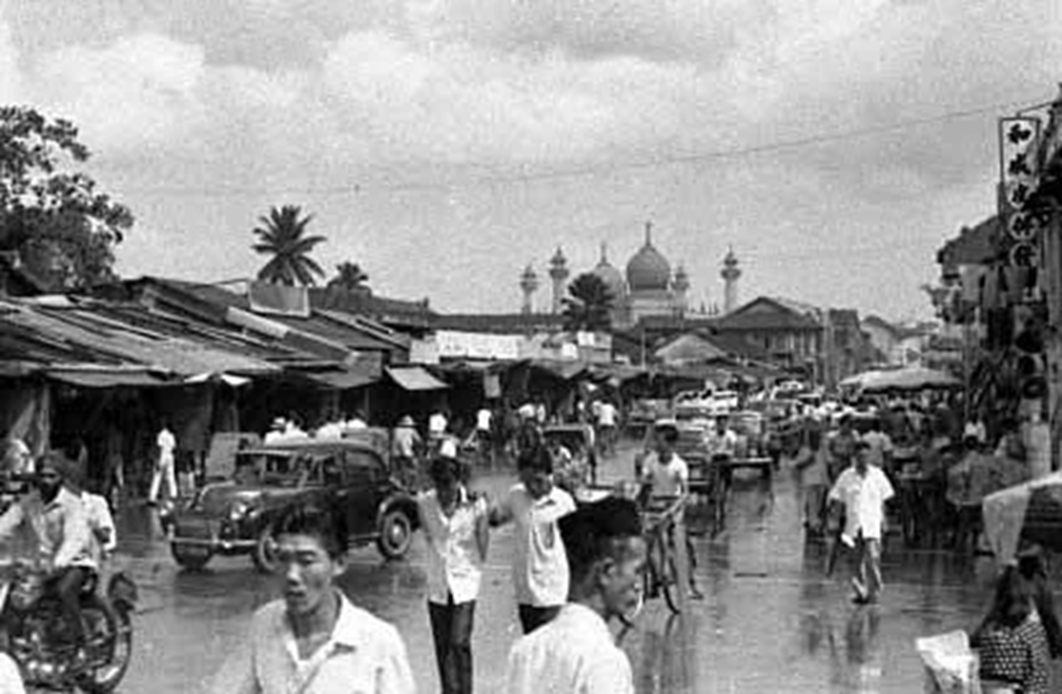
Photo by author, 1971
Kampong Glam District, Singapore

Photo by author, 1971
Kampong Glam District, Singapore
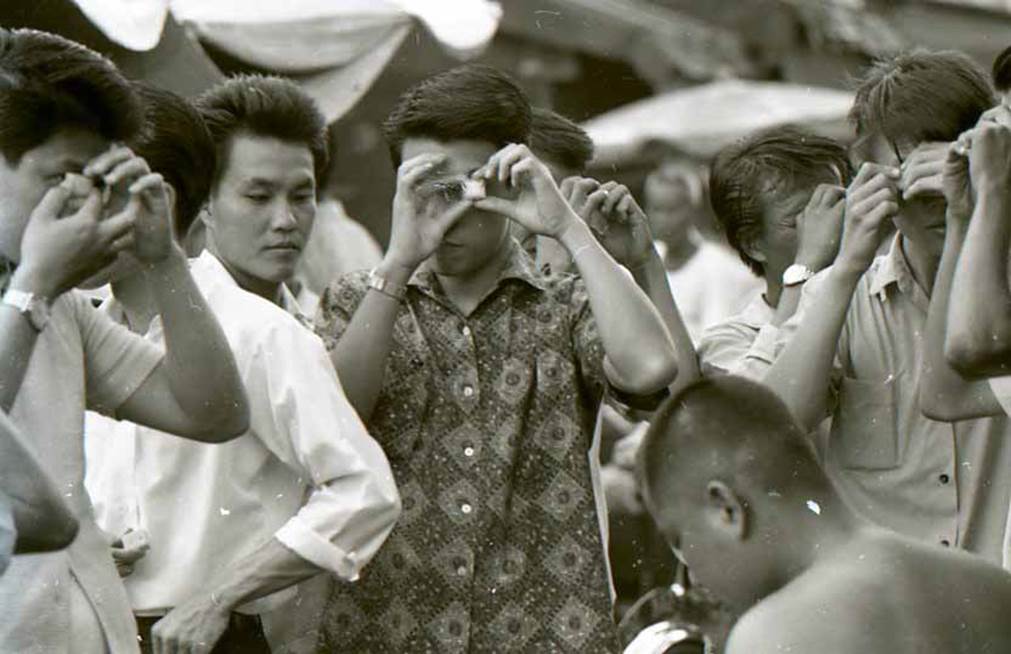
Photo by author, 1971
These photographs show that Singapore’s 1960s was a difficult period of transition from colonial rule to independence, and private investment was at a standstill for a long time.
There are also professional criminal groups specializing in pickpocketing in this area, snatching on motorcycles, and I have been a victim of two cases.
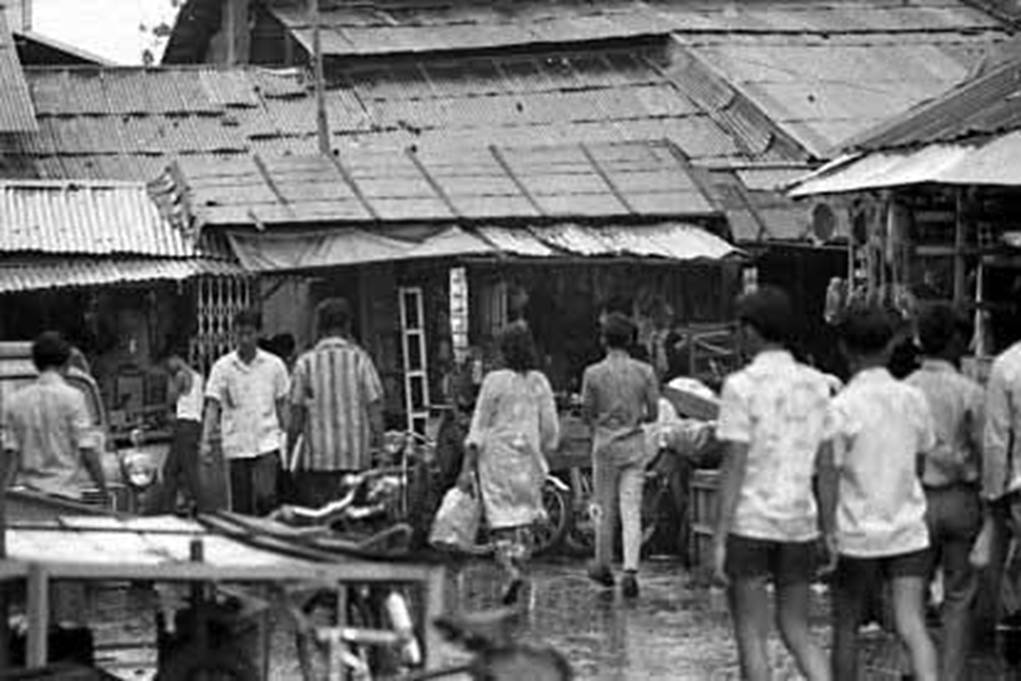
Kampong Glam District, Singapore, Photo by author, 1971
At that time in Singapore, pedestrian crossings were provided near intersection traffic lights, but pedestrians who wanted to avoid taking a detour were free to cross the road anywhere. This was also the case in the roads of the central financial district, and drivers had to be extremely careful of pedestrians randomly crossing the road.
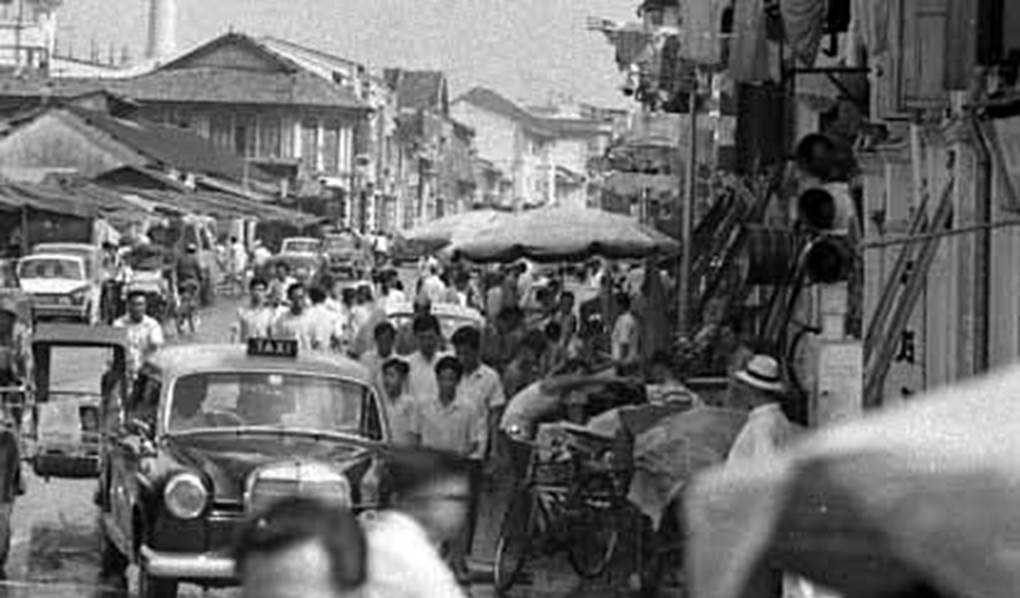
Kampong Glam District, Singapore, Photo by author, 1971
The current Kampung Gram area was spared from demolition. Singapore’s Malay historical buildings and large block of town district were well preserved.
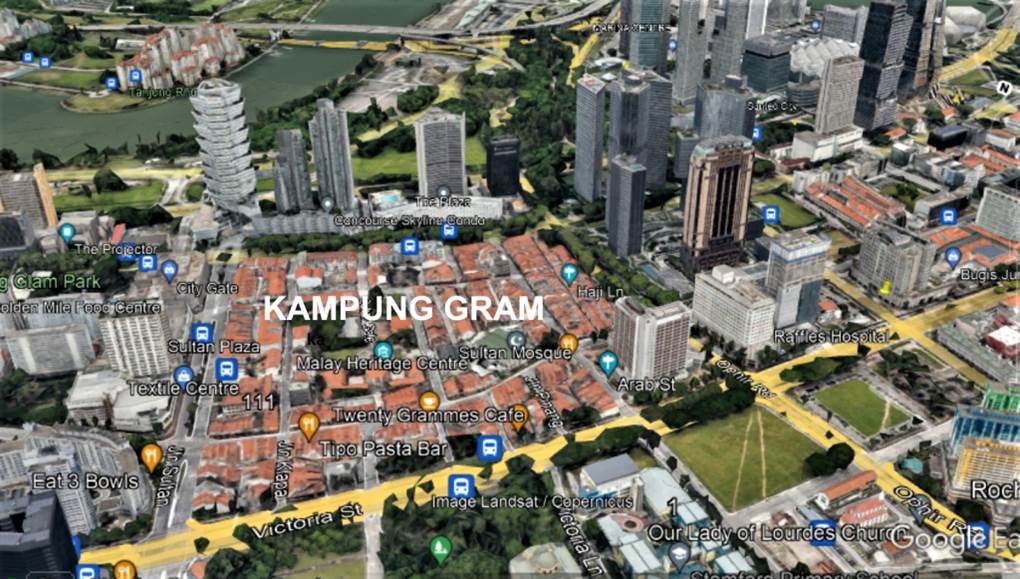
Malay style Houses
Housing suited for the natural environment
During the oil crisis, when real estate developers in the city were struggling, the suburbs were filled with a laid-back world like the one in the photo below.
There were many rubber forests and orchards around, and it was a world that truly evoked the “Tropical Country”
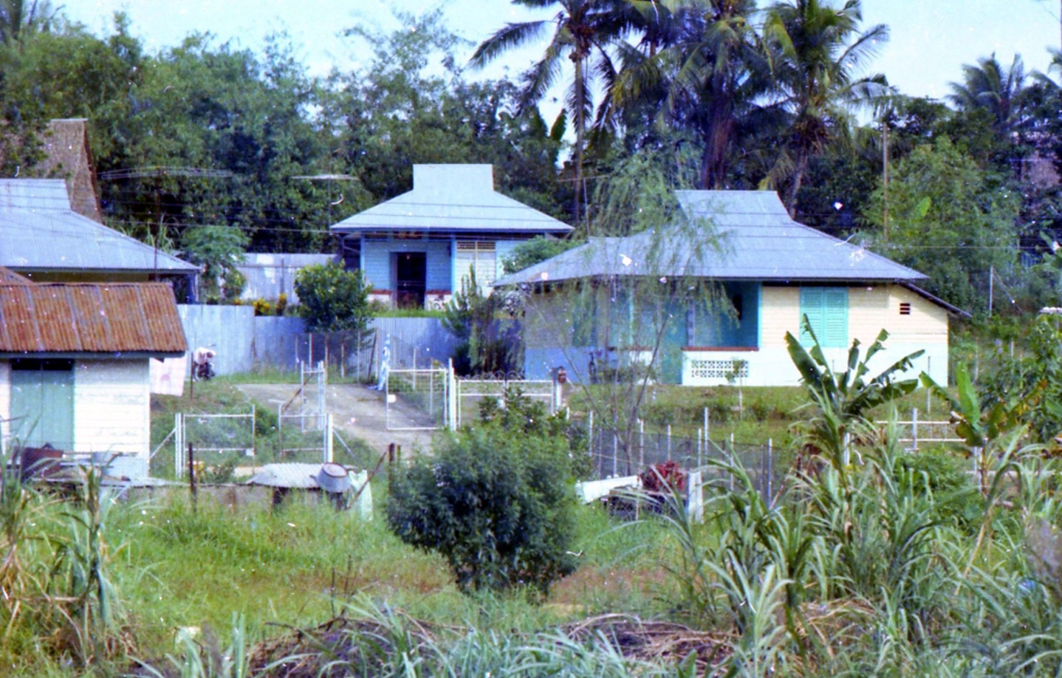
Photo by author, 1971
In the suburbs of Singapore, there used to be houses suited to the “hot, humid and rainy” natural environment of Singapore and the Malay Peninsula.
“They had raised floors off the ground, gabled roofs, deep eaves, balconies and outdoor terraces.”
They were well-ventilated houses suited to the tropical climate and built in harmony with the surrounding nature. They had no air conditioning.
(Photos above and below)
Then, in the late 1970s, due to fire prevention reasons, regulations came into force that prohibited all wooden construction, and these buildings were destined to disappear one after another.
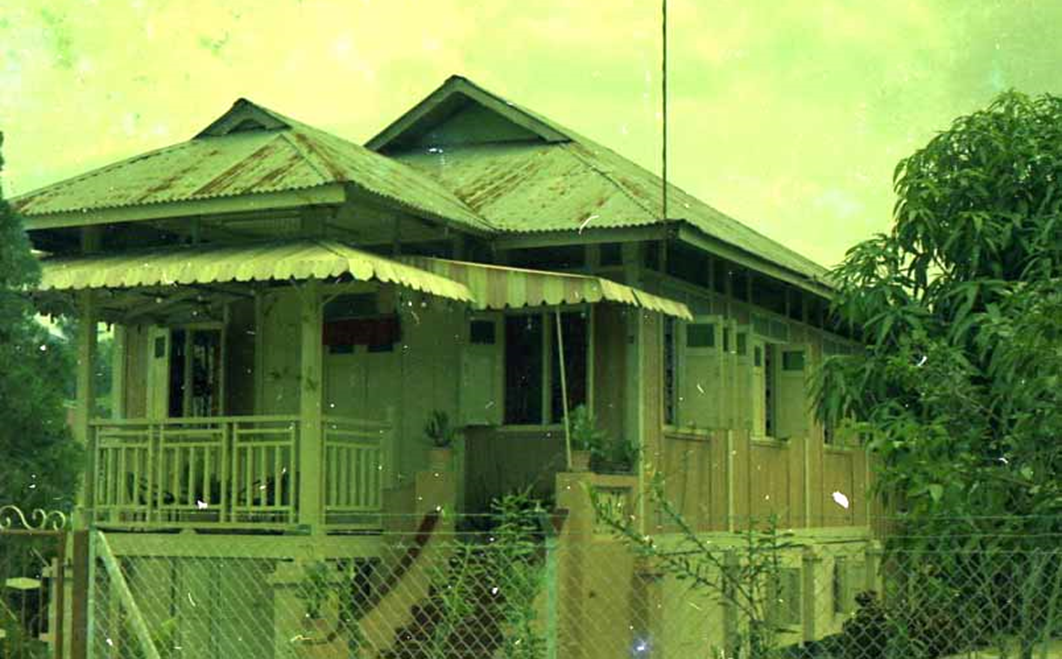
Photo by author, 1971
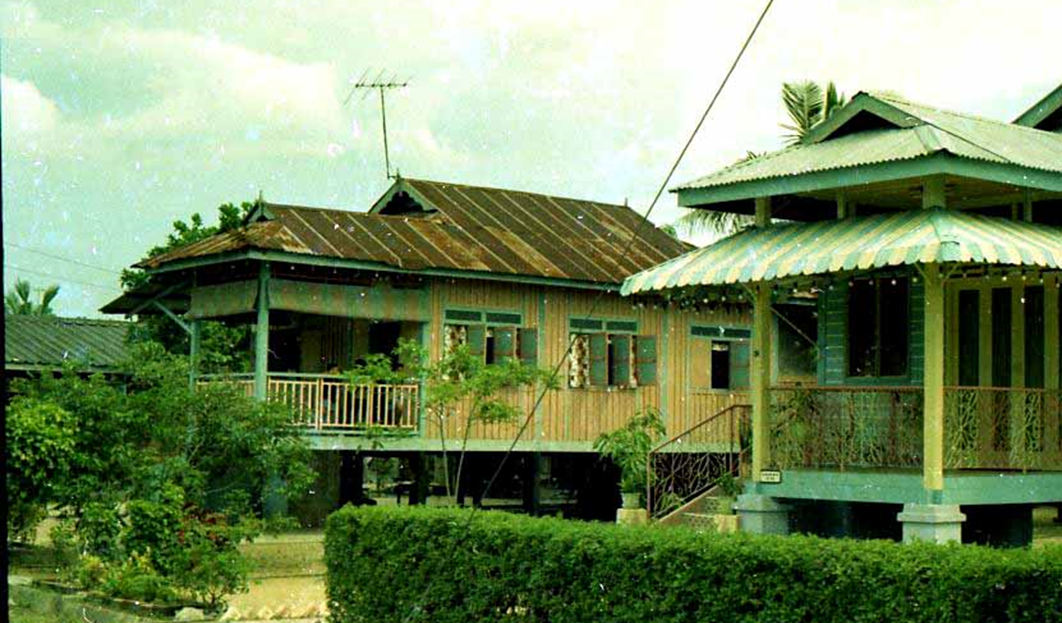
Photo by author, 1971
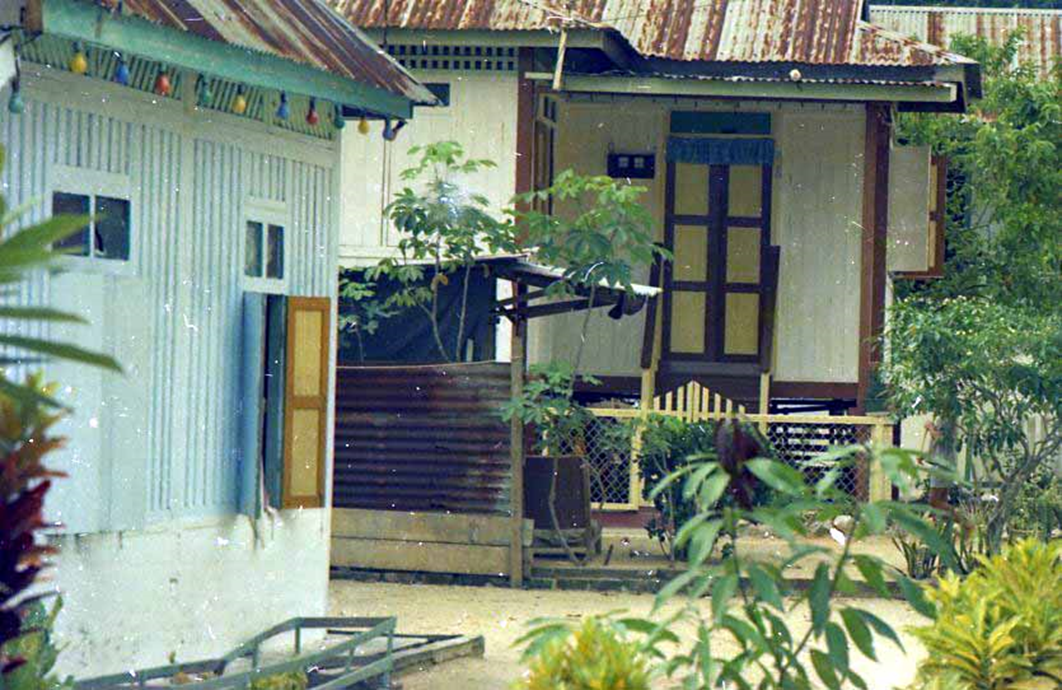
Photo by author, 1971
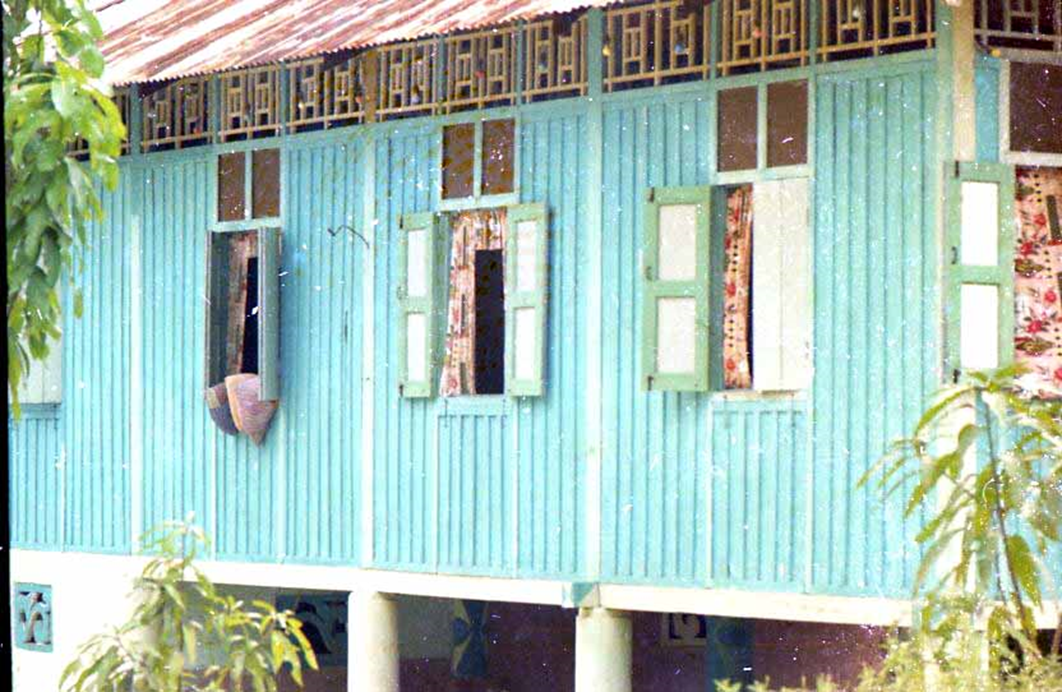
Photo by author, 1971
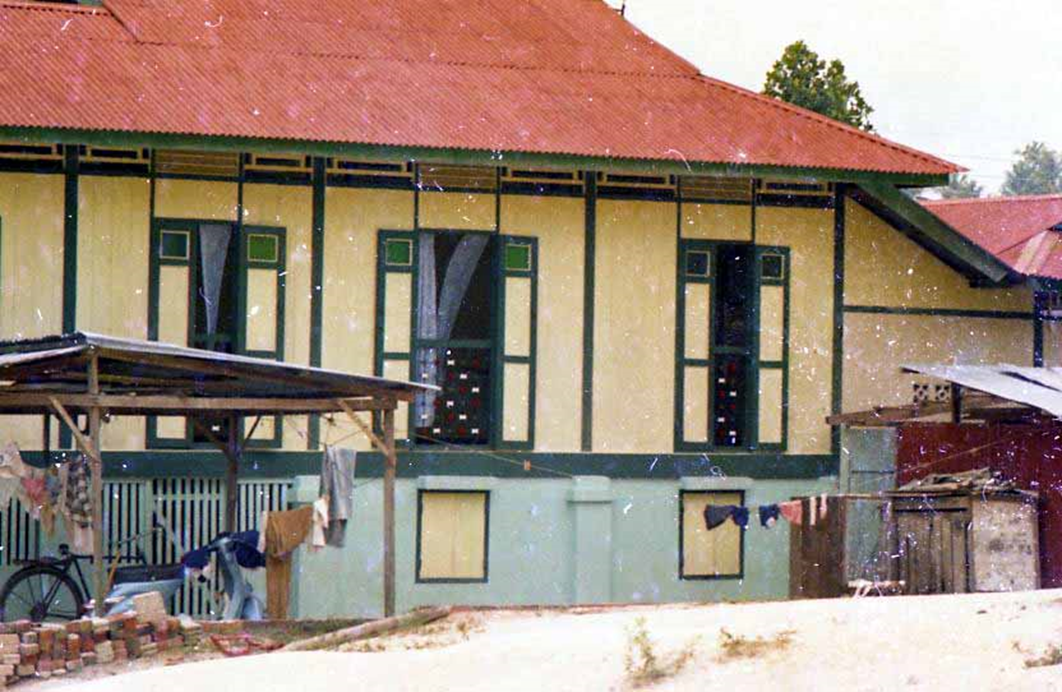
Photo by author, 1971
Thatched roofs
About 10 kilo meters from the city center, there were “thatched roofs” everywhere. Since the 1980s, the scenery shown in the photo below has been lost in a short period of time due to population growth and the City Planning Law.
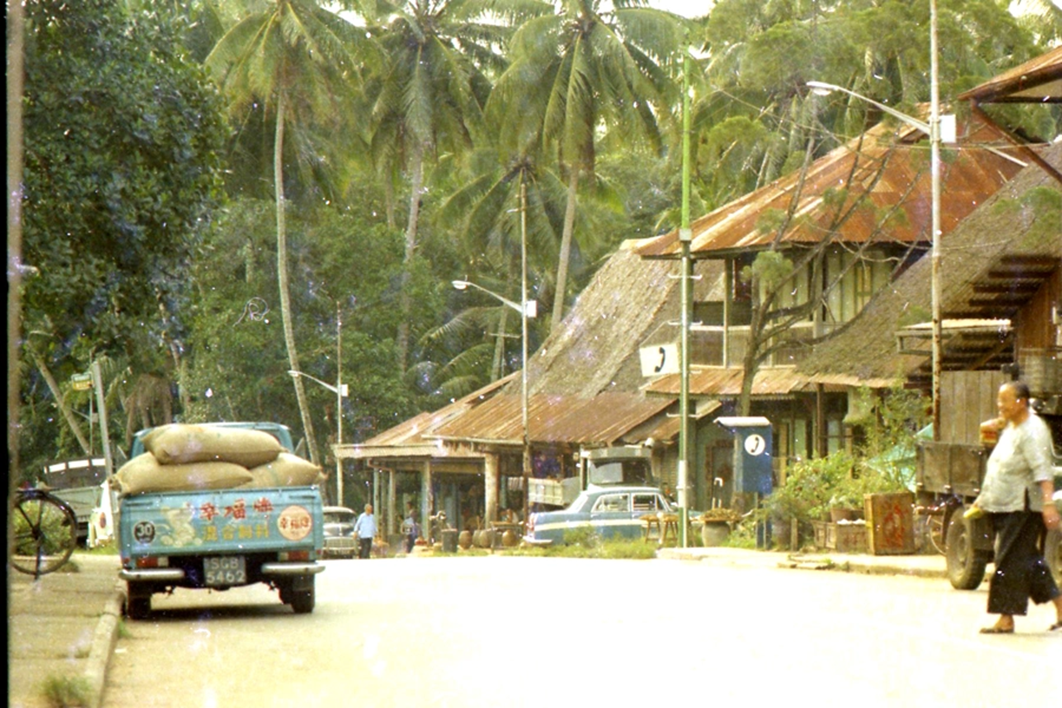
Photo by author, 1971
In these locals area, very few people used wear shoes.
Rubber sandals or barefoot were the norm
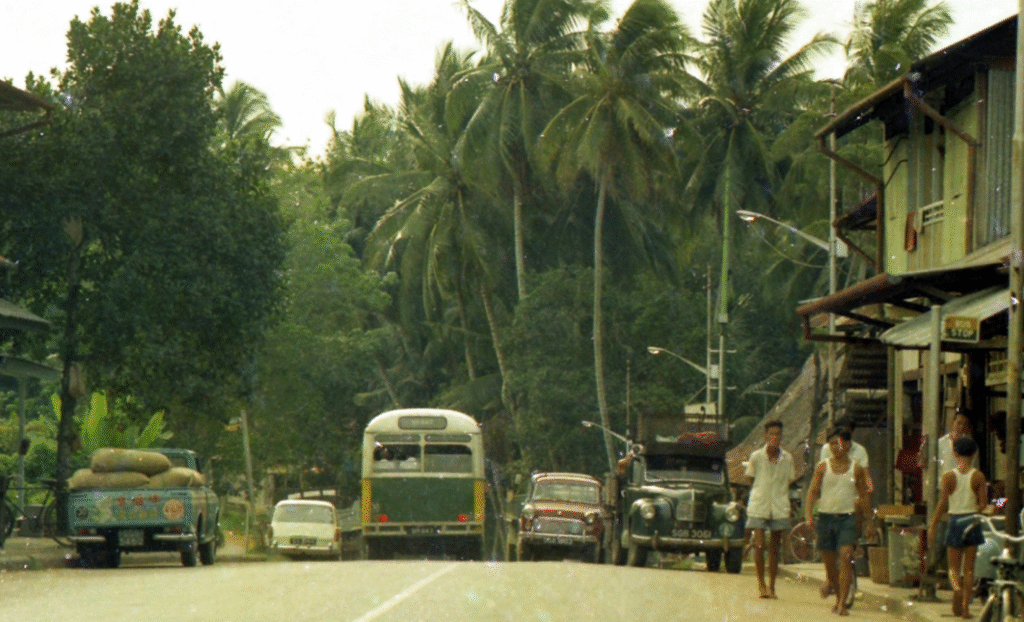
Photo by author, 1971